Staff Productivity in Senior Living: Analytics Guide
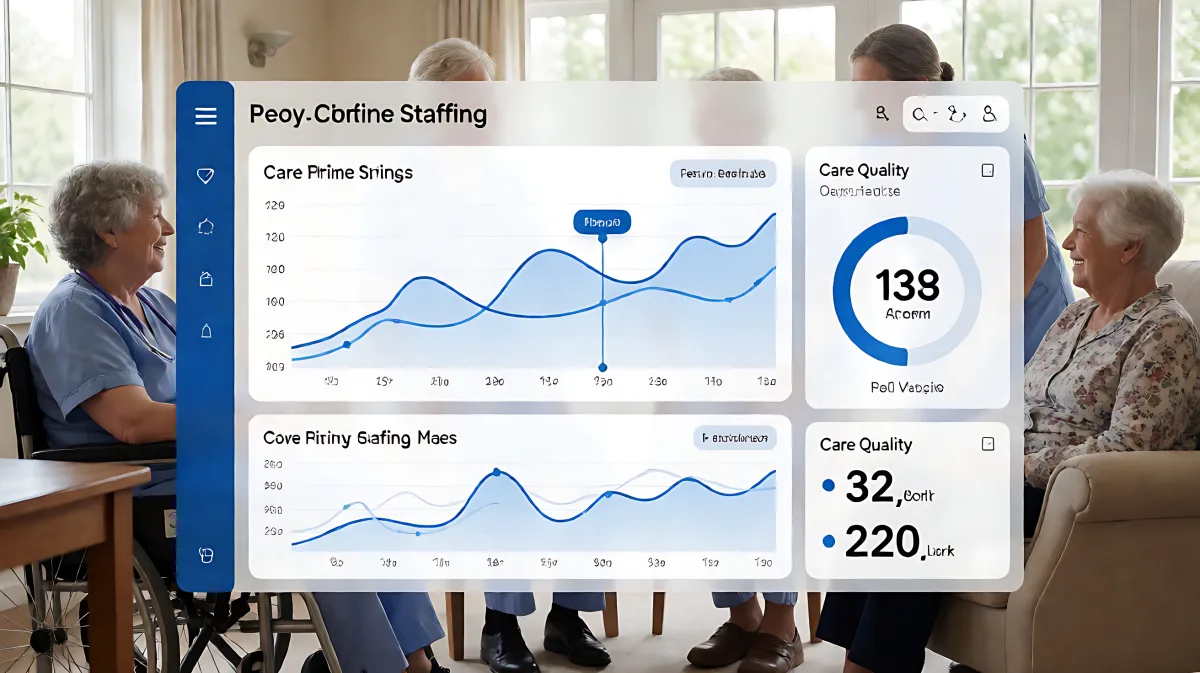
Senior living facilities are increasingly using data analytics to improve staff productivity by optimizing schedules, reducing administrative burdens, and training personnel based on performance metrics.
Senior living facilities are turning to advanced analytics to improve staff productivity by aligning workforce schedules with real-time resident demand and automating administrative tasks. By tracking key performance indicators and utilizing predictive data, organizations can reduce burnout, lower turnover, and ensure caregivers spend more time on direct patient care rather than paperwork.
How do analytics tools optimize daily staffing levels?
One of the most significant challenges in healthcare is managing fluctuating demand without overextending resources. Analytics platforms allow administrators to monitor resident engagement patterns and care needs in real-time. Instead of relying on static shifts, facilities can adjust staffing based on actual utilization. For example, if data shows that morning hours have the highest volume of resident interactions, staff can be scheduled accordingly. This prevents both under-staffing, which leads to stress, and over-staffing, which drains the budget.
What specific metrics drive these scheduling decisions?
Facilities track hours per patient day and staff utilization rates to find the balance. According to recent industry benchmarks, optimal staffing efficiency often falls within a specific range of hours per resident day. Maintaining a staff utilization rate between 85% and 92% is generally considered the sweet spot. This ensures that the workforce is deployed effectively without being pushed to the breaking point. When these metrics are integrated into a central dashboard, managers can see trends instantly and adjust next week's schedules before problems arise.
How does automation reduce the administrative burden on caregivers?
Caregivers spend a considerable amount of their shift on documentation and shift handoffs. Many facilities assume that more detailed paperwork always leads to better care, but in fact, excessive manual data entry consumes productive time that could be spent with residents. Analytics identify these low-value tasks. By automating routine documentation and scheduling processes, organizations can cut review time significantly. Some systems report that automating documentation can reduce review time by up to 40%. This efficiency gain allows staff to focus on clinical decisions and resident interactions rather than chasing digital forms.
How can data improve staff training and skill development?
Productivity isn't just about speed; it is about capability. Analytics tools track individual performance metrics, such as response times and quality of care. This data helps identify skill gaps in the workforce. Rather than training everyone on the same generic curriculum, managers can deploy targeted training based on actual needs. For instance, if a team struggles with a specific type of resident transfer, the system can flag this pattern. This approach ensures that professional development is efficient and directly impacts operational outcomes.
What steps can managers take to verify the success of productivity initiatives?
Implementing these technologies is only effective if outcomes are measured. Managers should adopt a verification cycle that includes regular audits and KPI tracking. Here is a checklist for verifying success:
- Collect at least three months of historical scheduling data to establish a baseline.
- Conduct quarterly staffing audits to spot inefficiencies early.
- Monitor turnover rates alongside productivity metrics to ensure quality of life.
- Track time savings on automated tasks to calculate return on investment.
- Review resident satisfaction scores to correlate staff efficiency with care quality.
How does predictive analytics enhance resident care delivery?
Modern analytics go beyond looking at the past; they forecast future needs. By analyzing health trends and behavioral changes, facilities can anticipate when a resident might require increased care or dietary adjustments. This proactive approach allows staff to allocate resources before a crisis occurs. It transforms the care model from reactive to preventive, ensuring that the team is prepared for daily demands without being overwhelmed by emergencies.
Is high productivity always a positive sign?
It is crucial to remember that productivity metrics measure billable or scheduled time, not necessarily care quality. A high percentage of time spent on tasks does not automatically mean better outcomes. If staff are hitting their numbers by cutting corners on documentation or rushing interactions, it creates a burnout risk. Therefore, productivity targets must always be balanced with workload distribution and job satisfaction monitoring.
Frequently Asked Questions
What is the ideal staff utilization rate in senior living?
Industry standards suggest that a staff utilization rate between 85% and 92% is optimal. This range indicates that the workforce is deployed efficiently without being overextended, balancing operational coverage with sustainable working hours.
How does cross-training impact workforce efficiency?
Cross-training creates a flexible workforce that can cover shifts during absences or census spikes without relying on expensive agency staff. It reduces overtime costs and improves team cohesion by spreading essential skills across the department.
Can analytics reduce employee turnover?
Yes. By monitoring workload distribution and shift patterns, managers can identify burnout risks before they lead to resignation. Proactive adjustments to schedules and workloads based on this data help retain experienced staff and maintain care continuity.
Do automated systems replace the need for human oversight?
No. Automation handles repetitive tasks, but human oversight is required to interpret data, make complex clinical decisions, and provide compassionate care. The technology acts as a support tool to free up staff for high-value interactions.