Fast Sous Vide Meal Prep Guide
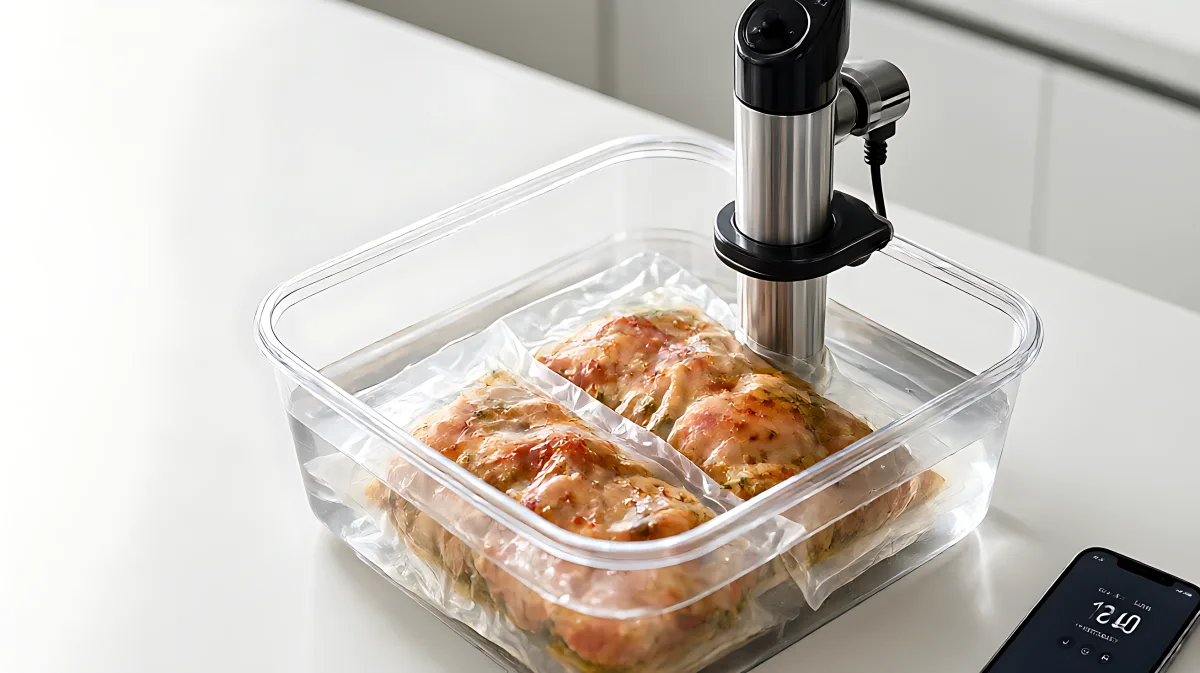
Discover how to cut your meal prep time in half using sous vide technology. This guide covers the best 2026 equipment, efficient batch cooking techniques, and critical safety checks for home cooks.
Sous vide is the fastest way to meal prep because it allows you to cook large batches of protein at precise temperatures with zero active monitoring. By sealing food and cooking it in a water bath, you eliminate the risk of overcooking and can run multiple items simultaneously. In 2026, modern circulators offer app connectivity that lets you set a timer and walk away, freeing up hours of your week. The key to speed is grouping ingredients by temperature so they cook together, saving you from running the machine multiple times.
What makes sous vide faster than traditional meal prep?
Traditional cooking requires constant attention to heat levels and timing, often limiting you to one dish at a time. Sous vide flips this logic. You can put ten chicken breasts in the bath at the same time as ten portions of salmon, provided they require the same target temperature. The water bath acts as a thermal buffer. Once the food reaches the target temperature, it stays there indefinitely. This means you can start cooking at 7:00 AM, go to your morning meeting, and return to perfectly cooked protein at 10:00 AM without the risk of drying out your chicken or toughening your steak. The time saved is in the mental load and the active cooking time, not just the clock time of the meal itself.
Which equipment speeds up the 2026 workflow?
Not all machines are created equal for batch cooking. For speed, you need sufficient wattage to heat the water quickly when adding multiple cold items. According to recent testing by Anova Culinary, models with 1,200 to 1,800 watts handle large volumes of water more efficiently than entry-level 850W units. The Breville Joule Turbo, a popular choice in 2026, heats a gallon of water from 57°F to 190°F in approximately 22 minutes, which is critical when you are adding several chilled bags at once. If you use a smaller wattage unit, the recovery time after dropping in frozen proteins will be much longer, slowing down your prep session.
Connectivity also matters. Wi-Fi enabled devices allow you to monitor the bath from your phone. If you are running a long cook for a family of four, you can stay in another room and get an alert when the timer ends. This removes the need to stand in the kitchen listening for a beep, which is a significant quality-of-life improvement for busy households.
How do you batch cook without waiting around?
The secret to speed is the 'temperature cluster' method. Instead of cooking one item at a time, group your meal prep items that share a similar target temperature. Here is a simple checklist to follow for a one-hour efficient session:
- Group proteins: Cook chicken breast and pork tenderloin together at 145°F (63°C).
- Group vegetables: Cook carrots and potatoes together at 180°F (82°C) to achieve a fork-tender texture.
- Use the freezer-to-bath trick: You can drop vacuum-sealed, frozen proteins directly into the water. The water temperature will drop briefly, but the circulator will recover. This saves you the step of thawing meat overnight.
- Label immediately: Use a permanent marker to label bags with the food type and date before sealing. Do not wait until after the cook to label; it makes refrigeration and freezer organization faster later.
By clustering, you only need to set the timer once for a group of items. You are not moving items in and out of the bath every five minutes. You put them all in at minute zero, and you take them all out at minute sixty.
Is it safe to leave the machine running unattended?
Many home cooks assume that sous vide machines can run for hours without issue, but in fact, you must ensure the water level remains high enough to cover the heating element and the bags. Evaporation is the main risk. If the water level drops too low, the element can overheat. To prevent this, use a lidded container or a specialized polycarbonate bin that slows evaporation. Additionally, never block the overflow drain. If you are using a stockpot, add enough water to leave two inches of headroom above the surface. For long cooks exceeding four hours, check the water level halfway through. This is a ten-second check that prevents a costly machine failure.
What are common mistakes that slow you down?
The biggest mistake is attempting to cook items with vastly different temperatures in a single batch unless you use the 'cooking by time' method correctly. For example, you cannot cook a steak at 130°F and a hard-boiled egg at 145°F in the same bath at the same time if you want both to be perfect. One will be undercooked or overcooked. Instead, use the time advantage. Cook the egg for 15 minutes and the steak for 60 minutes, but put them in at the same time and pull the egg out early. This still saves time, but you must be disciplined about pulling items out as they are done. Another misconception is that you need a vacuum sealer to get fast results. While a sealer is better, the water displacement method with high-quality freezer bags is fast and cost-effective for beginners, removing the barrier of a $100 investment before you start.
FAQ
Can I meal prep vegetables and proteins in the same bag?
No. Different ingredients have different optimal cooking temperatures. Proteins are usually cooked between 130°F and 150°F, while vegetables like carrots need 170°F to become tender. Cooking them together at a lower temperature will result in mushy, bland vegetables. Keep them in separate bags but run them in the same bath if their temperatures are close.
How long does it take to heat the water when adding frozen food?
Adding frozen food will temporarily lower the water temperature. A 1,200W circulator typically recovers to the target temperature within 5 to 10 minutes after the addition of several frozen proteins. The total cook time should account for this by adding 30 to 60 minutes to the standard cook time if starting from frozen.
Do I need to preheat the water before putting food in?
It is not strictly necessary, but it saves time. If you start with room-temperature water, the circulator will heat it up to temperature while the food is in the bath. However, preheating ensures that the food starts cooking immediately at the target temperature, which is more efficient for precise timing.
What is the best way to reheat sous vide meals for the week?
The best way to reheat is by using the sous vide machine again. Place the sealed bag in a bath at the target temperature for 15 to 20 minutes. This prevents the food from drying out or becoming rubbery, which often happens when microwaving or reheating in a pan.