Reduce Kitchen Cleanup Time for Seniors with Smart Tools
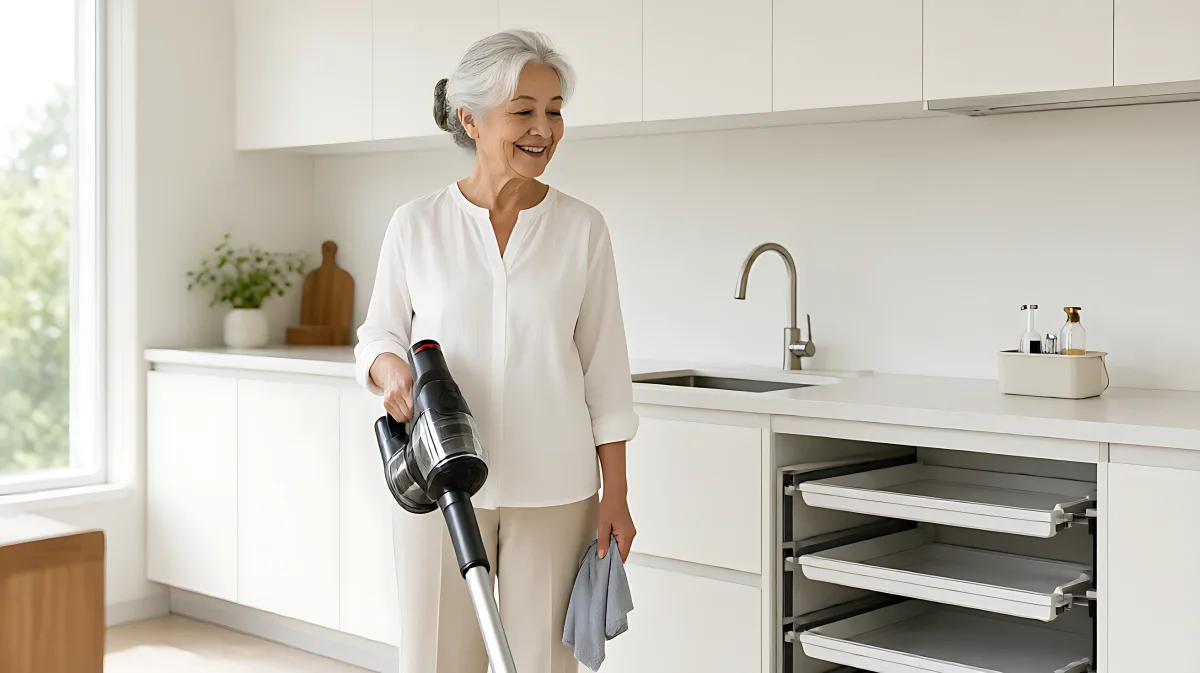
Kitchen cleanup becomes manageable when you use the right adaptive tools and routines. Learn how to reduce fall risks and physical strain with senior-specific strategies.
Reducing kitchen cleanup time for seniors involves adopting adaptive tools, organizing around the 'Golden Zone,' and using short, frequent cleaning sessions. This approach significantly lowers the risk of falls and physical strain while maintaining a hygienic cooking space. By matching tools to your current physical abilities, you can make chores manageable and confidence-building without overexertion.
Why Do Standard Cleaning Routines Fail Seniors?
Many families assume that cleaning tools are universal, but in fact, standard equipment often fails aging adults. Heavy vacuums with power cords create tripping hazards, and standard pump sprayers can aggravate hand fatigue and arthritis. The goal of senior-friendly cleaning is not just speed, but safety. When tools are ill-fitting, they increase the likelihood of balance loss and muscle strain. The standard professional term for this adapted approach is adaptive home maintenance, which prioritizes modified tools and routines to protect independence.
What Are the Best Senior-Friendly Cleaning Tools?
The right equipment removes the physical conditions that lead to injuries. Here are the top tools that deliver the most benefit for aging adults in 2026:
- Lightweight Cordless Vacuums: Models from brands like Shark and Bissell that weigh under five pounds eliminate the tripping hazard of a power cord. They handle debris on tile or hardwood without requiring you to drag a heavy unit.
- Long-Handled Scrubbers: Tools designed for low-grip-strength hands, such as those from OXO Good Grips, let you clean stovetop grates and backsplashes without stretching or climbing.
- Reacher and Grabber Tools: These allow you to retrieve items from low shelves or pick up dropped cloths without bending at the waist, eliminating one of the most common causes of balance loss.
- Trigger-Assist Spray Bottles: Look for models with a wide-grip trigger or continuous-spray mechanism to reduce hand fatigue associated with standard pump sprayers.
- Microfiber Cloths: Brands like e-cloth and Norwex produce microfiber products that lift grease and bacteria with water alone, reducing reliance on heavy chemical sprays.
How Can You Organize the Kitchen for Easier Cleanup?
Thoughtful organization is the foundation of safe cleaning. The core principle is the Golden Zone: store every item you use daily between waist height and chest height. This range requires no bending below the knee and no reaching above the shoulder, which are the two movements most likely to cause a fall or muscle strain.
Beyond the Golden Zone, these changes make a measurable difference:
- Install Pull-Out Shelves: Retrofit systems from companies like Rev-A-Shelf and Knape and Vogt eliminate the need to crouch and reach into the back of deep lower cabinets.
- Place Supplies Strategically: Keep cleaning supplies within arm's reach of your main work areas. The Fall Prevention Foundation notes that organizing supplies near work areas enables immediate spill response, directly reducing slip risk.
- Remove Throw Rugs: Replace standard throw rugs with low-profile anti-fatigue mats that have beveled edges and non-slip backing, as rugs are a leading cause of kitchen falls.
What Is the Safest Cleaning Schedule for Seniors?
Safe kitchen cleaning centers on fatigue control rather than deep-cleaning intensity. A senior who cleans for 45 minutes straight is at far greater risk of a fall in the final 15 minutes than someone who breaks the work into shorter bursts. LTC News advises breaking chores into short 10 to 15-minute periods with rest breaks between them. This protects joints and keeps concentration sharp, as distraction is a significant contributor to accidents.
How Can You Make Daily Maintenance Simpler?
Small habits reduce the total time spent on big cleaning projects. Consider these strategies to keep your kitchen manageable:
- Clean As You Go: Rinse a bowl while the kettle boils or wipe the counter while soup warms. This prevents the mess from feeling overwhelming.
- Use a Tray for Messes: A tray keeps crumbs and spills in one place for snacks or simple meals, so you only have to wipe one surface instead of the entire counter.
- Choose Low-Cleanup Meals: On tired days, opt for one-pot pasta, soup with bread, or microwave potatoes. Using paper liners in air fryers can also save time by trapping grease and crumbs.
- Sit When Possible: Use a sturdy stool near the prep counter to wipe surfaces, dry dishes, or sort items, reducing strain on your spine and feet.
Common Mistakes in Senior Kitchen Cleanup
One major misconception is that you need to buy the most expensive professional-grade equipment. In fact, matching the tool to your specific physical ability is more important. If grip strength is a concern, prioritize trigger-assist and wide-handle products first. If balance is the primary issue, long-handled tools and robot vacuums should be your starting point. Another mistake is ignoring the layout; if you have to carry supplies across the room, you increase your risk of falling. Place a small cleaning supply caddy in two or three spots around your kitchen to avoid extra trips.
FAQ About Senior-Friendly Kitchen Tools
Do I need to replace all my kitchen cabinets to improve safety?
No. You can achieve significant results with retrofits. Pull-out shelves and Lazy Susans from manufacturers like Knape and Vogt fit into existing cabinets without a full renovation, allowing you to access deep storage without crouching or stretching.
What is the most effective way to reduce fall risk while cleaning?
Remove all throw rugs and replace them with low-profile anti-fatigue mats that have beveled edges. Additionally, ensure all cleaning supplies are within arm's reach of your work areas so you do not have to walk across the kitchen to get them.
How long should a cleaning session last for seniors?
Experts from LTC News recommend 10 to 15-minute sessions followed by a rest break. This short duration helps prevent fatigue and keeps your concentration levels high, which is essential for safety during physical tasks.
Are automatic gadgets worth the investment for seniors with arthritis?
Yes. Simple devices like automatic jar openers and one-button food storage containers can significantly reduce the strain on arthritic hands. These tools often cost less than $50 and can make daily tasks much more independent and less painful.
How can I make dishwashing easier without buying a new dishwasher?
Use dishwasher pods if you have a machine, as they involve minimal steps. If washing by hand, rinse dishes immediately after eating to prevent food from drying. Use lighter-weight everyday dishes instead of heavy plateware, and keep your dish soap and sponges in a caddy right next to the sink.