Senior Fall Risk Checklist: 2026 Home Safety Guide
Assessing fall risk is critical for adults over 65. This guide provides a step-by-step checklist to screen for personal risk factors and identify household hazards, based on CDC and York Region Public Health standards.
Assessing fall risk is a vital step for adults over 65, as falls are a leading cause of injury among older populations. This article outlines a practical, two-part approach: first screening for personal risk factors using validated clinical tools, then conducting a detailed home safety audit. By following this guide, seniors and caregivers can identify hazards and implement targeted interventions to prevent accidents.
How Do I Screen My Personal Fall Risk?
Before addressing the home environment, it is essential to understand the individual's physical and medical risk profile. Clinical frameworks, such as the tool developed by York Region Public Health and aligned with Centers for Disease Control and Prevention (CDC) standards, recommend annual screening for all adults aged 65 and older. This screening is triggered immediately after any fall event or during routine primary care visits.
What Specific Questions Are Included in a Clinical Self-Assessment?
Clinicians and caregivers use a structured self-assessment to quantify risk. The scoring system assigns different weights to specific behaviors. For example, answering "yes" to having fallen in the past year or using a mobility aid like a cane or walker is weighted more heavily, counting for two points each. Other factors, such as feeling unsteady, gripping furniture for support, or fear of falling, count for one point each. A total score of four points or more indicates that the individual is at high risk and requires a multifactorial clinical assessment.
Which Medical Factors Are Evaluated During a Multifactorial Assessment?
Once a high-risk status is identified, a deeper dive into medical and physical factors is necessary. This process involves evaluating gait, strength, and balance using tests like the Timed Up and Go. Clinicians review medication lists for drugs that cause dizziness or drowsiness, often referencing the Beers Criteria for older adults. They also assess vision, foot health, and bone density. Cognitive screening is performed to ensure that memory issues are not contributing to balance problems. This comprehensive view allows for the creation of a personalized care plan that addresses both internal health issues and external environmental hazards.
What Household Hazards Should I Check First?
The home environment is where most fall injuries occur. A systematic audit of the living space, based on the CDC's "Check for Safety" guidelines, helps identify and mitigate trip and slip hazards. The assessment should cover four key areas: stairs and steps, general floors, kitchens, and bathrooms. Each area presents unique risks that require specific corrective actions.
How Do I Make Stairs and Steps Safer?
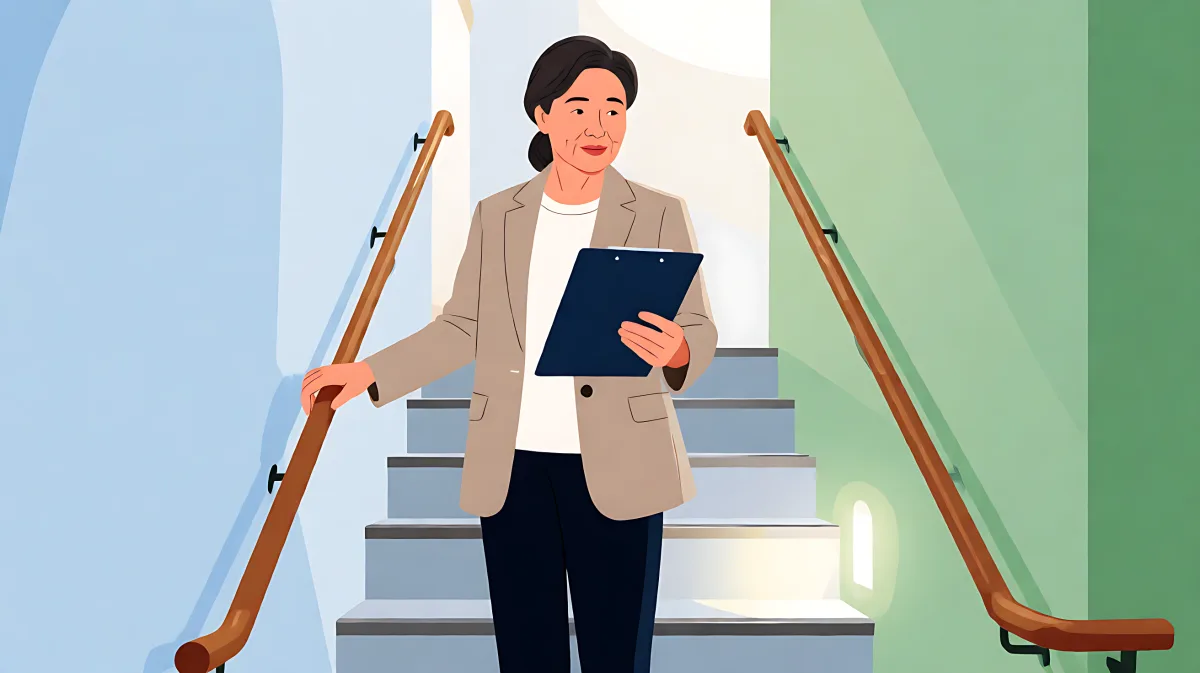
Stairs are high-risk zones due to the potential for severe injury from a fall. The assessment focuses on clarity of path and support structures. Objects such as shoes, books, or papers must be strictly removed from the steps. Steps should be inspected for unevenness or broken treads, which must be repaired immediately. Lighting is a critical component; a light switch and bulb should be present at both the top and bottom of the staircase. If the staircase is dark at night, installing a motion-sensor light or a glowing switch enhances visibility. Handrails must be securely fixed on both sides of the stairs to provide adequate support. If carpet is present on the steps, it must be firmly attached or replaced with non-slip rubber treads to prevent tripping.
What Are the Key Safety Measures for Flooring and Living Areas?
In living rooms and bedrooms, the primary goal is to clear the path of movement. Throw rugs are a common tripping hazard and should be removed or secured with double-sided tape or non-slip backing. Wires and cords from lamps or electronics should be coiled or taped flat against walls to keep them out of the way. Furniture arrangement should allow for clear walking paths without the need to step over objects. Items used frequently should be stored on lower shelves, approximately waist-high, to eliminate the need for stepping on chairs or stools. If a step stool is necessary, it must have a handrail for balance; standard chairs should never be used as steps.
How Can I Improve Safety in Kitchens and Bathrooms?
Wet areas present the highest risk of slips. In the bathroom, the floor of the tub or shower should be treated with a non-slip rubber mat or self-adhesive strips. Grab bars are essential for stability when entering and exiting the tub or when using the toilet. These bars should be professionally installed to ensure they can bear the necessary weight. In the kitchen, ensure that frequently used items are accessible to avoid ladder use. The bed-to-bathroom path should be well-lit, preferably with nightlights that activate automatically in darkness, to reduce the risk of disorientation during nighttime trips to the toilet.
What Role Do Smart Home Devices Play in Fall Prevention?
While traditional checks form the backbone of safety, smart home technology offers additional layers of protection. In 2026, many households are integrating sensor-based systems that can detect falls or unusual inactivity. Motion-sensing lighting is a low-cost, high-impact technology that eliminates the need to fumble for switches in the dark. Automated medication reminders can help prevent falls caused by missed doses or medication confusion. For those who have already screened positive for high risk, consulting a specialist about wearable fall detection devices or in-home monitoring systems can provide peace of mind and rapid response capabilities in the event of an accident.
FAQ
How often should I update my home fall safety checklist?
You should conduct a full home safety audit annually or immediately after any fall incident. Additionally, review your checklist whenever you move to a new residence, make significant home renovations, or notice changes in your mobility or vision.
What is the difference between a fall risk screen and a risk assessment?
A fall risk screen is a brief, initial check using a few key questions to determine if a person is at risk. A risk assessment is a more detailed, multifactorial process that evaluates specific medical, physical, and environmental causes of fall risk, usually performed by a healthcare professional.
Are non-slip rugs effective for preventing falls?
Yes, but with caution. While non-slip backings help, the CDC recommends removing throw rugs entirely wherever possible, as they remain a tripping hazard even when secured. If a rug must be kept, ensure it is short, flat-woven, and has no frayed edges.
Can medication changes affect my risk of falling?
Absolutely. Certain medications for blood pressure, pain, sleep, and mood can cause dizziness, drowsiness, or changes in balance. Always review your medication list with your pharmacist or doctor, as adjusting dosages or switching medications can significantly reduce fall risk.