Seated Yoga Mobility Exercises for Hip and Back Relief
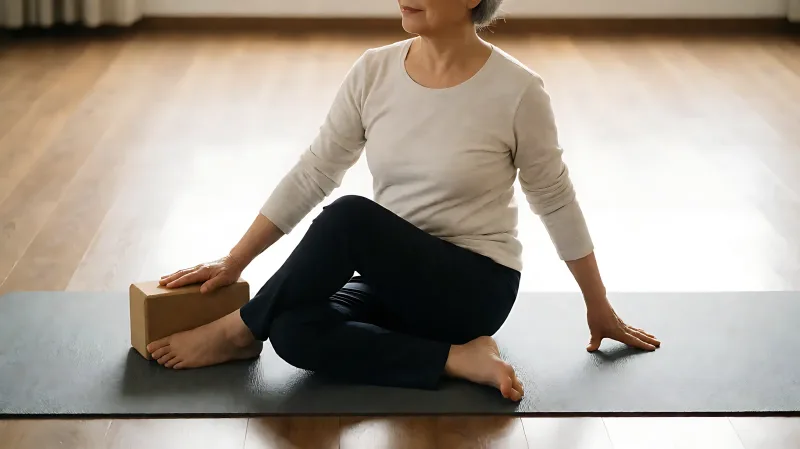
Stiff hips and a tight back can limit your daily life. Learn five simple seated yoga mobility moves that require minimal space and equipment to improve flexibility and joint health.
Seated yoga mobility involves gentle stretches and movements performed while sitting on the floor or in a chair to maintain joint range of motion. These low-impact exercises are ideal for adults looking to improve hip flexibility, reduce lower back tension, and support overall joint health without the strain of standing poses.
Why Is Seated Yoga Good for Joint Health?
As we age, our joints naturally lose some of their natural fluid and elasticity, leading to stiffness. Seated yoga counteracts this by encouraging full-range movements in the hips, shoulders, and spine. Unlike high-intensity cardio, these movements are joint-friendly and safe for beginners. Fitness professionals like Terri Walsh, an ACE certified group fitness instructor and creator of the Active Resistance Training method, note that using tools like foam blocks can deepen the stretch while protecting the knees.
Who Should Try Seated Mobility Workouts?
Seated exercises are perfect for anyone recovering from surgery, seniors with limited mobility, or those with desk jobs that lead to tight hips. Organizations like Senior Care United often recommend low-impact activities for maintaining independence in older adults. You do not need to be an experienced yogi to start; consistency is more important than intensity.
How Do You Perform Seated Hip Rotations?
One of the most effective moves for hip mobility is the seated internal and external rotation. This exercise targets the deep rotator muscles of the hip joint. To perform it safely, follow these steps:
- Sit on a mat with both knees bent and feet flat on the floor.
- Place a foam yoga block between your feet to act as a stabilizing contact point.
- Roll your knees to the right side. Let one knee rest on the block and the other on the floor.
- Rotate your upper body to the right, looking over your shoulder.
- Press your knees into the block and the floor to create an isometric contraction.
- Hold for five to ten seconds, then slowly return to center.
- Repeat on the left side.
Starting with ten repetitions per side is a good benchmark. This movement helps open the waist and loosen the lower back, addressing common complaints of stiffness after long periods of sitting.
What Are the Best Seated Stretches for Seniors?
Senior-focused fitness instructors like Jessica Goodwin often recommend short, 10-minute sessions to keep joints healthy without causing fatigue. For seniors, chair yoga is an excellent alternative if the floor is difficult to access. You can perform seated twists, cat-cow spine movements, and gentle leg lifts while seated in a sturdy chair. The key is to move slowly and breathe deeply. Avoid holding your breath, as this can increase internal pressure.
How Long Should You Hold Each Pose?
For mobility, shorter holds of 20 to 30 seconds are often more effective than long static stretches, especially when combined with active pressing or rotation. This keeps the muscles warm and the joints moving. If you feel pain rather than a gentle stretch, stop immediately. Discomfort is a signal to modify the pose or use props like cushions or blocks.
Can You Do Yoga Without a Mat?
Yes. Many seated exercises can be performed on a carpet, a thick towel, or directly in a chair. A chair provides back support and reduces the effort required to sit up, making it ideal for those with weak core strength. The American Transitions and other senior care networks emphasize that environment and comfort play a huge role in exercise consistency. Choose a space where you will not be interrupted and where you have enough room to extend your legs or arms comfortably.
What Equipment Do You Need?
You need very little. A yoga mat or towel is recommended for comfort. Two foam blocks are highly useful for modifying depth of stretch. A chair with a solid back is essential for chair-based versions. If you have knee issues, a folded blanket under your knees can provide extra cushioning. Keep your setup simple to avoid barriers to entry.
How Often Should You Practice Seated Mobility?
Short daily sessions are more effective than long weekly workouts. Aim for 10 to 15 minutes every day. This can be done in the morning to wake up the body or in the evening to release tension. Consistency helps maintain the synovial fluid in the joints, which lubricates and protects them. Think of it as brushing your teeth for your joints.
What Are the Safety Tips?
Always warm up with gentle neck rolls and shoulder shrugs before starting. Keep your spine tall and avoid slouching. If you have hip replacements, consult with your orthopedic surgeon before starting any new regimen. Movements should be controlled, never ballistic or jerky. Stop if you feel sharp pain in the hips, back, or knees.
Frequently Asked Questions
Is seated yoga safe for people with arthritis?
Generally, yes. Gentle movement helps reduce stiffness associated with arthritis. However, you should avoid movements that cause sharp pain. Use props to support painful joints and keep ranges of motion within a comfortable limit.
How many repetitions should I do per session?
Aim for 3 to 5 repetitions per side for dynamic movements. For static holds, 20 to 30 seconds is sufficient. Quality of movement is more important than quantity. Listen to your body and stop when you feel the stretch peak.
Can I do these exercises while sitting at a desk?
Yes, with modifications. You can perform seated twists and spinal extensions at your desk. However, full hip rotations are difficult in a standard office chair. It is better to stand up and move to a floor or open space for the hip-specific work.
What is the difference between stretching and mobility work?
Stretching usually involves holding a static position to lengthen a muscle. Mobility work involves moving a joint through its full range of motion, often with resistance. Seated yoga mobility combines both elements to improve function and flexibility.