Heart Rate Recovery: The 1-Minute Wait Rule Explained
Understanding the one-minute wait rule helps you gauge cardiovascular fitness. Learn how to calculate heart rate recovery, what a healthy range looks like, and why a slower drop can signal health risks.
Heart rate recovery is the drop in your pulse after stopping exercise, and the one-minute wait rule simply requires you to measure your heartbeat exactly sixty seconds after you stop moving. This specific timing is the industry standard for assessing cardiovascular health. A faster drop indicates better fitness, while a slow decline may signal underlying heart issues.
What is the One-Minute Wait Rule?
The one-minute wait rule is a simple diagnostic tool used by cardiologists and fitness professionals to measure how quickly your heart returns to a resting state after physical exertion. It is not a guideline for how long you must rest between sets, but rather a benchmark for measuring your heart's efficiency. When you stop exercising, your heart rate should fall rapidly. The number of beats per minute it drops in that first full minute is your Heart Rate Recovery (HRR) score.
According to data from Medical News Today, HRR is a prominent indicator of cardiovascular risk. Attenuated, or slow, heart rate recovery is associated with a higher risk of cardiovascular events, decreased insulin secretion, and raised glucose levels. Conversely, a fast recovery is a marker of excellent physical fitness and heart health.
How Do You Calculate Heart Rate Recovery?
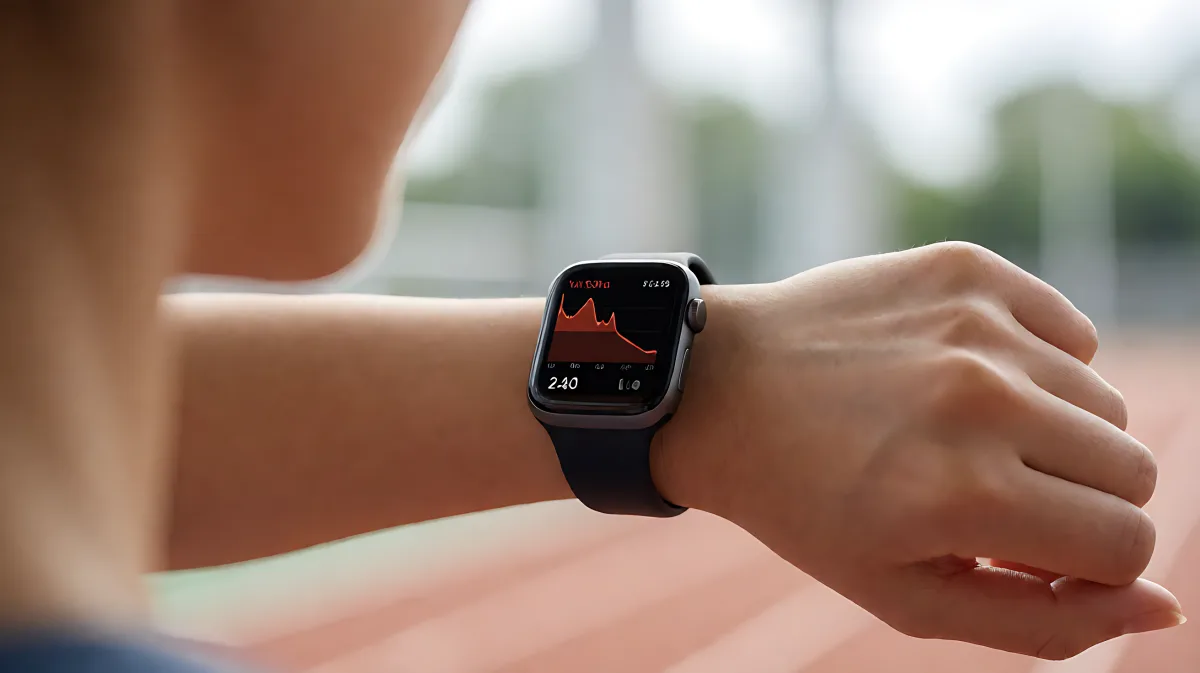
Calculating your HRR is straightforward and can be done at home with a smartwatch or a manual pulse check. The formula is Maximum Heart Rate minus Heart Rate After One Minute.
Here is a step-by-step guide to measuring it accurately:
- Peak Your Heart Rate: Engage in moderate to vigorous cardio (like a two-mile run or a vigorous cycle) for at least five to ten minutes. Ensure you are at your peak intensity just before you stop.
- Record the Peak BPM: The moment you stop all movement, check your heart rate immediately. If using a manual pulse check, count your pulse for 15 seconds and multiply by four. Enter this number as your 'Peak HR'.
- Wait Exactly One Minute: Sit or stand still for 60 seconds. Do not move your arms or engage in conversation.
- Record the Post-1-Minute BPM: At the 60-second mark, check your heart rate again using the same method.
- Subtract: Subtract the post-one-minute heart rate from the peak heart rate. The result is your HRR score.
For example, if your peak heart rate is 175 beats per minute and it drops to 156 beats per minute after resting for sixty seconds, your HRR is 19 beats per minute.
What Is a Good Heart Rate Recovery Score?
There is no single universal number, as HRR varies significantly by age, sex, and fitness level. However, general guidelines from clinical studies suggest the following benchmarks:
- 12 beats per minute or less: This is often considered a warning sign. A drop of fewer than 12 bpm after one minute, particularly in younger individuals, is associated with a higher risk of mortality and cardiovascular disease.
- 14 to 22 beats per minute: This is the median range observed in many healthy populations. A score in this range generally indicates adequate cardiovascular function.
- Above 22 beats per minute: This indicates superior cardiovascular fitness, often seen in elite athletes or highly trained individuals.
It is important to note that HRR naturally decreases with age. As you pass the age of 59, the decline in recovery rate becomes more pronounced. Therefore, a 70-year-old with an HRR of 15 may be in better shape than a 30-year-old with the same score.
Common Mistake: Confusing Rest Duration with Measurement Time
Many fitness enthusiasts assume the 'wait rule' means they should rest for a specific duration to prevent injury, or that they can continue light activity during the minute. In fact, the one-minute rule is a diagnostic measurement, not a recovery prescription. To get an accurate HRR score, you must remain completely still for that first minute after stopping peak exertion. Moving, walking, or fanning yourself will artificially lower your heart rate and skew the data. Furthermore, using a smartwatch that does not have a dedicated heart rate sensor will yield inaccurate results; you must use a reliable optical or electrocardiogram (ECG) source.
How Can You Improve Your Recovery Rate?
Improving HRR is similar to improving your maximum heart rate or VO2 max: it requires consistent aerobic training. The American Heart Association recommends at least 150 minutes of moderate-intensity aerobic activity or 75 minutes of vigorous activity per week. Regular endurance training strengthens the heart muscle, allowing it to pump more blood per beat, which facilitates a quicker drop in heart rate after stress.
In addition to exercise, lifestyle factors play a role. Maintaining a healthy weight, managing stress, and avoiding smoking can all contribute to better autonomic nervous system function, which governs heart rate recovery.
When Should You Worry About a Slow Recovery?
While occasional variability in heart rate is normal, consistently low HRR scores should be discussed with a healthcare provider. If your HRR is consistently below 12 beats per minute, or if you experience dizziness, chest pain, or shortness of breath during the recovery period, seek medical advice immediately. These can be signs of autonomic dysfunction or underlying cardiac issues that require professional assessment.
FAQ
Does the one-minute wait rule apply to all types of cardio?
The one-minute wait rule is most accurate when applied to continuous, moderate-to-vigorous aerobic activities like running, cycling, or swimming. It is less reliable for high-intensity interval training (HIIT) or weightlifting, where heart rate spikes and drops are more erratic due to the stop-start nature of the exercises.
Can I use a manual pulse check for accuracy?
Yes, but it requires practice. To be accurate, you must be able to find your radial or carotid pulse quickly and count it for exactly 15 seconds without losing focus. Smartwatches with continuous heart rate monitoring are generally more convenient and less prone to human counting error.
How often should I test my HRR?
You do not need to test it daily. Once a week or every two weeks is sufficient to track trends over time. Testing it too frequently may lead to unnecessary anxiety or 'overtraining' of the nervous system. Focus on consistent fitness rather than daily HRR checks.