Low Impact Garden Exercises for Better Mobility
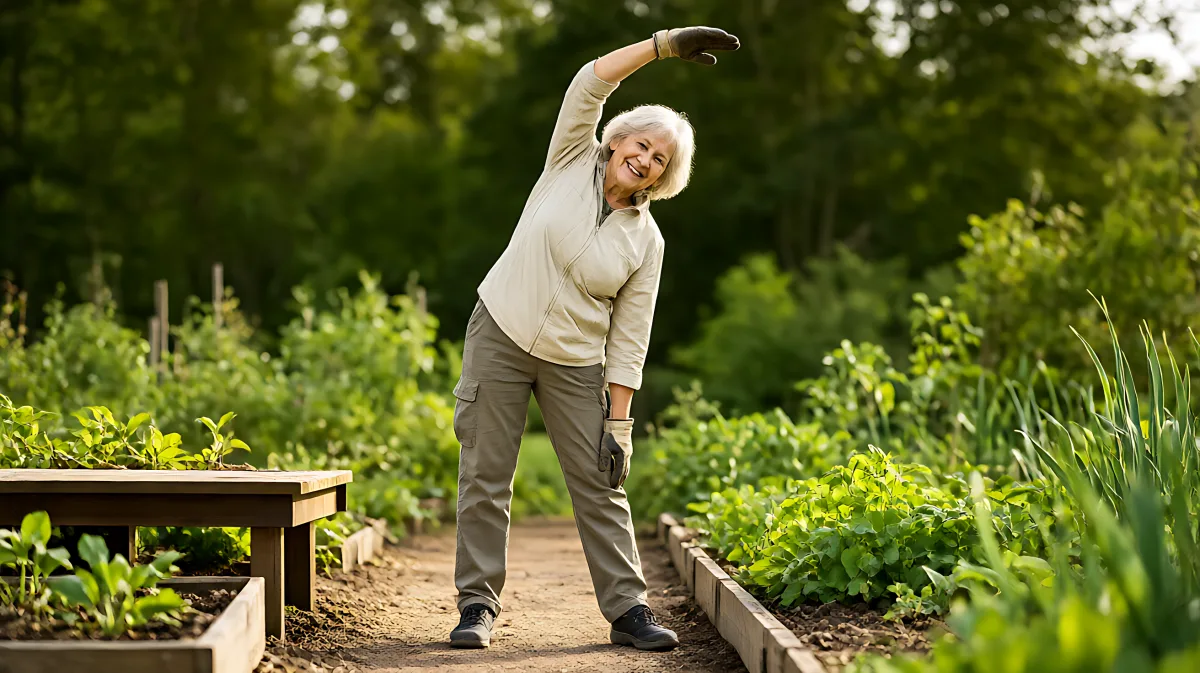
Gardening is more than a hobby; it is a functional workout. Here is how to use low-impact mobility routines to protect your joints while you dig, rake, and plant.
Can gardening serve as a low-impact mobility routine for adults over fifty? Yes. Dr. I-Min Lee, a professor of medicine at Harvard Medical School, confirms that tasks like raking and digging meet the criteria for moderate-intensity exercise. By combining these physical tasks with specific joint-mobilizing drills, you can maintain flexibility, build functional strength, and significantly reduce the risk of common garden-related aches and pains in 2026.
Why Low-Impact Garden Therapy Matters in 2026
As we move through 2026, health professionals emphasize that physical activity must be sustainable to remain beneficial. Many people assume that gardening is purely recreational and does not count toward official fitness targets. However, the U.S. physical activity guidelines recommend at least 150 minutes of moderate-intensity exercise weekly. Harvard Health notes that common yard chores, such as mowing a lawn with a push mower, can reach six metabolic equivalents (METs). One MET is the energy expenditure of sitting quietly, so six METs is vigorous effort, while three to five.9 METs is moderate. Activities like raking leaves or planting seedlings typically fall within this moderate range, making the garden an effective outdoor gym for those seeking low-impact options.
What Is a Metabolic Equivalent (MET)?
A MET is a standard measure used by exercise researchers to gauge exertion based on oxygen consumption. For context, walking and standing while picking flowers is rated at 3.0 METs, while weeding and cultivating a garden with a hoe is rated at 5.0 METs. This data helps individuals calibrate their effort. If you feel breathless but can still hold a conversation, you are likely in the moderate zone recommended by health authorities. If you are working at a steady pace with minimal strain, you are engaging in low-impact therapy that supports heart health without overstressing joints.
Building a Safe Mobility Routine Before You Dig
Stretching is beneficial, but building strength and flexibility simultaneously is crucial when you are bearing loads like soil and tools. Before you step into the garden, incorporate a short mobility sequence to prepare your thoracic spine, wrists, and hips. This proactive approach helps prevent the repetitive strain that often leads to chronic discomfort.
- Thoracic Rotation: From a tabletop position on hands and knees, rotate one hand behind your head while keeping your hips square to the ground. Perform five rotations per side to open up the mid-back, which is critical for twisting movements during weeding or harvesting.
- Wrist Circles: Extend your arm in front of you with the palm flat. Use your other hand to stabilize the forearm and slowly move the wrist in a large circle. This strengthens the wrist flexors and extensors, which are heavily used when gripping tools. Perform five circles in each direction for each arm.
- Hip Internal and External Rotation: Lie on your back with knees bent at 90 degrees. Slowly let both knees fall to one side, then return to center and fall to the other. This movement, often called a figure-four or 90/90 mobility drill, combats stiffness from sitting and prepares the hips for squatting and kneeling tasks.
- Posture Correction at the Wall: Stand with your back against a wall. Slide your arms up the wall while keeping your ribs drawn in. This glides the scapula and improves shoulder range of motion, preventing the hunched posture common in prolonged gardening.
How Should You Lift Heavy Pots or Bags?
Lifting technique is a common misconception area. Many gardeners assume they should bend at the waist to reach the ground. In fact, the Ohio State University Lifelong Gardening Committee advises squatting down, bending at the hips and knees, and pushing the buttocks out. Hold the object close to your body to reduce stress on the lower back. Avoid twisting while holding a load; instead, rotate your whole body by moving your feet. This core principle of 'push versus pull' and 'toes pointing in the direction of movement' is essential for safe mechanics in 2026.
Common Mistakes and How to Correct Them
Many families assume that pain during gardening is a sign of good effort or that pushing through soreness will build resilience. In fact, sharp pain is a signal to stop and modify the movement. A common mistake is reaching for distant plants with an outstretched arm and a rounded back. To correct this, bring the work to a comfortable height. Use raised beds or a potting bench to keep your hands between your hip and shoulder level. This minimizes excessive bending and reduces the load on the lumbar spine. Additionally, when using tools, always use your hands towards your thumb, not your little finger, to maintain a neutral wrist position. Holding a tray of plants should be done on your forearms, not lifted by your fingers, which are not designed for heavy carrying.
What If You Have Arthritis or Limited Mobility?
For those with joint limitations, seated exercises are highly effective. The Ohio State Health and Discovery guide suggests trunk rotations while sitting in a chair with feet on the floor. Clasp your hands in front of you at shoulder level and rotate your upper body to the right, holding for five seconds. Repeat on the left. This maintains spinal mobility without placing weight on the knees. Similarly, neck stretches, such as turning the head to one side for five seconds, can relieve tension accumulated from looking down at seedlings. These low-impact adaptations ensure that garden therapy remains accessible and safe for all mobility levels in 2026.
Integrating Activity into Your Weekly Health Plan
A recent study published in The Lancet Planetary Health highlighted that participants in community gardening groups increased their physical activity by about 42 minutes per week. They also reported improved dietary habits, such as consuming 7% more fiber, and reduced levels of stress and anxiety. These findings suggest that the mental health benefits of garden therapy are just as significant as the physical gains. To maximize these benefits in 2026, structure your garden sessions to hit the 150-minute weekly goal. You can achieve this by breaking tasks into smaller blocks, such as 30 minutes on Monday and Wednesday, and 45 minutes on Saturday. Use this time not just to plant, but to practice the mobility routines outlined above between tasks. This intermittent movement keeps the blood flowing and prevents stiffness.
What Tools Can Help Reduce Strain?
Tool selection matters as much as technique. Opt for long-handled hoes and rakes to reduce the need for deep bending. When carrying water, use a pump sprayer with a comfortable strap rather than holding a heavy can. For planting, use ergonomic trowels with curved handles that keep the wrist in a neutral position. These small adjustments contribute to a low-impact routine that is sustainable over years, not just weeks.
FAQ
Is gardening considered moderate-intensity exercise?
Yes. According to Harvard Health, activities like raking leaves (4.0 METs) and weeding (5.0 METs) fall within the moderate-intensity range of 3.0 to 5.9 METs. This level of exertion is suitable for most adults aiming to meet the 150-minute weekly activity guideline.
How often should I do mobility exercises before gardening?
It is best to perform the warm-up mobility routine on every occasion you engage in physical gardening tasks. A five to ten-minute session focusing on thoracic rotation, wrist circles, and hip mobility is sufficient to prepare the body for the day's workload.
What is the safest way to lift a heavy pot?
Squat down by bending at your hips and knees, keeping your back straight. Hold the pot close to your body. Do not bend at the waist or twist while lifting. If the pot is too heavy, use a cart or wheelbarrow to transport it rather than carrying it manually.
Can I do these exercises if I cannot kneel?
Absolutely. Many of the recommended routines, such as the wall glide for posture and seated trunk rotations, can be performed without kneeling. For hip mobility, you can use the 90/90 stretch lying on your back instead of kneeling on the ground.
Does gardening help with mental health?
Yes. Research indicates that gardeners experience reductions in stress and anxiety. The combination of physical movement, fresh air, and the tangible reward of growing plants contributes to improved mental well-being, making garden therapy a holistic health practice.