How Fast To Walk For Bone Health Past 80
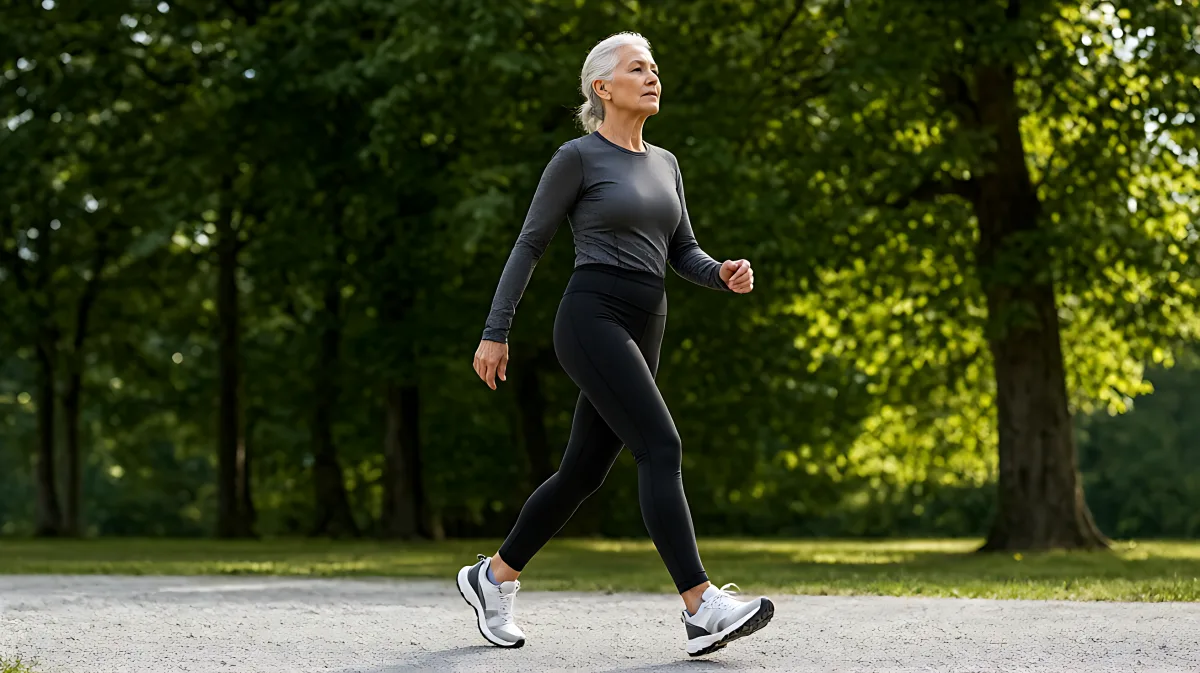
A leisurely stroll does not strengthen bones. Research indicates that women over 80 must walk at a specific brisk pace to trigger bone density gains. Here is the guide to doing it safely.
For women over 80, a leisurely stroll will not protect your bones. To trigger actual bone density gains, you must walk at a brisk pace of at least 2.5 miles per hour (4.0 km/h), with an ideal target range of 3.1 to 3.7 miles per hour (5.0 to 6.0 km/h). Below this threshold, the impact forces on your skeletal system are insufficient to stimulate new bone formation.
Why Pace Matters More Than Distance
Many seniors assume that the key to healthy bones is simply accumulating more steps throughout the day. While total volume has benefits for cardiovascular health, bone remodeling is driven by mechanical loading. When your heel strikes the ground, it creates a small impact force. If that force is too low, your bones interpret it as "low usage" and do not build density. If the force is significantly higher, it signals the body to strengthen the structure.
Research highlighted by Harvard Health notes that when walkers increase their speed from a slow 2 miles per hour to a brisk 3.7 miles per hour, the forces acting on their hip bones increase by approximately 30%. This 30% increase in impact is the critical window where bone strengthening begins. A recent Dutch study established that 2.5 mph is the minimum speed for bone health, while 3.1 to 3.7 mph is the ideal speed for bone strengthening. This is particularly relevant for women over 80, as the risk of hip fractures rises sharply in this demographic. Brisk walking creates forces on the hips similar to hopping or running, but with a much lower risk of injury.
How Do I Know If I Am Walking Fast Enough?
You do not need a fancy GPS watch to track this, though one can be helpful. The most reliable method is counting your cadence, or steps per minute. Aim for a cadence of approximately 120 steps per minute to hit the ideal bone-building speed range. A simple test is to count the number of times your right foot hits the ground during a 10-second interval. If you count 10 right-foot strikes in 10 seconds, you are maintaining the target pace.
For context, 120 steps per minute translates to roughly 3.5 miles per hour. This pace should feel moderately brisk. You should be able to talk, but you will feel slightly out of breath. If you can sing a song comfortably, you are likely moving too slowly for bone density purposes.
Correcting Common Form Mistakes
Many walkers assume that taking longer strides will make them faster. In fact, this is a common misconception that actually slows you down and reduces the beneficial impact on bones. Overstriding, where your foot lands far in front of your body, increases the impact on your joints without efficiently propelling you forward. Instead, focus on shorter, quicker steps.
When you take shorter steps and place your front leg almost directly under your body center of mass, you create a smoother, rolling stride. This allows for a more efficient transfer of weight and generates the consistent, rhythmic impact needed for bone health. Additionally, keep your front leg straight but not locked at the knee to prevent bouncing, which dissipates energy.
Step-by-Step Guide to Safe Brisk Walking
To start walking faster safely, especially if you have been a slow walker, follow this progressive approach. Do not attempt to jump to high speed immediately. Instead, use interval training to build tolerance.
- Warm Up: Start with five minutes of very slow walking to loosen up your joints and ligaments.
- Interval 1: Walk at a comfortable, moderate pace for two minutes. Then, for one minute, increase your speed to the target 3.1–3.7 mph range. Focus on swinging your arms and keeping your posture upright.
- Interval 2: Return to the comfortable pace for two minutes. Repeat the one-minute fast interval. Aim for three to five of these fast intervals per session.
- Cool Down: Finish with five minutes of slow walking to let your heart rate drop gradually.
- Posture Check: During the fast intervals, ensure your shoulders are down and back, not hunched. Look straight ahead, not at your feet. Your core should be engaged to support your spine.
As your fitness improves, you can gradually increase the duration of the fast intervals and reduce the rest periods. Ultimately, the goal is to maintain the brisk pace for the majority of your 20- to 30-minute walk.
How Often Should You Walk?
Frequency matters as much as intensity. Research indicates that breaking up your walking into shorter, more frequent sessions is often more effective for bone health than one long walk. This is because each time you start walking, you create a "burst" of impact that stimulates the bones. Spreading these impacts throughout the day provides multiple signals for bone remodeling.
Health organizations recommend at least 150 minutes of moderate activity per week. For bone density specifically, aim for 21 to 42 minutes of brisk walking every day. If you cannot find one long block of time, three 10-minute brisk walks spread across your day will yield significant benefits. Do not expect to see changes in a DEXA scan immediately; studies suggest it can take six months or more to notice a measurable improvement in bone mineral density. Consistency is key.
Addressing Safety for Women Over 80
At age 80 and above, fall prevention is paramount. While brisk walking is superior for bone density, it must be done safely. Choose well-lit, flat paths free of trip hazards. Wear shoes with good arch support and a low heel. If you have joint pain or arthritis, consider walking on a treadmill or a soft-surface trail to cushion the impact while still maintaining the required speed.
Always consult your healthcare provider before starting a new exercise routine, especially if you have been diagnosed with osteopenia or osteoporosis. They can assess your bone quality and provide personalized guidance on safe exercise parameters.
Frequently Asked Questions
Can I build bone density if I already have osteoporosis?
Yes, but the response may be slower. A meta-analysis published in Osteoporosis International found that exercise interventions generally have a positive effect on bone mineral density in postmenopausal women, regardless of whether they started with normal bone density or osteoporosis. However, the magnitude of improvement may vary, and medical supervision is strongly recommended for those with severe bone loss to prevent fractures.
Is swinging my arms important for bone health?
While arm swinging primarily aids in maintaining rhythm and forward momentum, it does not directly stimulate leg bone density. The key is the impact of your feet on the ground. However, proper arm swing (bending elbows at 85 to 90 degrees) helps you maintain a faster stride without overstriding, which indirectly supports the bone-building pace.
What if I cannot reach 3 miles per hour?
Start where you are and progress gradually. The goal is to reach the 2.5 mph minimum threshold for bone health. Use a pedometer to track your progress. Many people find that after two weeks of regular practice, their natural pace improves. Focus on form and cadence rather than pure speed initially. Consistency in shorter, faster bouts is more important than forcing a high speed that compromises your technique.
Does walking help the spine as much as the hips?
The evidence is mixed. While walking is excellent for the femoral neck and hip area, a 2008 meta-analysis concluded that walking may not provide enough stimulus for the lumbar spine or upper body. For comprehensive bone health, consider adding strengthening exercises for the upper body and core alongside your brisk walking routine.
How long before I will see results?
Bone remodeling is a slow process. Most studies indicate that measurable changes in bone mineral density at the femoral neck typically take six months to one year of consistent, brisk walking. Do not rely on a single DEXA scan after three months to judge success. Focus on maintaining the habit, as the long-term cumulative effect is what protects against fractures.