Post-Stroke Grip Testing: Checkout Benchmarks
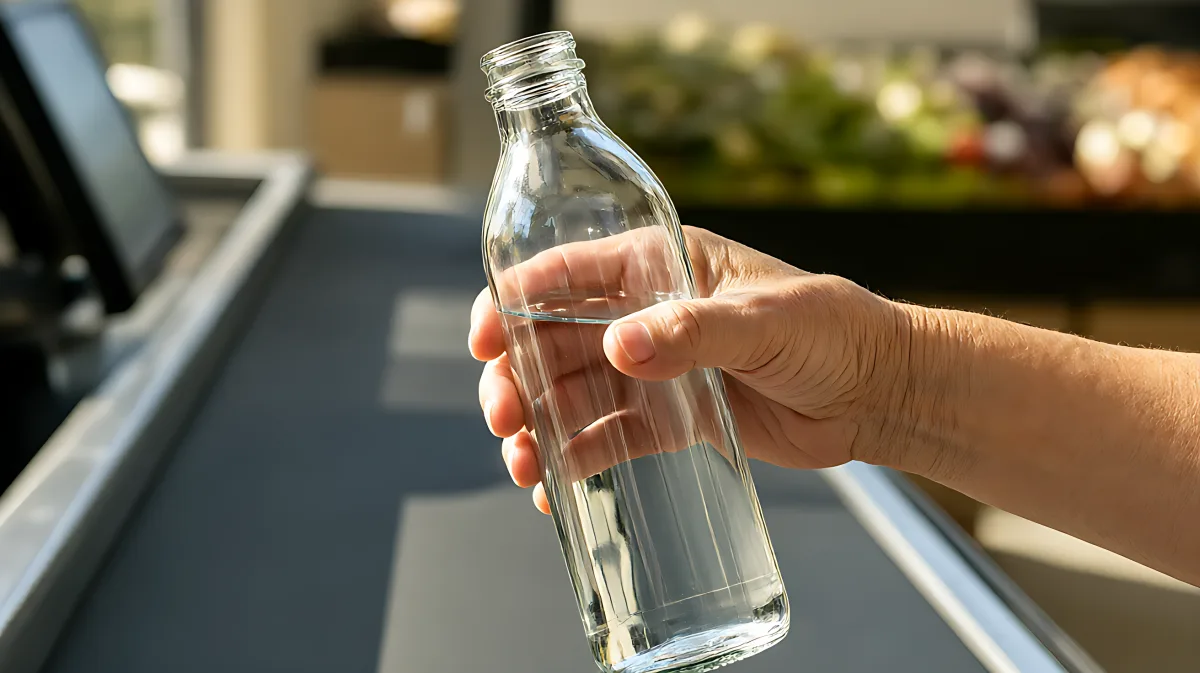
Grip strength recovery after stroke is a critical marker for daily independence. This article explores how simple tasks like scanning items at a grocery checkout can serve as practical benchmarks for hand function, backed by longitudinal data from Norwegian University of Science and Technology research.
Testing grip strength at a grocery checkout is not a standardized medical diagnostic tool, but it is a highly effective functional benchmark for post-stroke recovery. A study from the Norwegian University of Science and Technology found that while maximum grip force in the affected hand improves significantly within the first six months of stroke, the rate of force development remains less than half that of the healthy hand at two to four weeks. Survivors often rely on the non-affected side, missing out on the neural plasticity required for full hand re-education.
Is the Grocery Aisle a Valid Test for Grip Recovery?
Many families assume that if a patient can hold a light object, their hand is safe to use for heavy groceries, but in fact, the dynamic demands of a checkout lane expose specific deficits that static tests miss. The checkout scenario requires rapid force modulation, sustained endurance, and precise finger extension to release items into a bag or onto a belt. These mechanics are often where stroke survivors struggle most, even when they can pass a standard dynamometer test with a relaxed grip.
The concept of using real-world tasks as assessment tools is supported by the principle that functional performance correlates strongly with motor function. However, there is no official "grocery checkout grip standard." Instead, clinicians use such scenarios to identify if a patient can maintain a secure grasp on varied surfaces, such as the slippery texture of a plastic bag handle or the rough surface of a cardboard box. If a survivor drops items or compensates by shifting weight onto the shoulder to support the arm, it indicates that grip sustainability is still below safe functional levels.
What Does Research Say About Grip Progression?
Longitudinal data highlights a distinct recovery curve. Research involving patients with mild to moderate stroke showed that grip force in the affected hand increased considerably during the first year, with the most rapid gains occurring in the first six months. After the six-month mark, progress slows significantly, and motor function stabilizes by the twelve-month follow-up. This implies that the grocery checkout, as a daily task, becomes a reliable mirror for health only after the initial rapid repair phase has begun to plateau.
Furthermore, the data indicates that rate of force development—a crucial element for catching a falling cup or squeezing a trigger quickly—lags far behind raw strength. At two to four weeks post-stroke, this metric was less than half that of the unaffected hand. By six months, the affected hand approached the values of the healthy hand, but the initial deficit is a major factor that makes early, high-quality functional practice vital.
How to Perform Safe Home-Based Grip Checks
While a digital hand dynamometer is the gold standard for objective measurement, home environments can offer practical alternatives. The following checklist helps caregivers and therapists assess readiness for independent grocery runs without risking falls or compensatory strain.
- Baseline Posture: Ensure the patient is seated or standing with the shoulder relaxed and the elbow bent at approximately 90 degrees. The wrist should remain in a neutral, comfortable position to prevent unnecessary trunk compensation.
- Handle Selection: Use objects of varying diameters and textures. A narrow grip may be easier than a wide one, but both are needed for different grocery items. Adjust the handle to permit a comfortable grasp without excessive finger strain.
- Controlled Release: The release phase is often just as vital as the grasp. Observe if the patient can open their fingers deliberately to drop an object into a container. Delayed release suggests spasticity or lack of extensor control.
- Comfort Monitoring: Pause or modify the activity if the patient experiences pain or if the movement becomes increasingly uncontrolled. Fatigue can significantly alter muscle tone and grip quality.
Common Mistakes in Post-Stroke Hand Training
A frequent misconception is that squeezing harder leads to faster recovery. Many survivors focus exclusively on peak force, ignoring the coordination and sensation required to grade that force. A patient may be able to squeeze a therapy ball firmly but struggles to open their fingers to grasp the next item. Treatment must address the individual's specific movement limitations, not just grip force metrics.
Another error is neglecting the affected limb due to its lack of initial function. When a hand is difficult to control, people often rely on the unaffected side. This reduces the opportunities for the brain to re-map motor pathways, limiting functional practice. Rehabilitation should include targeted exercises such as supported hand opening, soft-object grasp and release, and sliding lightweight objects across a table to cultivate coordination during purposeful tabletop motions.
What Equipment Supports Grocery-Ready Hand Function?
For those transitioning from therapy to the checkout lane, adaptive devices can bridge the gap. A digital hand dynamometer allows for consistent, objective tracking of progress over weeks and months. However, for real-world integration, resistance bands and therapy balls provide variable resistance that mimics the feedback of pulling a shopping cart handle or twisting a container lid. It is crucial to consult a rehabilitation professional before using resistance bands, as improper application can aggravate spasticity in the flexor muscles.
The goal is not to chase a higher score at any cost, but to improve the specific movements that matter for daily life. By integrating functional tasks like grocery handling into the rehabilitation routine, survivors can build the endurance and precision needed to maintain independence.
When should I stop using compensatory strategies during grip tests?
Compensation is a natural part of early recovery, but it should be minimized as control improves. If the patient leans the trunk or lifts the shoulder to generate force, the test is no longer measuring grip strength but rather trunk and shoulder stability. Stop relying on these strategies once the patient can maintain a neutral posture and generate force primarily through the forearm and hand.
How long does it take for grip strength to stabilize after a stroke?
While individual variation exists, research suggests that the most significant improvements occur within the first six months. From six to twelve months, progress is slower, and motor function is typically stable by the one-year mark. It is important to remain consistent with practice even after formal rehabilitation ends, as small gains can continue to support long-term independence.
Can a digital dynamometer be used at home safely?
Yes, provided the patient can safely hold and operate the device without pain. Sit upright with a stable support for the forearm and elbow. Ensure the handle is adjusted for a comfortable grasp. If the patient has severe weakness or difficulty releasing objects, a therapist may recommend alternative assessment methods to ensure safety.