The Science of Learning: Humans vs Machines
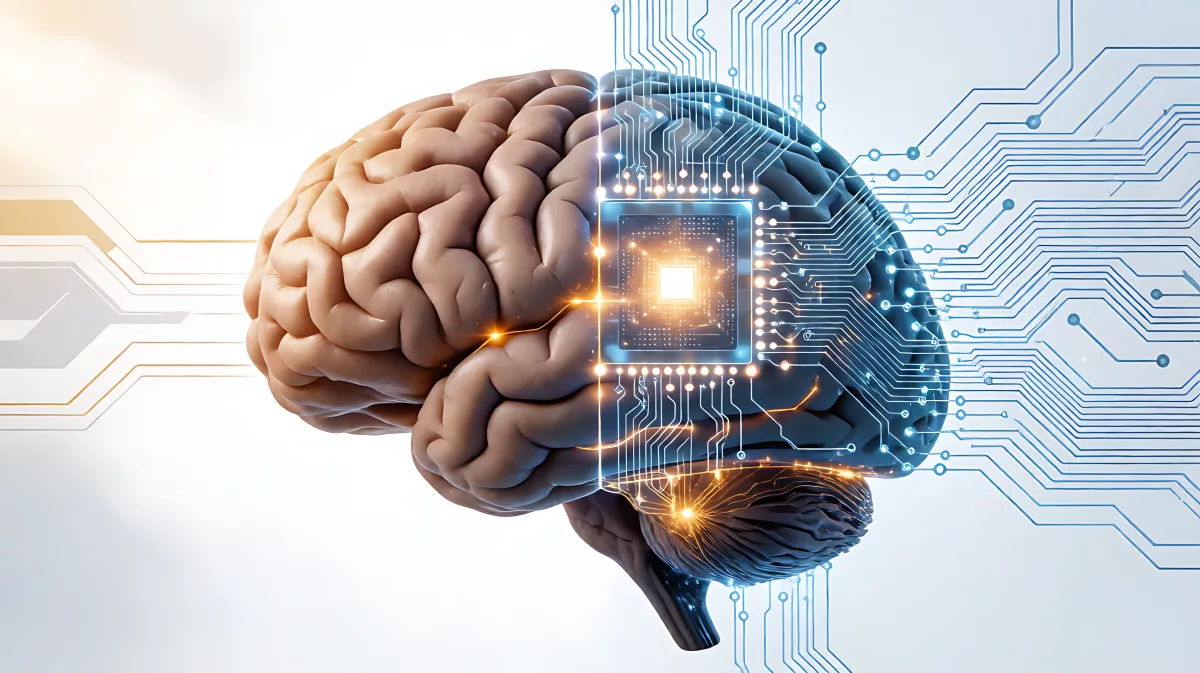
Learning is a continuous process that shapes behavior in humans and algorithms alike. This guide explores the biological roots of education and the digital evolution of data-driven intelligence.
Learning is the continuous process of acquiring new knowledge, skills, and behaviors, whether through biological neural development or algorithmic data analysis. For humans, it begins before birth and lasts a lifetime, while machine learning focuses on statistical algorithms that generalize from data without explicit programming.
What is the biological foundation of human learning?
At its core, learning is the mechanism by which organisms adapt to their environments. In humans, this process involves the acquisition of understanding, skills, values, and preferences. While some learning is immediate, such as the quick reaction to a hot stove, much of what we know accumulates through repeated exposure and experience. Research indicates that the central nervous system is primed for learning very early in development, with evidence suggesting that habituation can occur as soon as 32 weeks into gestation. This prenatal foundation highlights that learning is not just an academic exercise but a biological imperative that begins before the first breath.
The field of cognitive science and neuropsychology has mapped many of these pathways. We learn through various mechanisms, including habituation, where we stop responding to harmless stimuli, and classical conditioning, where we associate one event with another. More complex forms of learning, such as those driven by play, are found in cognitively advanced animals. Lev Vygotsky, a prominent developmental psychologist, argued that play is the first form of language and communication learning, allowing children to understand rules and symbols through interaction. This view positions learning as an active, social process rather than a passive absorption of facts.
How does memory categorize what we learn?
Memory researchers often distinguish between associative and non-associative learning, as well as declarative and procedural memory. Declarative memory, which includes episodic memories of personal experiences and semantic memories of facts, can often be communicated through language. Procedural memory, on the other hand, involves skills like riding a bike or typing, which are procedural and often implicit. Understanding these distinctions helps educators design better curricula, as it allows them to tailor methods that align with how the brain naturally stores information. For instance, rote learning is less effective for complex problem-solving than experiential learning, which builds procedural fluency.
How does machine learning differ from human cognition?
Machine learning is a subset of artificial intelligence that relies on statistical algorithms to learn from data and generalize to unseen scenarios. Unlike human learning, which is driven by biological evolution and sensory experience, machine learning is built on the foundations of statistics and mathematical optimization. The theoretical framework for this field is often described as empirical risk minimization, where algorithms adjust their parameters to reduce errors during the learning process.
There are several approaches to machine learning, each with distinct applications. Supervised learning uses labeled data to train models, while unsupervised learning finds patterns in data without explicit labels. Reinforcement learning, similar to how animals learn through trial and error, allows agents to learn behaviors by receiving rewards or penalties. In recent years, deep learning has allowed neural networks to surpass many previous algorithms, leading to a period where the terms artificial intelligence and machine learning are often used interchangeably, even though they are not synonymous. The dominance of these systems in data processing has shifted the focus from explicit programming to learning from vast datasets.
What role does data play in artificial intelligence?
Data is the fuel for machine learning. The field of data mining focuses on exploratory analysis, particularly through unsupervised learning, to uncover hidden patterns. However, the quality and quantity of data directly impact the performance of these models. As algorithms become more sophisticated, the emphasis has shifted to the structure of the data itself. Models such as support-vector machines, random forests, and Bayesian networks offer different ways to interpret and classify information. The challenge for engineers is not just creating the model, but curating the data that trains it, ensuring it is representative and free from significant bias.
How are digital tools transforming educational experiences?
Technology companies like Google have integrated learning into their core mission, aiming to make information universally accessible and useful. Billions of people use these platforms not just for search, but with the intent to learn. The introduction of artificial intelligence into educational tools has transformed how teachers and students interact with content. For educators, AI can provide immediate feedback, improve accessibility, and offer personalized learning pathways. For students, these tools help fuel curiosity and prepare them for future career opportunities.
The concept of lifelong learning has been expanded by digital platforms that offer resources for professional development and personal growth. Programs focused on coding and artificial intelligence skills allow individuals to upskill quickly in a changing job market. These platforms also include family-oriented tools that help younger users explore the internet safely. The goal is to augment human curiosity with machine efficiency, creating a hybrid learning environment where digital tools handle routine tasks and humans focus on creative and critical thinking.
What are the limitations of algorithmic learning?
Despite their power, machine learning systems have significant limitations. Overfitting occurs when a model performs well on training data but fails to generalize to new data. There are also concerns regarding explainability; complex neural networks often act as black boxes, making it difficult to understand how a specific decision was made. Furthermore, the issue of model collapse, where models trained on their own outputs degrade over time, highlights the need for diverse, high-quality external data sources. Addressing these challenges is crucial for maintaining trust in AI systems, particularly in high-stakes fields like healthcare and finance.
Frequently Asked Questions
Can machines truly understand concepts like humans do?
Machines can recognize patterns and make predictions based on data, but they do not possess consciousness or intuition. Human learning is deeply connected to semiosis, the process of creating meaning through signs and symbols, which allows for deep understanding of context and culture. Machine learning, while powerful, lacks this symbolic reasoning and relies on statistical probability rather than true comprehension.
What is the difference between declarative and procedural memory?
Declarative memory refers to facts and events that can be consciously recalled, such as remembering the capital of France or your last birthday. Procedural memory involves skills and habits that are performed automatically, like riding a bicycle or playing a piano chord. While declarative memory is often verbal, procedural memory is motor-based and becomes second nature with practice.
How does reinforcement learning apply to real-world problems?
Reinforcement learning is widely used in robotics, game development, and autonomous driving. In these scenarios, an agent interacts with an environment, takes actions, and receives rewards or penalties. Over time, the agent learns the optimal strategy to maximize cumulative reward. This approach has been instrumental in training systems that can navigate complex, dynamic environments without human intervention.
Why is continuous learning important in the modern workforce?
The rapid pace of technological change means that job skills become outdated quickly. Continuous learning allows professionals to adapt to new tools, methodologies, and industry standards. Employers increasingly value workers who can demonstrate adaptability and a commitment to upskilling, making lifelong education a critical component of career resilience in the 2020s and beyond.
Are there ethical concerns regarding AI in education?
Yes, ethical concerns include data privacy, algorithmic bias, and the potential for over-reliance on automated systems. It is essential to ensure that AI tools are used to enhance, not replace, human interaction and critical thinking. Educators and institutions must establish clear guidelines for the use of AI to protect student welfare and maintain academic integrity.