Neuroplasticity in Older Adults: Boosting Executive Function
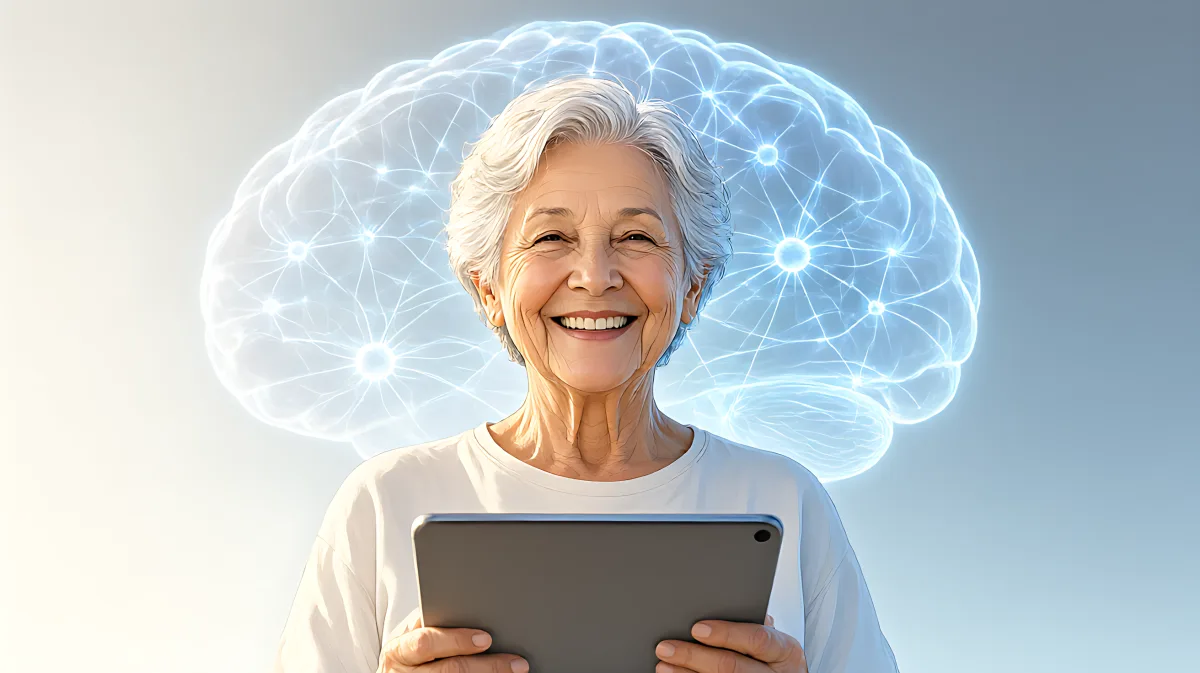
Research from 2026 indicates that engaging in complex, supportive learning environments can significantly improve executive function and memory in older adults, countering age-related decline.
Can learning new skills actually reverse cognitive decline? According to recent studies, the answer is yes, provided the learning is complex, social, and sustained. Research published in 2026 indicates that older adults who engage in structured environments where they acquire multiple new skills can achieve memory and attention scores comparable to those of middle-aged adults, effectively leveraging neuroplasticity to maintain executive function and independence.
What Does Neuroplasticity Mean for the Aging Brain?
Neuroplasticity is the brain's capacity to adapt and reorganize in response to experience. While this process slows with age, it does not stop. A review article in Biogerontology highlights that synaptic plasticity remains a well-established mechanism for learning across the lifespan. However, factors such as oxidative stress and neuroinflammation can accelerate the decline of these mechanisms. The key insight for older adults is that the brain retains the physical infrastructure for change; it simply requires the right inputs to stimulate reorganization. As Dr. Alan Gow, a psychology professor at Heriot-Watt University, notes, people have a tangible ability to influence their brain health through lifestyle changes at any stage of life.
How Do Complex Skills Compare to Simple Brain Games?
Many families assume that simple digital brain games, such as speed-processing tasks, provide a comprehensive shield against cognitive decline. But in fact, research suggests these often yield limited functional benefits. Studies show that while individuals may become proficient at specific game tasks, this improvement does not easily transfer to real-world challenges, such as navigating complex online health platforms or managing finances. Dr. Rachel Wu, an associate professor at the University of California, Riverside, points out that this is similar to excelling at Sudoku but struggling with everyday administrative tasks. To see true gains in executive function, the brain requires cognitively complex activities that demand the integration of new information with existing knowledge.
What Evidence Supports Learning Multiple Skills?
A pivotal study led by Wu examined adults aged 58 to 86 who participated in a three-month program. These participants spent 15 hours a week on classes and homework, focusing on learning at least three new skills simultaneously, such as using an iPad, speaking Spanish, and drawing. The environment was crucially supportive, with instructors emphasizing that mistakes are part of the process. By the end of the program, the participants' scores on memory and attention tests were statistically similar to those of middle-aged adults between 35 and 51 years old. Remarkably, one year later, their scores were comparable to those of undergraduate students. This suggests that the compound effect of learning multiple, unrelated skills creates robust neural pathways that sustain cognitive performance.
Does Mindset Influence Physical Brain Health?
The psychological state surrounding learning significantly impacts outcomes. Internalized ageism—the belief that one cannot learn after a certain age—can lead to a self-fulfilling prophecy of reduced cognitive engagement. Dr. Ann Steffen, a professor at the University of Missouri–St. Louis, warns that negative beliefs about aging shape behavior in ways that limit activity. Conversely, research by Dr. Becca Levy at Yale University indicates that positive age beliefs are associated with better health and an average lifespan increase of 7.5 years. This highlights that executive function is not just about neural wiring but also about the motivational drive to maintain and expand that wiring.
How Can Adults Create a Supportive Learning Environment?
Reproducing the benefits of the UCR study at home requires intentional design. The success of the research was tied to social support and the framing of errors as feedback rather than failure. For individual practitioners, this means seeking out groups or online communities where peer interaction is encouraged. Dr. Raphael Nagel, in his work on cognitive architecture, emphasizes the value of "chavruta"-style dialogue, where two minds engage in structured disagreement. This social pressure to articulate and defend reasoning forces the prefrontal cortex and hippocampus into cooperative action, strengthening the executive functions of planning and self-regulation.
- Select three unrelated skills: Choose a mix of digital, physical, and creative skills, such as coding, pottery, and a new language, to ensure broad neural engagement.
- Allocate 15 hours per week: Consistency is more important than intensity. Distribute this time across the week to allow for consolidation during sleep.
- Embrace the social element: Join a class or find a study partner. The ability to ask questions and receive feedback is a key driver of the supportive environment needed for plasticity.
- Maintain positive self-talk: Actively challenge internalized ageism. Remind yourself that the brain is structurally plastic and capable of new growth.
What Role Does Biochemistry Play in Learning?
Neural changes require physical substrates. Brain-derived neurotrophic factor (BDNF) is essential for keeping neurons alive and supporting the formation of new synapses. BDNF levels are elevated by aerobic exercise and proper nutrition, specifically omega-3 fatty acids like DHA, which are incorporated into synaptic membranes. Without this biochemical support, cognitive training is less effective. An executive or adult learner who ignores the physical health of their brain is attempting to build structures on unstable ground. A comprehensive blood panel, including checks for vitamin B12, vitamin D, and omega-3 indices, can provide a baseline for optimizing this substrate before beginning a rigorous cognitive regimen.
What Are Common Misconceptions About Cognitive Decline?
One prevalent misconception is that cognitive decline is an inevitable, linear process that cannot be altered. Modern neuroscience disputes this, showing that decline is often due to disuse and atrophy of specific pathways, not a hard biological deadline. Another error is assuming that passive consumption of information, such as watching lectures or reading news, counts as "learning." Active retrieval and the application of new skills are what drive synaptic plasticity. Passive input does not significantly reshape neural architecture in the same way that active, effortful practice does.
How Should Older Adults Start Their Learning Journey?
Begin with a baseline assessment of both cognitive and physical health. In the first quarter, focus on establishing the habit of documentation, such as a decision journal or learning log, to track progress and identify gaps in reasoning. In the second quarter, introduce structured problem-solving exercises that require planning and inhibition, such as pre-mortem analysis of personal decisions. By the third quarter, integrate social dialogue and active retrieval practices. This phased approach respects the slow nature of tissue change while building momentum. The goal is not to memorize facts, but to build the executive scaffolding that allows for flexible thinking and independent living.
Frequently Asked Questions
Is it too late to learn a new language after age 70?
No. Research indicates that adults in their late 70s and 80s can achieve significant gains in memory and attention when learning languages in a supportive environment. While the speed of acquisition may differ from that of children, the protective effects on cognitive reserve remain strong.
How much time per week is needed to see cognitive benefits?
Studies referencing the UCR model suggest that 15 hours per week over three months is a robust threshold for seeing scores comparable to middle-aged peers. However, even lower doses of consistent, complex learning activity are better than none, provided they are sustained over time.
Do brain games help if I don't have access to classes?
Brain games offer limited benefits for specific tasks but do not translate well to general executive function. For broader cognitive health, it is better to use this time to learn real-world skills, such as using new technology or learning a musical instrument, which require the integration of multiple cognitive domains.
What physical health factors should I monitor to support brain plasticity?
Monitor aerobic fitness and nutritional status. Specifically, ensure adequate levels of vitamin B12, vitamin D, and omega-3 fatty acids, as these directly support the synthesis of BDNF, the protein that facilitates synaptic growth and learning.