Peer Teaching for Brain Health and Social Connection
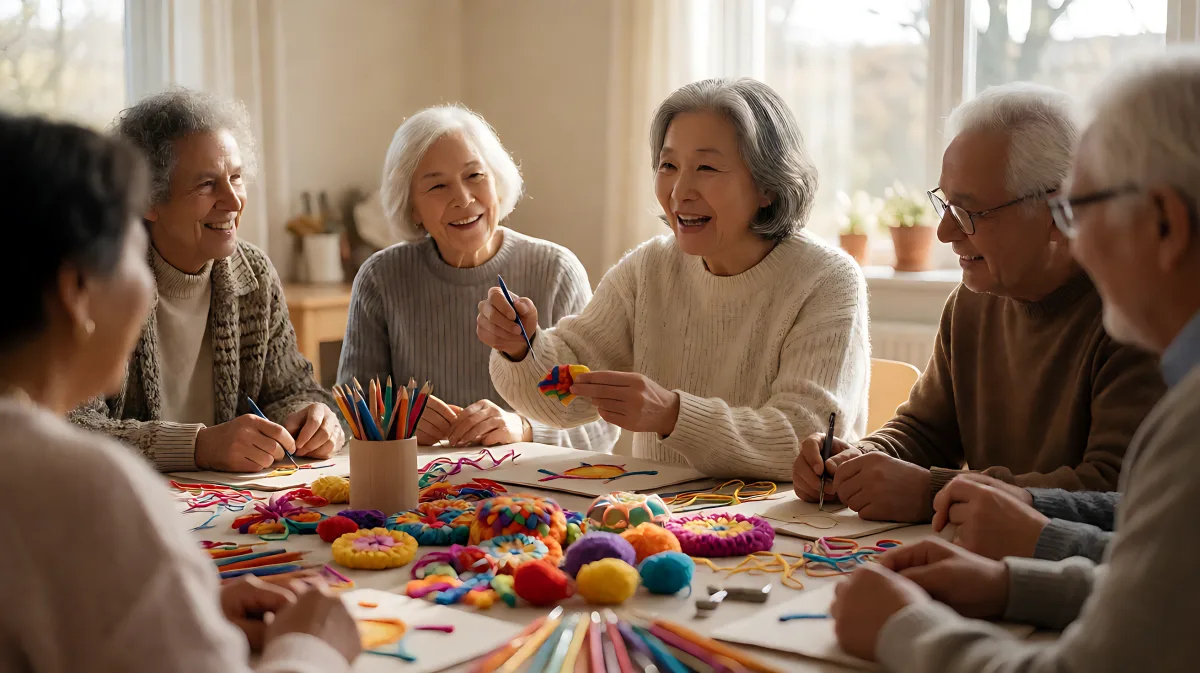
Recent research highlights that teaching peers can significantly improve cognitive scores and reduce loneliness in older adults. This guide outlines how to implement supportive learning environments that protect brain health.
Peer teaching can effectively reverse cognitive decline and combat social isolation by leveraging the brain's natural plasticity. By engaging in supportive, multi-skill learning environments where individuals teach and learn from peers, older adults can achieve cognitive performance levels similar to those of middle-aged adults while significantly reducing feelings of loneliness.
Why Peer Teaching Protects the Aging Brain?
Neuroplasticity, the brain's ability to reorganize itself by forming new neural connections, does not stop after childhood. In fact, recent studies suggest that this adaptability remains a powerful tool for maintaining mental sharpness in later life. Rachel Wu, an associate professor of psychology at the University of California, Riverside, has highlighted that adults who engage in complex, real-life learning tasks can significantly boost their cognitive abilities. Unlike passive entertainment, active learning forces the brain to build new pathways, helping individuals adapt to changes in technology and daily life.
The social component of this process is just as critical. Thomas Cudjoe, a professor at Johns Hopkins University, notes that social isolation affects approximately 25% of adults aged 65 and older. He explains that isolation differs from loneliness; isolation is the objective lack of social contact, while loneliness is the subjective distress of that lack. Combining these two factors creates a significant risk for cognitive decline. Peer teaching addresses both by providing structured social interaction and mental challenge simultaneously.
What Does the Data Say About Skills Versus Brain Games?
A common misconception is that playing generic brain training games protects against dementia. Many families assume that mastering Sudoku or processing speed puzzles improves daily life, but in fact, these tasks often only make users better at those specific games without transferring to real-world independence. Research led by Wu showed that learning practical skills, such as using a tablet, speaking a foreign language, or drawing, yields far superior results. In one study, participants aged 58 to 86 who spent 15 hours a week over three months learning these skills achieved memory and attention scores comparable to adults between the ages of 35 and 51. One year later, their scores matched those of undergraduate students.
Furthermore, positive age beliefs play a crucial role. Becca Levy, a psychologist at Yale University, found that individuals with positive views on aging have an average lifespan increase of 7.5 years compared to those with negative stereotypes. When older adults believe they can learn, they are more motivated to engage in the supportive environments that drive neuroplasticity.
How Does Tactile Learning Enhance Cognitive Resilience?
Not all learning happens through digital screens or verbal instruction. Tactile activities, such as knitting, sculpting, or painting, stimulate the motor cortex and engage multiple senses. These hands-on tasks require fine motor coordination, spatial awareness, and problem-solving, which reinforce neural pathways associated with memory and planning. When these activities are done in a group setting, they become a form of peer teaching where participants exchange techniques and feedback. The American Psychological Association emphasizes that innovative, research-backed interventions that combine physical activity with social learning can prolong cognitive health. The multisensory nature of crafting provides a mental break from daily distractions, promoting a state of mindfulness that reduces stress and improves focus.
What Steps Can Communities Take to Foster Connection?
Organizing effective peer teaching programs requires more than just putting people in a room. The Centers for Disease Control and Prevention (CDC) outlines several promising approaches to promote social connection. Programs should blend health education with skill development. For example, community-based exercise programs like Tai Chi or walk groups can incorporate social skills training. Technology also plays a role; video messaging and virtual programming from local institutions can help connect isolated individuals who cannot travel. To create a successful environment, you can follow this checklist:
- Identify practical skills: Focus on real-world tasks like digital literacy, language learning, or arts and crafts rather than abstract puzzles.
- Create a supportive atmosphere: Ensure instructors and peers explicitly convey that mistakes are a normal part of learning, reducing the fear of failure.
- Combine physical and mental engagement: Pair physical activities, such as walking or gentle movement, with educational discussions to boost both heart health and social bonding.
- Leverage technology inclusively: Use simple tools like smartphones or video calls to maintain contact between sessions, ensuring no one falls through the cracks between in-person meetings.
- Measure social isolation: Regularly assess participants' levels of connection to tailor support, recognizing that some may need help with communication skills while others need a structured routine.
FAQs About Peer Teaching and Aging
How much time is needed to see cognitive benefits?
Research indicates that a commitment of approximately 15 hours per week over a three-month period is effective for significant cognitive improvement. However, even shorter, consistent sessions can help maintain neuroplasticity and social connection over time.
Is it too late for older adults to learn new skills?
No. The brain retains its plasticity throughout life. Studies show that adults in their late 80s can still learn new skills and achieve cognitive scores similar to middle-aged peers when provided with a supportive, structured learning environment.
What is the difference between social isolation and loneliness?
Social isolation is the objective state of having few social contacts or roles. Loneliness is the subjective feeling of distress when there is a mismatch between desired and actual social connections. One can be isolated without feeling lonely, or lonely while surrounded by people, but peer teaching addresses both by creating meaningful, frequent interactions.
Do brain training games offer the same benefits as peer teaching?
Generally, no. While brain games may improve performance on that specific task, they do not typically translate to real-world functional gains like managing finances or using new technology. Peer teaching focuses on practical, transferable skills and provides the social interaction necessary for comprehensive brain health.