Aphasia Friendly Card Games: Expert Tips for Families
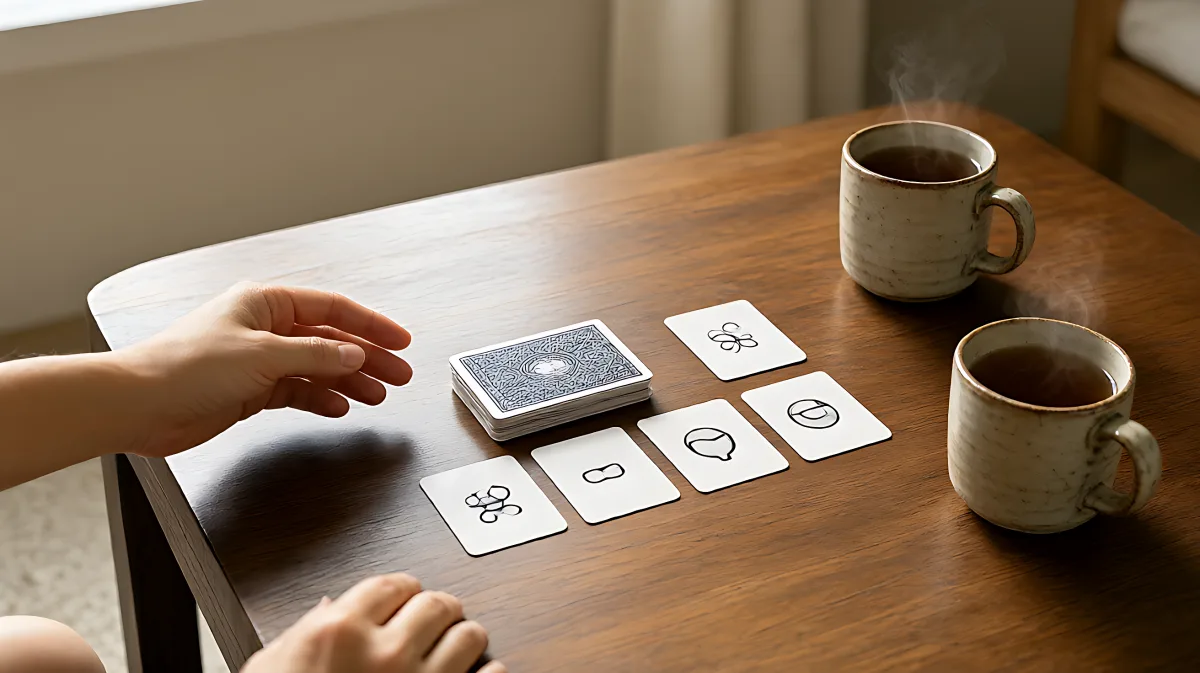
Playing cards can rebuild connection for adults with aphasia. This guide outlines respectful rules, visual aids, and practical setups recommended by speech pathology experts.
Adults with aphasia can enjoy card games by using simplified rules, visual prompts, and a slow pace. According to the Aphasia Recovery Connection, which supports over 9,000 members globally, the goal is not to test language skills but to create low-pressure social connection. By adapting traditional decks with large-print instructions and picture-based responses, families can turn game night into a supportive moment of interaction rather than a source of frustration.
Why Standard Card Games Often Feel Difficult
Many families assume that a person with aphasia simply needs to try harder to recall words or follow complex rules. In fact, the challenge is often environmental. A standard game like Go Fish or UNO relies on rapid verbal exchanges, turn-taking speed, and memory of hidden cards. For someone with aphasia, which affects speaking, comprehension, reading, or writing due to stroke or other acquired brain injuries, this speed can feel overwhelming. The University of Pittsburgh Language Rehabilitation and Cognition Lab notes that extra-linguistic factors, such as noise levels and time pressure, significantly impact performance. When a game requires quick spoken answers, the cognitive load increases, leading to anxiety and withdrawal rather than participation.
What Makes a Game Aphasia-Friendly?
A successful game for an adult with aphasia is defined by how it is played, not the box it comes in. The best options are flexible, easy to stop, and allow multiple ways to respond. You do not need expensive special equipment. Standard playing cards can be adapted by focusing on choice, pointing, and visual matching. The key is to ensure the game respects the adult’s dignity. It should feel like a relaxed shared moment, not a school lesson. If a game requires a long explanation or fast reactions, it may become frustrating. Instead, look for activities that can be understood by watching one example. As of 2025, experts recommend keeping the pace calm and using short sentences to reduce cognitive strain.
- Allow multiple response modes: The player should be able to point, gesture, write, draw, or use simple yes/no answers.
- Remove time pressure: There are no timers. The person takes as long as they need to look at the card or make a decision.
- Use visual aids: Picture cards or large-print labels help bridge the gap between spoken words and understanding.
- Keep it stoppable: The game must be easy to pause or end without awkwardness, as some days are better for communication than others.
How to Set Up the Table for Success
The environment plays a crucial role in how well a card game works. A quiet room with good lighting makes it easier to focus. Turn off background television or loud music, as these add to the comprehension load. Sit at a small table so that faces and cards are clearly visible. Only one person should speak at a time. This prevents the person with aphasia from having to process multiple voices simultaneously. When handing over the deck or showing a card, use large, clear visuals. If you are using a standard deck, you might place a single card face up and ask a simple binary question. For example, instead of asking 'Do you have a queen?', you might point to the card and ask 'Queen?' with a nod or shake option available. This transforms a complex verbal interaction into a simple visual check.
Step-by-Step: Playing a Modified Match Game
Matching pairs is one of the most effective card activities for building confidence. It does not rely on vocabulary. Here is a practical checklist to set up and play a matching game using standard cards or printed images:
- Prepare the cards: Take out a small number of cards, such as ten or twelve. Ensure they are large enough to read or identify easily. You can use face cards (Kings, Queens, Jacks) as simple symbols.
- Face them down: Place the cards face down in a small grid on the table. This creates a visual board without requiring the player to read them all at once.
- Demonstrate the move: Flip over one card, then a second. If they match, keep them open. If they do not, flip them back. Do not explain the rule; just show it.
- Invite the player to try: Let them flip two cards. If they match, celebrate the win. If not, gently flip them back and wait. Do not speak for them.
- Use pointing: If the player hesitates, you can point to a card to indicate their turn. Allow them to point to a card to select it.
- Keep the duration short: Stop after ten or fifteen minutes, or when the energy dips. Ending on a positive, successful moment is important for morale.
Common Mistakes to Avoid During Play
A frequent misconception is that the partner should quickly supply the word if the player with aphasia stalls. Many families assume that filling in the blank helps, but in fact, it can interrupt the communication process and make the player feel unable to participate. Instead, give time. Wait for a response, whether it is a word, a gesture, or a nod. Avoid asking 'Why' questions, which are cognitively expensive. Stick to 'What' or 'Where' questions with visual support. Another mistake is insisting on verbal responses only. If the person cannot say 'Ace,' they can point to it. If they cannot identify a suit, they can match by color. The goal is connection, not correction. As the Aphasia Games for Health initiative, a collaboration between the University of Pittsburgh and Carnegie Mellon University, emphasizes, the aim is to break through social isolation by making play accessible and joyful.
Incorporating Personal Interests
Generic cards can feel abstract. Using cards with meaningful images makes the game more personal. You can print photos of family members, favorite foods, or travel destinations on cardstock. Cut them into a deck. Now the matching game becomes a memory game. For instance, you might ask the player to find the photo of their home garden. This engages personal history and emotion. You can also use 'Would You Rather' style cards with two choices, such as 'Garden' and 'Beach.' The player points to their preference. This leads to real-life conversation or action, like moving outside to the garden. This approach turns a simple card game into a bridge for daily life decision-making.
FAQ
Is it okay to stop the game if the person gets frustrated?
Yes, absolutely. The game should be easy to stop. Some days communication is easier than others. If the mood shifts or frustration builds, it is better to pause or end the session. A relaxed game is a shared moment, not a performance. Leaving on a positive note is more beneficial than pushing through difficulty.
Do I need special aphasia cards or can I use a normal deck?
You can use a normal deck. The key is in the playing style. Use fewer cards, larger fonts if possible, and focus on matching or choosing rather than complex rules. You can also print simple picture cards from online resources or magazine clippings to create a personalized deck that is easier to understand.
What if the person cannot say any words?
Speech is not required for these games. Use pointing, nodding, shaking head, gesturing, writing, or drawing to communicate. The goal is interaction. If they point to a card, acknowledge it by moving it to their side of the table. This validates their choice and maintains the flow of the game without pressure.
How long should a session last?
Keep sessions short, typically between 10 and 20 minutes. Attention span and energy levels vary. It is better to end the game when it is still fun than to force a longer duration. You can always resume later or on another day. Consistency is helpful, but flexibility is essential.