Micro-Mobility Safety: Indoor Navigation Habits
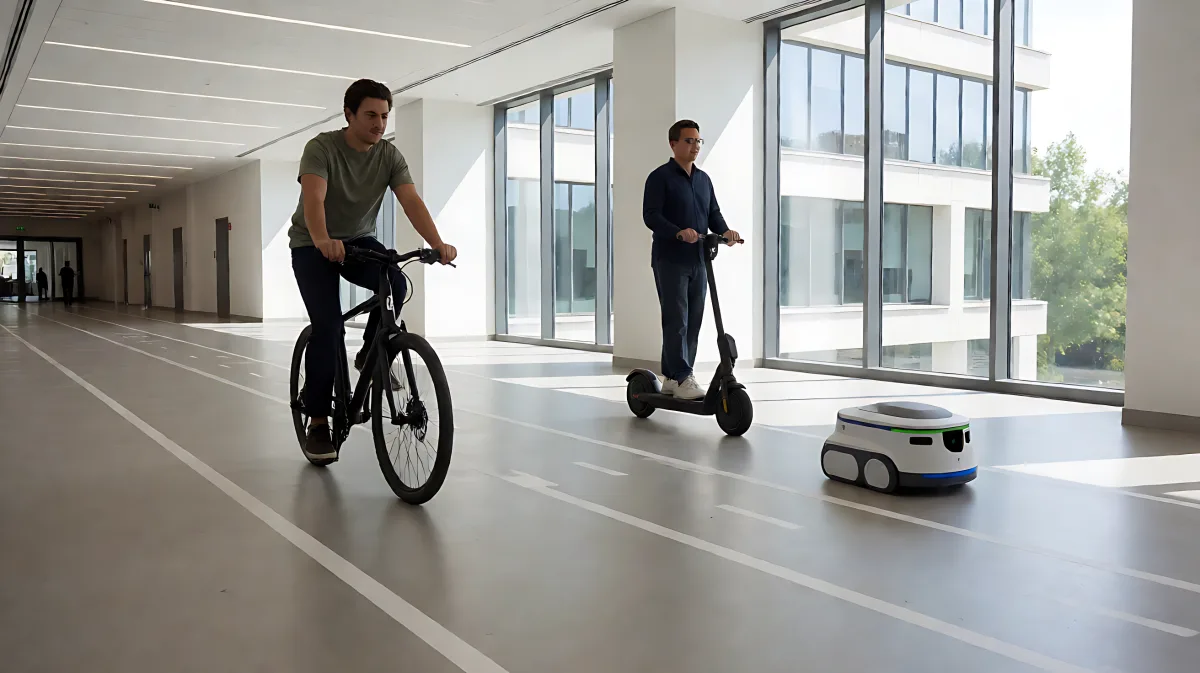
Integrating personal micro-mobility with automated indoor systems requires specific safety habits. This guide outlines how to use data-driven design principles and protective gear to navigate shared spaces safely.
Safe indoor micro-mobility navigation relies on combining personal protective habits with data-driven infrastructure. Riders must wear Department of Transportation-certified helmets and use physical lane markers to separate themselves from pedestrians and autonomous robots. By respecting designated paths and using real-time awareness, individuals can significantly reduce the risk of collision and injury in shared indoor environments.
Why indoor micro-mobility requires new safety habits
As cities and large campuses integrate e-scooters and electric bikes into their infrastructure, the traditional rules of the road often fail to apply inside buildings. Many riders assume that staying on the sidewalk or main corridor is safe, but in fact, indoor spaces are highly dynamic. They contain unpredictable variables such as cleaning staff, autonomous delivery robots, and children playing in temporary zones. Research from the University of Alabama at Birmingham indicates that accidents involving these vehicles often result in the rider being catapulted forward, causing severe facial and dental trauma. To mitigate this, safety is no longer just about speed; it is about spatial awareness and environmental compatibility.
The trend of mixing human riders with autonomous systems is accelerating. Researchers at the Politecnico di Marche have developed multi-layer control systems for indoor mobile robots that use semantic information and dynamic barriers to avoid humans. This technology relies on the assumption that humans will stay within designated semantic zones. If a rider ignores these implied boundaries, the robot’s safety layers may not react fast enough. Therefore, a key habit for 2026 is understanding that your path is monitored by sensors, and you must act predictably.
What protective gear is medically required?
Protective equipment is the first line of defense against the high-speed impacts common in micro-mobility. While a standard bicycle helmet is better than nothing, trauma specialists recommend higher specifications for powered devices. A Department of Transportation-certified full-face helmet provides superior coverage for the face and jaw, which are primary impact points in scooter crashes. Furthermore, knee and elbow pads are medically proven to reduce the severity of abrasions and fractures when a rider loses balance on smooth indoor surfaces.
- Head Protection: Use a DOT-certified full-face helmet for all powered devices (e-scooters, e-bikes).
- Joint Guards: Wear elbow and knee pads to protect against pavement impact.
- Visibility: Use reflective clothing or lights when moving through low-light indoor corridors or parking structures.
It is a common misconception that a helmet prevents all head injuries. In reality, a helmet disperses force, but at high speeds, a traumatic brain injury can still occur. This highlights the need for behavioral habits: riding at a safe speed and stopping at intersection signs, even if no one is watching.
How can you use data to choose safe routes?
Modern urban planning uses GPS trip logs and crash reports to design better lanes, and individual riders can apply similar logic. Data from shared mobility services shows that protected lanes can cut cycling injuries by 75% at intersections. When navigating a new building or campus, look for physical infrastructure—such as painted lanes, flexible posts, or dedicated paths—rather than relying on your own judgment. If a route lacks physical separation from car traffic or heavy pedestrian flow, it is a high-risk zone.
For riders in the United States and the United Kingdom, checking local municipal dashboards is a useful habit. Cities like New York and Santa Monica have used near-miss data to adjust lane designs. If you notice a "near-miss" pattern in your own riding, such as repeatedly stopping to avoid a car turning across your path, you should treat that location as dangerous and choose a different route or time of day.
How do you navigate around autonomous robots?
Indoor environments in 2026 are increasingly populated by autonomous service robots. These machines use a three-tiered control system: offline semantic mapping, semi-online dynamic barriers, and online human-in-the-loop triggers. To coexist safely, riders should follow a simple protocol:
- Yield to Service Robots: Treat autonomous delivery or cleaning robots as moving obstacles. Slow down to a walking pace (under 3 mph or 5 km/h) when within 10 feet (3 meters) of a robot.
- Wait for Clearance: Do not attempt to steer around a robot that is executing a task. Allow it to complete its maneuver.
- Observe Visual Cues: Many advanced robots use floor projections or turn indicators to signal their intent. Watch for these cues before proceeding.
- Report Hazards: If you see a robot navigating a cluttered or dangerous zone, use the provided app or interface to report the obstruction. This helps the system update its safety map for everyone.
What are the common mistakes in indoor navigation?
Many families and individuals assume that riding slowly eliminates the risk of injury, but in fact, low-speed collisions can still cause significant concussions or fractures if the rider is not wearing protective gear. Another frequent error is ignoring traffic signals and stop signs in multi-modal indoor spaces. As noted by trauma experts, obeying traffic laws in micro-mobility is just as critical as wearing a helmet. Finally, riders often misuse equipment by using hoverboards or skateboards in areas not designed for them, such as busy lobbies or stairwells. Stick to designated paths and intended uses.
Frequently Asked Questions
Are standard bike helmets sufficient for e-scooters?
Standard bike helmets offer basic head protection but do not cover the face. Because e-scooters can catapult riders forward onto their faces in a crash, trauma specialists at the University of Alabama at Birmingham recommend Department of Transportation-certified full-face helmets for all powered micro-mobility devices.
How should I interact with an autonomous robot indoors?
Treat the robot as a moving vehicle. Slow down to a walk speed, maintain a safe distance, and wait for the robot to finish its maneuver before passing. Do not attempt to steer the robot or block its path, as this can interfere with its safety layers and sensors.
Can I rely on my phone's map for safe indoor riding?
While useful for finding destinations, general map apps often lack data on micro-mobility specific hazards like near-miss zones or robot-active corridors. Use your phone to check local safety reports or community feedback if available, but always prioritize physical infrastructure and your own observation of the environment.