Medication Safety Guide: How to Prevent Adverse Drug Events
Adverse drug events are a leading cause of emergency room visits. Discover evidence-based strategies to keep medications safe at home and in clinical settings.
Medication safety is more than just taking pills on time; it is a systematic approach to preventing harm from drugs, supplements, and dosing errors. Adverse drug events, which include allergic reactions and accidental overdoses, remain a significant public health concern. By adopting specific storage habits, using precise measurement tools, and understanding the risks of high-alert medications, households can significantly reduce the likelihood of needing emergency medical intervention.
Why Adverse Drug Events Are a Growing Concern
The complexity of modern healthcare and the aging population have increased the volume of prescriptions in American households. According to data from the Centers for Disease Control and Prevention, adverse drug events result in over 1.5 million visits to hospital emergency departments in the United States every year. These incidents are not merely individual mistakes but are often system failures that can be identified and prevented. The risk is particularly high when new medicines are introduced or when older adults manage multiple conditions simultaneously, a phenomenon often referred to as polypharmacy.
How to Secure Medications for Adults
For adults, the primary goal is consistency and communication. The most common cause of error in this group is taking incorrect doses due to confusion or forgetfulness. To combat this, experts from the Institute for Safe Medication Practices recommend maintaining a comprehensive list of all active medications, including over-the-counter products and supplements. This list should be shared with every healthcare provider you visit to prevent dangerous interactions.
- Verify Label Instructions: Always read the label before taking a dose. If the directions are unclear, contact your pharmacist immediately rather than guessing.
- Use Technology: Utilize pill-reminder apps or physical pill organizers to ensure doses are taken at the correct intervals.
- Optimize Environment: Turn on lights and wear corrective lenses when handling medications to avoid misreading labels.
Regularly scheduled blood tests or lab work may be required for certain chronic medications. Staying current on these appointments allows your doctor to adjust doses safely, preventing the accumulation of drug toxicity.
Protecting Children from Unintentional Overdoses
Unintentional medication ingestion is the leading cause of emergency department visits for young children. The PRevention of Overdoses and Treatment Errors in Children Taskforce (PROTECT) Initiative emphasizes that while safety caps are helpful, they are not a guarantee of security. Children are surprisingly capable of opening many standard locks within a few seconds.
What Is the Safest Way to Store Medicines?
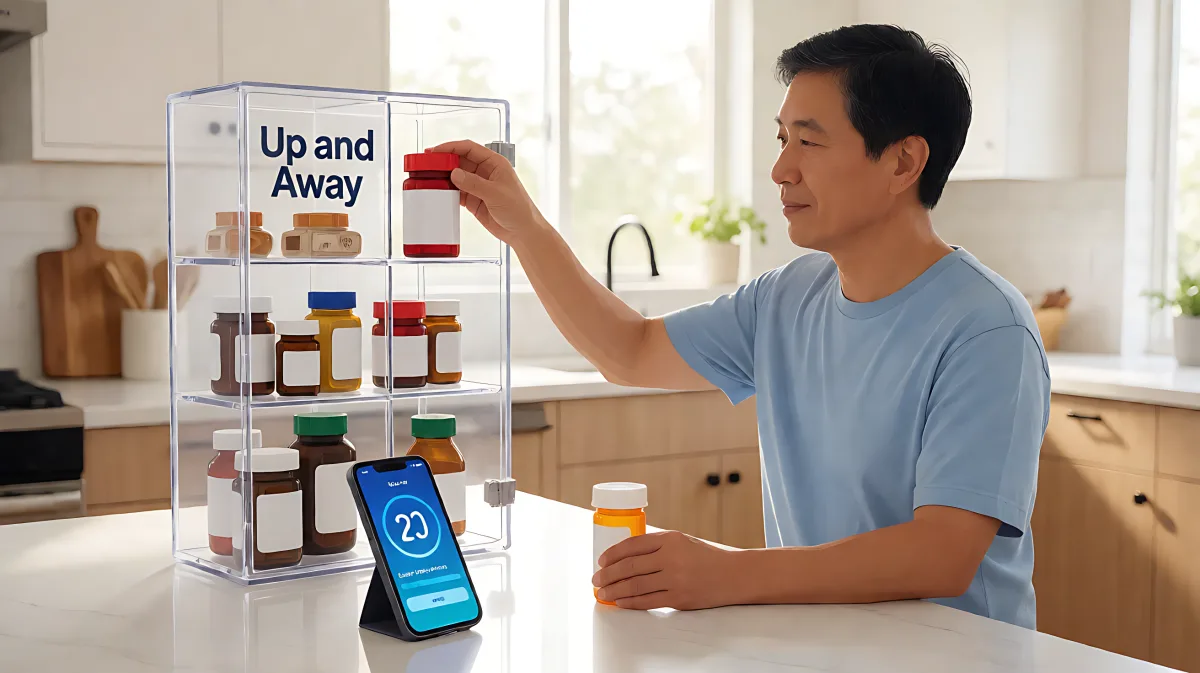
The safest strategy is the "Up and Away" method. This involves storing all medications, vitamins, and gummy supplements in a locked cabinet or high shelf that is completely out of sight and reach of children. Do not leave medicines on kitchen counters or nightstands. The PROTECT Initiative advises that every time you use a medication, you must put it back in this secure location. Furthermore, you should ask guests to keep their bags and purses secured, as children often grab loose items in unattended bags.
How Should I Dose Liquid Medications?
Household spoons are unreliable measurement tools and can lead to significant dosing errors. The CDC and the American Pharmacists Association recommend using the dosing device that comes with the medication, such as an oral syringe or a marked dosing cup. When prescribing, labeling, and dispensing liquid medications, standardized units of measure like milliliters (mL) should be used to reduce confusion. Never refer to medicine as "candy" to encourage a child to take it; instead, explain that it is medicine that requires adult supervision.
High-Alert Medications: Why They Need Extra Caution
Not all medicines carry the same risk profile. The International Medication Safety Network identifies specific "high-alert" medications that pose a heightened risk of causing serious harm if used in error. These include potassium concentrate injection, vinca alkaloids, oral methotrexate for non-cancer conditions, and two-component vaccines.
In home settings, the focus shifts to oral methotrexate and similar powerful agents used for autoimmune conditions. A common, fatal error occurs when weekly-dose methotrexate is mistakenly taken daily. To prevent this, patients and providers must implement "forcing functions," such as labeling prescription bottles clearly or using distinct packaging for weekly vs. daily doses. The strategy relies on system design that makes errors visible and difficult to execute, rather than relying solely on patient vigilance.
How to Respond to a Suspected Overdose
If you suspect that a child or adult has ingested a harmful amount of medication, do not wait for symptoms to appear. Time is critical. The first step is to call the Poison Help line at 800-222-1222. This hotline is available 24/7 in the United States and provides immediate guidance from toxicologists. Simultaneously, if the person is unconscious, having a seizure, or not breathing, call 911 for emergency services. Keep the medication container with you, as the active ingredients and formulation are vital for treatment decisions.
Frequently Asked Questions
Are safety caps effective at keeping children out of medicines?
Safety caps reduce the risk but are not child-proof. Many children, especially those between the ages of two and six, can open standard safety caps in under a minute. The most effective safety measure is to store all medications up and away, out of sight and reach, not just under a cap.
What should I do with expired medications?
Expired medications should be disposed of properly to prevent accidental ingestion or the spread of drug-resistant bacteria. Do not flush most medications down the toilet unless the label specifically instructs you to. Instead, take unused or expired drugs to a designated disposal drop-off site, such as those found at many pharmacies, to ensure they are rendered unusable.
How can I ensure my doctor knows about my supplements?
Medication interactions often occur with non-prescription items. Before starting any new supplement or vitamin, check with a pharmacist or use a medication interaction checker tool provided by your healthcare provider. Inform your doctor during every annual physical, even if you have not had symptoms, so they can review your full medication list for potential conflicts.