Best Low-Impact Floor Exercises for Seniors
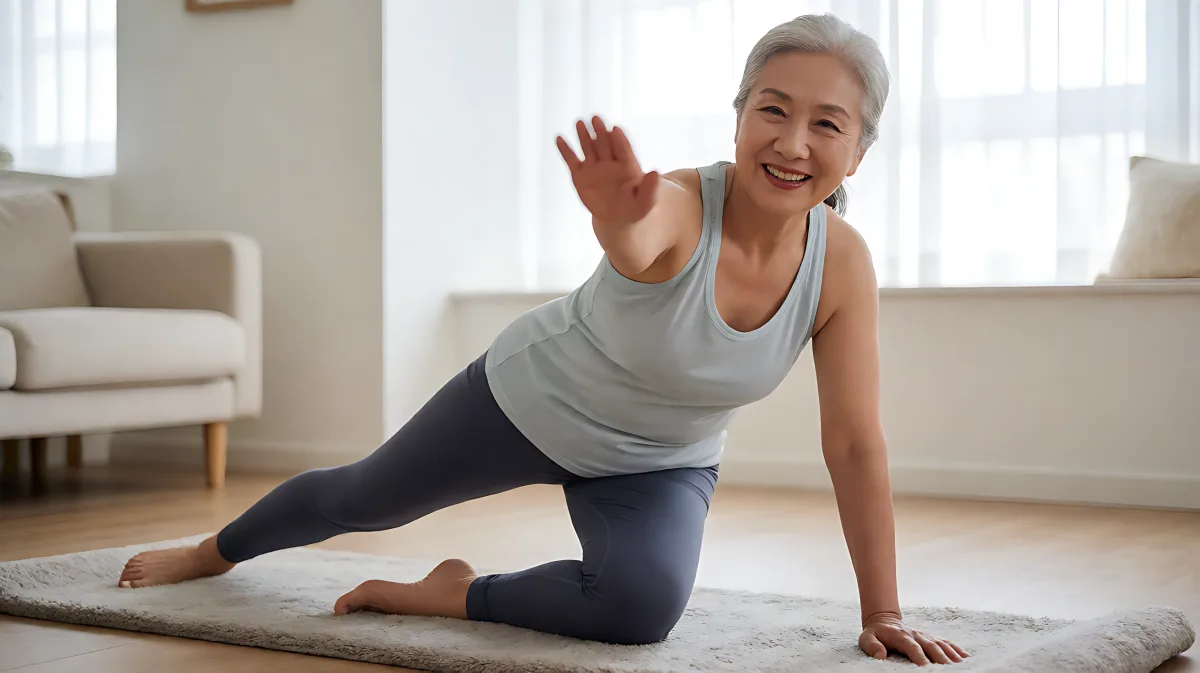
Looking for safe ways to stay strong after 60? These eight low-impact floor exercises target core strength, balance, and flexibility without stressing your joints.
Low-impact floor exercises are safe, accessible movements that build strength and balance for adults over 60 without straining joints. By working on a mat, you support your spine and engage core muscles to improve daily stability and reduce fall risks.
As we age, muscle mass naturally declines, making it essential to find routines that protect joints while maintaining mobility. Floor-based workouts are ideal for seniors because they minimize impact on knees and hips. The following guide details eight expert-recommended movements that target the posterior chain, core, and hips. These exercises require minimal equipment, usually just a non-slip mat, and can be easily modified for varying fitness levels.
Why Choose Floor Exercises for Older Adults?
Traditional high-impact activities like running can place significant stress on aging joints. Floor exercises offer a controlled environment where gravity works with you rather than against you. This approach is particularly beneficial for individuals with arthritis, osteoporosis, or chronic back pain. According to clinical guidance, maintaining core stability is one of the most effective ways to prevent falls, which are a leading cause of injury in the senior population.
These routines also promote flexibility. Tight hamstrings and hip flexors are common complaints among older adults, yet gentle stretching on the floor helps restore range of motion. By focusing on controlled movements and proper alignment, you can build functional strength that translates to easier movement around the home.
Warm Up Safely Before You Begin
Never skip the warm-up. Blood flow needs to increase before deeper muscle engagement. Spend five minutes on gentle movements to prepare your body. Stand with feet hip-width apart and march in place, lifting your knees comfortably. Swing your arms loosely to warm up the shoulders. Follow this with slow arm circles, moving forward and backward. Finish with shoulder shrugs, pulling your shoulders up toward your ears and releasing. This sequence wakes up the upper body and stabilizes the core without causing joint strain.
8 Essential Floor Exercises for Strength and Stability
The following movements form a complete routine. Perform each exercise slowly, focusing on form rather than speed. Listen to your body and stop if you feel sharp pain.
Glute Bridge
This fundamental exercise targets the glutes and hamstrings, which are crucial for hip stability. Lie on your back with knees bent and feet flat on the floor, hip-width apart. Squeeze your glutes and lift your hips until your body forms a straight line from knees to shoulders. Hold for three seconds, then lower slowly. Perform three sets of ten repetitions. This movement activates the posterior chain without compressing the spine.
Bird Dog
The bird dog is excellent for core control and spinal stabilization. Start on all fours, with hands under shoulders and knees under hips. Extend your right arm forward and your left leg back, keeping both straight. Hold for three breaths, ensuring your pelvis remains neutral. Return to the start and repeat on the other side. Do five repetitions per side. If balance is difficult, keep your hands and feet grounded and only extend the arm or leg one at a time.
Side-Lying Clamshell
Weakness in the outer hips can contribute to knee pain. Lie on your left side with knees bent and stacked. Keeping your heels together, lift your top knee toward the ceiling like opening a clam. Lower slowly. Perform ten repetitions on each side. This isolates the gluteus medius, a key muscle for walking stability.
Side Plank (Modified)
Core strength is vital for protecting the lower back. For a senior-friendly modification, place your forearm on the mat with your elbow under your shoulder. Stack your feet. Lift your hips to form a straight line. If a full side plank is too intense, keep your knees on the floor and lift your hips in a straight line. Hold for 15 to 30 seconds. Switch sides. This builds oblique strength and lateral stability.
Knee-to-Chest Stretch
Lower back stiffness is common in later life. Lie on your back with knees bent. Pull one knee toward your chest, holding the back of your thigh with both hands. Keep the other foot flat on the floor. Hold for 20 to 30 seconds, breathing deeply. Switch legs. This stretch releases tension in the glutes and lumbar spine.
Seated Spinal Twist
Sitting on the floor with legs extended, cross your right ankle over your left knee. Gently twist your torso to the left, using your hands on the floor for support if needed. Keep your shoulders square to the front. Hold for 20 seconds, then release and repeat on the opposite side. This movement improves thoracic rotation and spinal mobility.
Toe Taps (Tabletop)
Lie on your back and lift your legs into a tabletop position, knees over hips. Slowly tap your right toe to the floor on the left side, keeping your hips square. Return to the start and tap the left toe to the right side. Perform ten taps per side. This challenges pelvic stability and engages the deep core without bending the spine excessively.
Seated Forward Fold
Sit on the floor with legs straight out in front of you. Exhale and reach forward, hinging from your hips. Grab your ankles, shins, or feet, whichever is comfortable. Do not force the range of motion. Hold for 20 seconds. This stretch targets the hamstrings and calves, promoting better posture when standing.
How to Structure Your Weekly Routine
Consistency is more important than intensity. Aim to perform this floor routine three to four times per week. Between sessions, include low-impact aerobic activities like walking or stationary cycling to boost cardiovascular health. The Centers for Disease Control and Prevention recommends that adults over 65 engage in muscle-strengthening activities at least two days a week. These floor exercises meet that recommendation effectively.
Always cool down with gentle breathing exercises. Practice box breathing: inhale for four counts, hold for four, exhale for four, and hold for four. This calms the nervous system and aids recovery.
Safety Tips for Senior Movers
- Consult Your Doctor: Before starting any new program, get clearance from your healthcare provider, especially if you have heart conditions, severe arthritis, or recent surgeries.
- Use Proper Footwear: Even on the floor, wearing supportive shoes or non-slip socks can prevent feet from sliding, which maintains alignment.
- Listen to Pain: Mild muscle fatigue is normal; sharp or shooting pain is not. Stop immediately if you experience joint distress.
- Stay Hydrated: Drink water before, during, and after your session.
Frequently Asked Questions
Can I do these exercises if I have lower back pain?
Many of these movements, like the bird dog and glute bridge, are often recommended by physical therapists for back pain because they stabilize the spine without heavy compression. However, always avoid movements that cause sharp pain. If you have a history of spinal issues, consult a physical therapist to modify the range of motion.
How many times per week should I repeat this routine?
For best results, perform the floor strength and stability routine three days a week, with rest days in between. You can do gentle stretches daily. The goal is to build up to a minimum of two dedicated strength sessions per week, in line with general health guidelines for older adults.
Do I need special equipment?
No. You only need a non-slip yoga mat or exercise mat to ensure safety and comfort. Some exercises can be done on a firm surface like a carpet. Resistance bands can be added later to increase difficulty as your strength improves.
What if I cannot get down on the floor comfortably?
Many of these exercises have standing or seated modifications. For example, the glute bridge can be done lying down, which is usually manageable. If lying on the floor is difficult, focus on seated versions like the spinal twist and forward fold. Standing toe touches and calf raises can substitute for some floor work. The key is to find a variation that allows you to maintain proper form without strain.