Nighttime Lighting Guide for Senior Fall Prevention
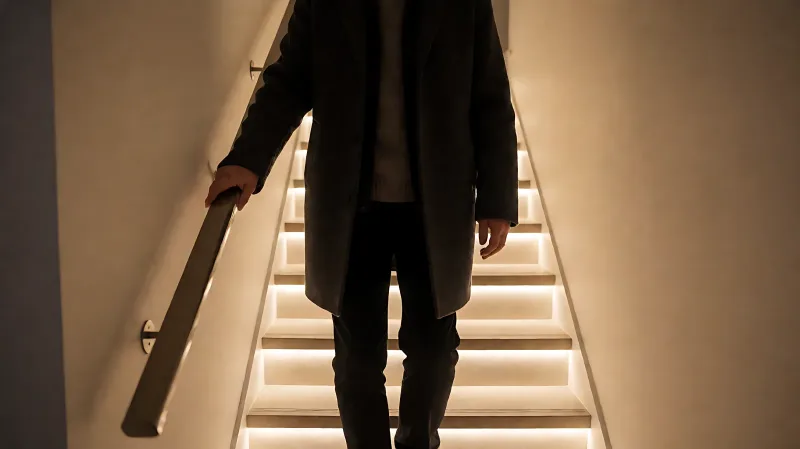
Simple lighting changes can drastically reduce the risk of nighttime falls for older adults. Discover how to effectively illuminate stairs and hallways to improve visibility and stability.
Proper nighttime lighting in hallways and stairwells is a critical factor in preventing falls among older adults. By installing motion-activated step lights, ensuring switches are accessible at both ends of stairs, and using low-glare fixtures at ankle height, seniors can navigate dark spaces safely. This approach reduces trip hazards and improves depth perception during late-night movements to the bathroom or kitchen.
Why specific lighting matters for senior vision
As eyes age, the pupil size decreases, and the ability to adjust to darkness slows down. The National Institute on Aging notes that older adults often experience reduced contrast sensitivity and increased sensitivity to glare. These changes mean that standard bright overhead lights can sometimes be just as disorienting as total darkness because they cast sharp, hard-to-see shadows. To mitigate this, lighting must be uniform and diffused rather than focused on a single high point. This ensures that the floor and the edge of each step are clearly defined, allowing the senior to maintain their balance and spatial orientation.
How should you light the stairs at night?
Stairways are among the most high-risk areas in the home. The most effective strategy involves a combination of static and dynamic lighting. First, ensure there is a dedicated light switch at both the top and bottom of the staircase. This allows a person to turn on the light before they begin the ascent or descent. Second, consider installing motion-activated plug-in lights or battery-operated puck lights directly on the side of each step. These devices automatically illuminate when a person approaches, providing a visual cue for where to place their feet without requiring them to hunt for a switch in the dark.
What are the benefits of step-edge lighting?
Placing lights at the edge of the stairs, often called step nosing, creates a high-contrast line that defines the boundary of the tread. This is particularly helpful for individuals with visual impairments or those recovering from balance issues. The light should be directed downward to avoid blinding the user. For long staircases, wall-mounted sconces spaced every few feet can provide ambient illumination, but the specific edge lighting is superior for judging the depth of each step.
What are the best practices for hallway illumination?
Hallways serve as the main pathways between rooms, especially at night when trips to the bathroom are frequent. To prevent disorientation, use a combination of low-level pathway lighting and ambient overhead lights. Low-level LED strips or motion sensor pucks placed near the floor guide the eye toward the intended path without causing glare. For long hallways, place light switches at both ends so the space is fully lit before walking through. Additionally, remove any clutter, such as throw rugs or shoes, that might be hard to see in low light. The Fall Prevention Foundation advises using warm white bulbs, typically between 2700K and 3000K, which are easier on the eyes than harsh cool blue lights.
Should you use smart or motion-activated lights?
Motion-activated lights are highly recommended for senior safety because they eliminate the need to turn on a switch manually in the dark. Many modern devices link together, meaning that triggering the light in the bedroom will also illuminate the hallway and the bathroom in sequence. This "anticipatory lighting" ensures the entire path is visible before the person starts moving. For those who prefer manual control, touch lamps or smart bulbs that can be controlled via voice or remote are excellent alternatives, as they do not require fine motor skills to operate.
How do you choose the right bulbs and fixtures?
Choosing the correct bulb type is essential for clarity and energy efficiency. Look for Light Emitting Diodes, or LEDs, which provide bright, consistent light without significant heat. For general room lighting, a brightness of at least 800 lumens is recommended. However, for stairs and hallways, the focus is on quality rather than just raw brightness. A high Color Rendering Index, or CRI, of 80 or above is important because it ensures colors are perceived accurately, helping to distinguish surfaces and obstacles. Avoid bare bulbs or glossy fixtures that reflect light directly into the eyes. Instead, choose fixtures with diffusers or shields that scatter the light evenly.
What is the "ankle-level" lighting rule?
A practical tip often shared by physical therapists is to keep lights at ankle level, roughly six to ten inches above the floor. This placement reduces the risk of temporary blinding glare when looking up. It also casts shadows on objects on the floor, making it easier to spot a stray shoe or a rug edge. This low-level contrast helps maintain spatial orientation, which is vital for balance. By highlighting the transition from floor to wall, seniors can better judge their position in the room, reducing the chance of stumbling into furniture or walls.
What other safety measures complement good lighting?
Lighting is most effective when paired with other fall prevention strategies. Ensure that handrails are installed on both sides of any staircase and are securely anchored. The National Institute on Aging emphasizes that these rails should be held when moving up or down stairs, even when carrying items. In the hallway, keep electrical cords tucked against walls and away from walking paths. If a senior lives alone, a well-charged phone or a medical alert system should be accessible from the bed and the bathroom. Regular home safety evaluations can identify subtle hazards that are not visible, such as uneven flooring or poor contrast between wall and floor colors.
| Lighting Type | Best Use Case | Key Feature |
|---|---|---|
| Motion Sensor Pucks | Stairs and Bedside | Automatic activation, low battery |
| Plug-in Night Lights | Hallways and Bathrooms | No batteries required, consistent |
| Rechargeable LED Bars | Wide Hallways and Closets | High brightness, USB charging |
| Smart Linked Lights | Full Pathways | Sequence activation across rooms |
Frequently Asked Questions
Is it better to use battery-operated or plug-in motion lights?
Plug-in motion lights are generally more reliable because they do not require battery replacement, which can be difficult for seniors with limited dexterity. However, battery-operated pucks offer more placement flexibility, allowing them to be mounted on stair treads or behind furniture where outlets are not available. A combination of both is often the most effective approach for comprehensive home coverage.
What color of light is best for seniors at night?
Warm white light, typically in the range of 2700K to 3000K, is recommended for nighttime use. This color temperature is softer and less likely to cause glare or disorientation compared to cool blue-white light. It also aligns better with the human circadian rhythm, reducing the risk of disrupting sleep while providing sufficient visibility for safe navigation.
Do I need to change the existing switches on my stairs?
If there is not already a switch at both the top and bottom of the staircase, it is highly advisable to install one. Moving the switch to the top can be inconvenient and risky if done without proper lighting. A simple switch at the bottom allows the light to be turned on before the ascent, while a switch at the top ensures the path down is illuminated. For those who cannot easily reach switches, motion sensors provide a hands-free alternative that eliminates this risk entirely.