Leg Swelling Causes: Heart, Kidney & Vein Signs
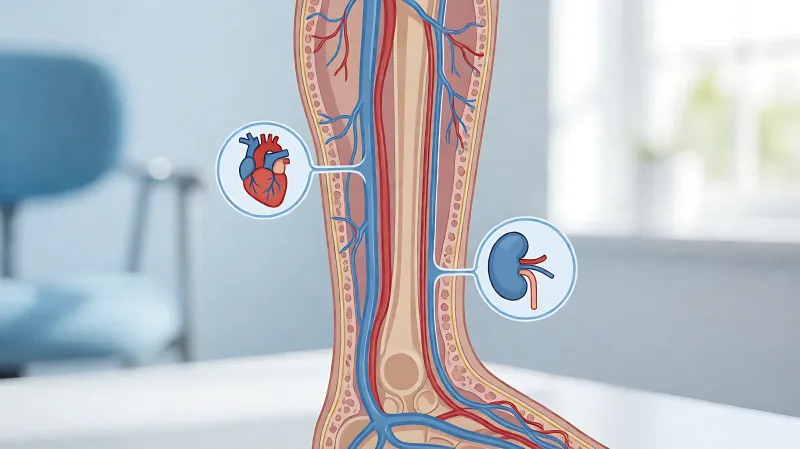
Persistent leg swelling can signal serious underlying conditions. This guide breaks down the specific signs of heart failure, kidney disease, and vein issues, helping you know when to seek immediate care.
Leg swelling, or edema, is more than temporary discomfort. It is often the body’s first warning sign of significant issues with your heart, kidneys, or veins. While mild swelling after a long day is common, persistent or painful swelling requires medical attention. Understanding the distinct patterns of heart failure, kidney disease, and venous insufficiency helps you identify the root cause and seek appropriate treatment before complications arise.
For more information, see NIA health information for older adults from the National Institute on Aging.
What causes leg swelling in the first place?
Edema occurs when fluid accumulates in the tissues under your skin. This happens when blood flow slows, pressure in the veins rises, or your body struggles to excrete excess water and salt. For many adults, especially seniors, this fluid retention is a symptom of a broader systemic issue. The American Heart Association (AHA) notes that swelling in the legs and ankles is a hallmark symptom of heart failure, where the pump mechanism weakens and fluid backs up into the extremities.
Common non-serious causes include:
- Prolonged sitting or standing, often seen after long flights or desk jobs.
- High sodium intake, which causes the body to retain water.
- Heat exposure, which causes blood vessels to dilate and leak fluid.
- Pregnancy, where increased blood volume can lead to temporary swelling.
However, when the swelling persists after rest or is accompanied by other symptoms, the cause is likely medical. It is important to distinguish between local vein issues and organ dysfunction.
Is leg swelling a sign of heart failure?
Yes, swollen legs are a classic indicator of heart failure. When the heart muscle becomes weak or stiff, it cannot pump blood efficiently. This causes pressure to build up in the veins, forcing fluid out of the blood vessels and into the surrounding tissues. Gravity pulls this fluid down, resulting in swelling in the feet, ankles, and lower legs.
According to the CDC, heart disease is a leading cause of death in the United States, and edema is a key monitoring symptom for cardiologists. Heart-related swelling often presents with these specific characteristics:
- Bilateral swelling: It usually affects both legs equally.
- Evening worsening: Swelling is often subtle in the morning but noticeable by the end of the day.
- Shortness of breath: Fluid can also back up into the lungs (pulmonary edema), causing difficulty breathing when lying flat.
- Fatigue: Because the heart is not delivering enough oxygen-rich blood to the body, you may feel unusually tired.
If you notice pitting edema (where an indentation remains when you press on the swollen area) combined with breathlessness, the AHA advises seeking prompt medical evaluation to check for congestive heart failure.
Could kidney disease be causing the swelling?
Your kidneys filter waste and excess fluid from your blood. When they are damaged, they cannot remove enough salt and water, leading to fluid retention. The National Kidney Foundation (NKF) highlights that edema is a common symptom in stages 3 through 5 of chronic kidney disease (CKD).
Kidney-related swelling differs slightly from heart-related swelling in its presentation:
- Facial puffiness: Unlike heart failure, kidney issues often cause swelling around the eyes and face, particularly in the morning.
- Urine changes: You may notice foamy or bubbly urine, which indicates protein leakage (proteinuria).
- Reduced output: A decrease in urine frequency or volume can signal that the kidneys are struggling to filter waste.
- Generalized swelling: Fluid may accumulate in the hands, belly, and legs, not just the extremities.
The NKF recommends regular blood and urine tests for adults over 60, especially those with high blood pressure or diabetes, to monitor kidney function and detect early signs of fluid retention.
How do vein problems contribute to leg swelling?
Chronic venous insufficiency (CVI) is a condition where the valves in your veins do not close properly, allowing blood to flow backward and pool in the legs. This is distinct from heart or kidney issues because the heart and kidneys are functioning normally; the problem is local to the vascular system. The American Vein & Vascular Centers (AVVC) explains that CVI is one of the most common causes of leg swelling in the general population.
Signs that the cause is venous include:
- Visible veins: Varicose or spider veins may be present on the legs.
- Skin changes: The skin may become darkened, itchy, or hard (dermatitis) over time due to poor circulation.
- Daytime worsening: Swelling typically increases after standing or sitting for long periods and improves when you lie down or elevate your legs.
- Aching pain: A heavy or tired feeling in the legs, often relieved by moving.
Unlike heart failure, CVI rarely causes shortness of breath. However, if left untreated, it can lead to open sores on the ankles (venous ulcers), which are difficult to heal.
When is leg swelling an emergency?
Not all edema is life-threatening, but certain symptoms indicate a medical emergency. You should call 911 or go to the nearest emergency room if the swelling is:
- Sudden and unilateral: Swelling in only one leg can indicate a deep vein thrombosis (blood clot). The NIH notes that a DVT can travel to the lungs and cause a pulmonary embolism, which is fatal if untreated.
- Painful and red: Warm, red, and tender swelling may signal an infection (cellulitis) or a blood clot.
- Accompanied by chest pain: This could be a heart attack or a severe pulmonary event.
- Causing severe shortness of breath: This suggests fluid is accumulating in the lungs.
Even if the swelling is not an emergency, you should see a doctor if it persists for more than a few days, worsens with time, or is associated with unexplained weight gain. Early intervention prevents the progression of conditions like heart failure or chronic venous disease.
How can you manage mild edema at home?
For non-urgent cases, such as swelling from a long day at work or travel, lifestyle adjustments can provide relief. The CDC recommends simple strategies to reduce fluid retention:
- Elevate your legs: Raise your legs above heart level for 30 minutes several times a day to help fluid drain back toward the core.
- Reduce sodium: Limit salt intake to under 2,300 milligrams per day, the recommended limit by the AHA for adults.
- Movement: Calf raises and walking help pump blood back up the veins using the muscle contractions.
- Compression stockings: Wearing supportive socks can prevent pooling in veins, but consult a doctor before starting them to ensure they fit correctly.
However, home remedies are only for mild, temporary swelling. They will not treat underlying heart or kidney failure.
Frequently Asked Questions
What stage of heart failure causes leg swelling?
- Bilateral swelling: It usually affects both legs equally.
- Evening worsening: Swelling is often subtle in the morning but noticeable by the end of the day.
- Shortness of breath: Fluid can also back up into the lungs (pulmonary edema), causing difficulty breathing when lying flat.
- Fatigue: Because the heart is not delivering enough oxygen-rich blood to the body, you may feel unusually tired.
Could kidney disease be causing the swelling?
Your kidneys filter waste and excess fluid from your blood. When they are damaged, they cannot remove enough salt and water, leading to fluid retention. The National Kidney Foundation (NKF) highlights that edema is a common symptom in stages 3 through 5 of chronic kidney disease (CKD).
Kidney-related swelling differs slightly from heart-related swelling in its presentation:
- Facial puffiness: Unlike heart failure, kidney issues often cause swelling around the eyes and face, particularly in the morning.
- Urine changes: You may notice foamy or bubbly urine, which indicates protein leakage (proteinuria).
- Reduced output: A decrease in urine frequency or volume can signal that the kidneys are struggling to filter waste.
- Generalized swelling: Fluid may accumulate in the hands, belly, and legs, not just the extremities.
The NKF recommends regular blood and urine tests for adults over 60, especially those with high blood pressure or diabetes, to monitor kidney function and detect early signs of fluid retention.
How do vein problems contribute to leg swelling?
Chronic venous insufficiency (CVI) is a condition where the valves in your veins do not close properly, allowing blood to flow backward and pool in the legs. This is distinct from heart or kidney issues because the heart and kidneys are functioning normally; the problem is local to the vascular system. The American Vein & Vascular Centers (AVVC) explains that CVI is one of the most common causes of leg swelling in the general population.
Signs that the cause is venous include:
- Visible veins: Varicose or spider veins may be present on the legs.
- Skin changes: The skin may become darkened, itchy, or hard (dermatitis) over time due to poor circulation.
- Daytime worsening: Swelling typically increases after standing or sitting for long periods and improves when you lie down or elevate your legs.
- Aching pain: A heavy or tired feeling in the legs, often relieved by moving.
Unlike heart failure, CVI rarely causes shortness of breath. However, if left untreated, it can lead to open sores on the ankles (venous ulcers), which are difficult to heal.
When is leg swelling an emergency?
Not all edema is life-threatening, but certain symptoms indicate a medical emergency. You should call 911 or go to the nearest emergency room if the swelling is:
- Sudden and unilateral: Swelling in only one leg can indicate a deep vein thrombosis (blood clot). The NIH notes that a DVT can travel to the lungs and cause a pulmonary embolism, which is fatal if untreated.
- Painful and red: Warm, red, and tender swelling may signal an infection (cellulitis) or a blood clot.
- Accompanied by chest pain: This could be a heart attack or a severe pulmonary event.
- Causing severe shortness of breath: This suggests fluid is accumulating in the lungs.
Even if the swelling is not an emergency, you should see a doctor if it persists for more than a few days, worsens with time, or is associated with unexplained weight gain. Early intervention prevents the progression of conditions like heart failure or chronic venous disease.
How can you manage mild edema at home?
For non-urgent cases, such as swelling from a long day at work or travel, lifestyle adjustments can provide relief. The CDC recommends simple strategies to reduce fluid retention:
- Elevate your legs: Raise your legs above heart level for 30 minutes several times a day to help fluid drain back toward the core.
- Reduce sodium: Limit salt intake to under 2,300 milligrams per day, the recommended limit by the AHA for adults.
- Movement: Calf raises and walking help pump blood back up the veins using the muscle contractions.
- Compression stockings: Wearing supportive socks can prevent pooling in veins, but consult a doctor before starting them to ensure they fit correctly.
However, home remedies are only for mild, temporary swelling. They will not treat underlying heart or kidney failure.
Frequently Asked Questions
What stage of heart failure causes leg swelling?
- Visible veins: Varicose or spider veins may be present on the legs.
- Skin changes: The skin may become darkened, itchy, or hard (dermatitis) over time due to poor circulation.
- Daytime worsening: Swelling typically increases after standing or sitting for long periods and improves when you lie down or elevate your legs.
- Aching pain: A heavy or tired feeling in the legs, often relieved by moving.
When is leg swelling an emergency?
Not all edema is life-threatening, but certain symptoms indicate a medical emergency. You should call 911 or go to the nearest emergency room if the swelling is:
- Sudden and unilateral: Swelling in only one leg can indicate a deep vein thrombosis (blood clot). The NIH notes that a DVT can travel to the lungs and cause a pulmonary embolism, which is fatal if untreated.
- Painful and red: Warm, red, and tender swelling may signal an infection (cellulitis) or a blood clot.
- Accompanied by chest pain: This could be a heart attack or a severe pulmonary event.
- Causing severe shortness of breath: This suggests fluid is accumulating in the lungs.
Even if the swelling is not an emergency, you should see a doctor if it persists for more than a few days, worsens with time, or is associated with unexplained weight gain. Early intervention prevents the progression of conditions like heart failure or chronic venous disease.
How can you manage mild edema at home?
For non-urgent cases, such as swelling from a long day at work or travel, lifestyle adjustments can provide relief. The CDC recommends simple strategies to reduce fluid retention:
- Elevate your legs: Raise your legs above heart level for 30 minutes several times a day to help fluid drain back toward the core.
- Reduce sodium: Limit salt intake to under 2,300 milligrams per day, the recommended limit by the AHA for adults.
- Movement: Calf raises and walking help pump blood back up the veins using the muscle contractions.
- Compression stockings: Wearing supportive socks can prevent pooling in veins, but consult a doctor before starting them to ensure they fit correctly.
However, home remedies are only for mild, temporary swelling. They will not treat underlying heart or kidney failure.
Frequently Asked Questions
What stage of heart failure causes leg swelling?
- Elevate your legs: Raise your legs above heart level for 30 minutes several times a day to help fluid drain back toward the core.
- Reduce sodium: Limit salt intake to under 2,300 milligrams per day, the recommended limit by the AHA for adults.
- Movement: Calf raises and walking help pump blood back up the veins using the muscle contractions.
- Compression stockings: Wearing supportive socks can prevent pooling in veins, but consult a doctor before starting them to ensure they fit correctly.
Frequently Asked Questions
What stage of heart failure causes leg swelling?
Leg swelling is more common in moderate to severe heart failure (New York Heart Association Class III or IV). However, it can appear earlier if the heart begins to retain fluid due to high blood pressure or valvular issues. Any new swelling should be evaluated by a cardiologist.
Can kidney problems cause swelling in just one leg?
Generally, no. Kidney disease typically causes generalized swelling in both legs, the face, and the abdomen. Swelling in a single leg is more often related to local vein issues, such as a blood clot or varicose veins, or local trauma.
Does salt always cause leg swelling?
Not always. While high sodium intake can lead to mild fluid retention in healthy individuals, it is a significant risk factor for worsening swelling in people with heart, kidney, or liver disease. Reducing salt is a key management strategy for these groups.
How long does it take for swelling to go down with treatment?
For mild venous insufficiency, elevation and movement can reduce swelling within hours or days. For heart failure or kidney disease, treatment with diuretics (water pills) may take several days to weeks to see significant reduction in fluid. If swelling persists despite home care, seek medical help.