Incontinence Product Selection: Pads, Underwear, Commodes
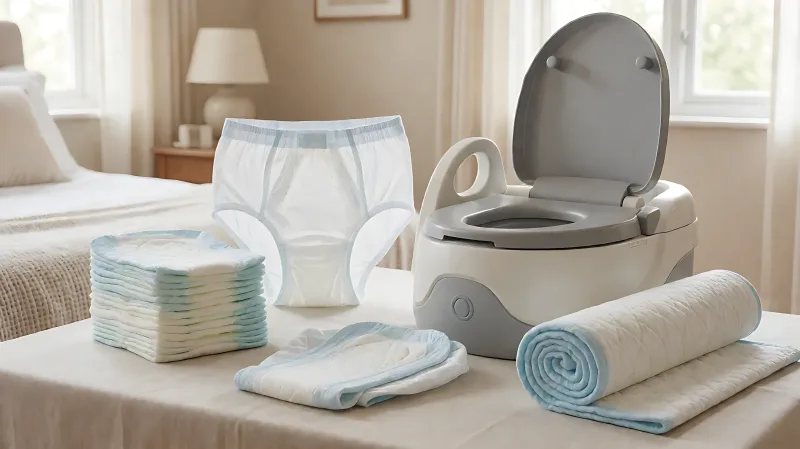
Choosing the right incontinence product can feel overwhelming. This guide breaks down pads, protective underwear, and bedside commodes to help you find comfort and confidence.
Choosing the right incontinence product depends on leak volume, activity level, and mobility. For most adults, a combination of absorbent pads for light leaks, protective underwear for moderate needs, and a bedside commode for nighttime safety offers the best balance of dignity and skin health. The American Geriatrics Society emphasizes that product selection should prioritize skin integrity and user independence. Start with the least invasive option that matches your specific leakage pattern to ensure comfort and prevent skin breakdown.
For more information, see NIA health information for older adults from the National Institute on Aging.
How do I choose the right absorbency level?
Selecting the correct product begins with understanding your leak volume. Light leaks, often caused by stress incontinence, are typically managed with small pads or liners. Moderate to heavy leaks, common in urgency incontinence or after pelvic surgery, require higher-capacity products like protective underwear or adult briefs. The National Association for Continence advises that wearing a product with absorbency far exceeding your needs can lead to bulkiness and irritation, while underestimating volume risks leaks and skin exposure. Track your fluid output for a few days to find the accurate baseline. For example, a product rated for 400 milliliters may suffice for daytime use, but overnight wear often requires capacity ratings exceeding 800 milliliters to ensure a restful sleep.
What are the main types of incontinence underwear?
Two primary styles of incontinence underwear serve different needs: protective underwear and adult briefs.
- Protective Underwear: These look and feel like regular boxer briefs or panty styles. They feature a stretch waistband and are ideal for active individuals who need moderate absorbency and discretion. They are easy to pull on and off, supporting independence.
- Adult Briefs: Designed with tape tabs or hook-and-loop closures, these resemble disposable diapers. They provide high absorbency and are best for bedridden patients or individuals with limited mobility. Caregivers can change these without requiring the wearer to stand, which is safer for repositioning.
Both options are available in washable and disposable forms. Disposable versions offer convenience, while reusable cloth options reduce long-term costs and environmental impact. When selecting briefs, check for wetness indicators that change color when saturated, signaling it is time for a change.
How do pads and liners differ from underwear?
Pads and liners are not substitutes for underwear; they are inserts used inside regular or protective underwear. Feminine pads are contoured for the female anatomy, while male guards and shields are tapered for male anatomy. Male shields are specifically designed for post-void dribbling and are very thin, allowing them to remain discreet under tight-fitting clothing. For women, disposable vaginal inserts can be used for temporary protection during exercise. However, standard sanitary napkins are not recommended for urine because they lack the fluid-locking polymers and waterproof backings found in incontinence-specific products. The Centers for Disease Control and Prevention notes that using incorrect products can increase the risk of skin maceration, a condition where skin breaks down due to prolonged moisture exposure.
When should you use a bedside commode?
A bedside commode is a sturdy chair with a seat that contains a removable, easy-to-clean pan. It is positioned between the bedside and the nightstand to reduce the travel distance to the toilet, especially at night. The U.S. Consumer Product Safety Commission recommends ensuring the commode meets safety standards for weight capacity and stability to prevent falls. Commodes are particularly beneficial for individuals with mobility limitations, arthritis, or those recovering from surgery. They help prevent falls in the dark and provide a rest place for the user while transferring. When selecting a commode, look for a removable pan that can be cleaned with antibacterial solutions and a sturdy frame that supports at least 300 pounds for wide-ranging user needs.
How do you protect skin when using incontinence products?
Skin protection is critical when managing incontinence. Prolonged contact with urine and feces leads to diaper rash, candidiasis, and pressure injuries. The National Pressure Ulcer Advisory Panel suggests implementing a consistent skin care routine. First, change products immediately when wet or soiled. Second, clean the skin with a pH-balanced, no-rinse wash or mild wipes. Third, apply a barrier cream or ointment to protect the skin from moisture. Do not scrub the skin; pat it dry instead. Regularly inspect the sacral area and heels for redness, which is the first sign of skin breakdown. Keeping the skin dry and clean is more important than the product itself.
Frequently Asked Questions
Can I use regular panty liners for incontinence?
No. Regular panty liners and sanitary pads are designed for vaginal flow, not urine. They lack the super-absorbent polymers and waterproof backing needed to lock away urine, which can lead to leaks and skin irritation. Always use products specifically labeled for incontinence or enuresis.
How often should I change my incontinence pads or underwear?
Change incontinence products as soon as they feel wet or soiled to prevent skin breakdown. For many people, this means changing every two to four hours during the day and once or twice overnight. Using a wetness indicator on the product can help you know when it is time for a change without checking the skin directly.
What is the difference between a male guard and a male shield?
Male guards are wider and offer moderate absorbency for general leakage. Male shields are thinner, tapered specifically for the male anatomy, and are designed for light dribbling or post-void leakage. Shields are less bulky and easier to hide under tight clothing, while guards provide more security for moderate leaks.