Home Body Composition Scales: Accuracy & Best Practices
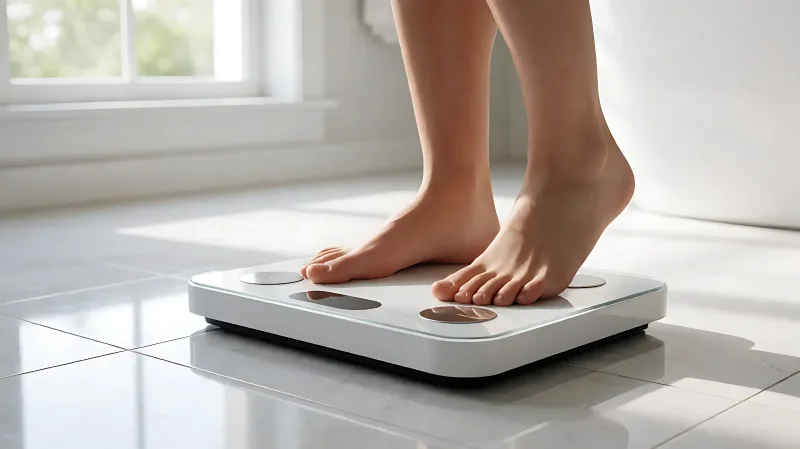
Learn how home body composition scales measure body fat using bioelectric impedance analysis, why hydration affects results, and how to track trends for effective weight management.
Home body composition scales offer a convenient way to monitor health, but their accuracy depends heavily on consistency and hydration levels. While these devices use bioelectric impedance analysis to estimate body fat, they are not as precise as clinical DEXA scans. To get the most value from a consumer scale, focus on tracking trends over time rather than fixing on single daily readings.
For more information, see NIA health information for older adults from the National Institute on Aging.
How Do Home Body Composition Scales Work?
Standard digital scales simply measure physical load to calculate total weight. Body composition scales go further by using a technology called bioelectric impedance analysis (BIA). A low-level electrical current passes through your body via the scale's metal plates. The device measures the impedance, or resistance, to that current. Lean tissues like muscle and water conduct electricity easily, while fat tissue resists the flow. By analyzing this resistance, the scale estimates your body fat percentage and other metrics.
It is important to understand that BIA is an estimation method, not a direct measurement. The accuracy of the result depends on the scale's electrode count and the algorithm used by the manufacturer. Two-point scales, which measure only through the feet, are common and affordable but less precise. Four-point scales, which use hand and foot electrodes, provide a more comprehensive path for the current and are generally more accurate. Most home users will only find four-point options in clinical or wellness center settings, as they are bulky and expensive.
Is BIA Technology Reliable for Daily Use?
For tracking long-term progress, BIA scales are reliable enough to be useful. They are not designed to be perfect, but they are designed to show direction. According to experts from the Obesity Medicine Association, high body fat percentage is generally defined as 25 percent or higher for men and 32 percent or higher for women. Using a scale to monitor whether you are approaching these thresholds can be a valuable part of a healthy lifestyle plan, especially when combined with guidance from a dietitian or physician.
What Factors Affect the Accuracy of Your Readings?
The biggest limitation of home BIA scales is that your body's hydration status can significantly skew the results. Water conducts electricity, so if you are dehydrated, your body has less conductive material, which can make the scale overestimate your body fat. Conversely, if you are overhydrated, the scale may underestimate your fat percentage. This means that drinking a large glass of water right before weighing in can produce a different body fat reading than if you had not hydrated.
Other factors that influence accuracy include:
- Recent Exercise: Sweating and blood flow changes during and after exercise can alter electrical resistance. It is best to wait at least an hour after a workout before stepping on the scale.
- Caffeine and Alcohol: Both are diuretics and affect hydration levels, so avoid consuming them immediately before a reading.
- Swelling: Water retention or edema, particularly in the lower legs, can throw off the impedance measurement.
- Time of Day: Your body weight and hydration levels naturally fluctuate throughout the day due to food and water intake.
Do Pregnant Women or People with Pacemakers Need Precautions?
Yes. The low-level electrical current from BIA scales is generally safe for most healthy adults, but it can interfere with certain medical devices. If you have an implanted pacemaker or defibrillator, you should consult your healthcare provider before using a body composition scale, as the current could potentially interfere with the device's function. Additionally, many manufacturers advise pregnant women not to use these scales, as the electrical current should not pass through the developing fetus. Always read the instruction manual and follow safety warnings.
How Can You Get the Most Accurate Results at Home?
To maximize the reliability of your home scale, consistency is key. The goal is to reduce variables so that you can compare today's reading to last week's reading with greater confidence. Try to weigh yourself at the same time every day, ideally in the morning after using the bathroom but before eating or drinking. If possible, use the same scale every time, as different devices may use different algorithms and produce different baseline numbers.
Do not obsess over a single day's number. Instead, look at the weekly or monthly average. A sudden spike or drop in body fat percentage is likely due to daily fluctuations in hydration rather than actual changes in your body composition. If you notice a consistent upward trend in body fat over several weeks, that is a significant signal worth discussing with your doctor.
Can Tracking Trends Help with Weight Loss?
Absolutely. Losing weight is not just about dropping pounds; it is about losing fat while preserving or building lean muscle mass. A standard scale only tells you total weight, which can be misleading. If you are lifting weights and building muscle, your total weight might go up even as your body fat percentage goes down. A body composition scale helps you see this nuance. By tracking both weight and body fat percentage, you can adjust your diet and exercise routine to ensure you are losing fat, not just water or muscle.
Frequently Asked Questions
Are smart scales more accurate than analog scales?
Not necessarily in terms of basic weight. A high-quality analog scale can be just as accurate for total weight. However, smart scales offer the advantage of digital consistency and the ability to track trends via an app, which helps you visualize changes over time. For BIA metrics, a smart scale is required to process the complex calculations.
How often should I use a body composition scale?
For most people, daily use is acceptable if you are tracking trends. However, if the numbers cause anxiety, checking three to four times a week is a good balance. The key is consistency in the time of day and environmental conditions.
Why does my scale show different results on different days?
This is primarily due to hydration levels, recent food intake, and time of day. Since BIA relies on water content in your tissues, any change in hydration will alter the electrical resistance and thus the estimated body fat percentage.
What is the gold standard for measuring body fat?
The DEXA (dual-energy X-ray absorptiometry) scan is considered the most accurate method for measuring body composition in a clinical setting. It uses low-dose X-rays to measure bone, muscle, and fat. However, it is not practical for routine home use due to cost and radiation exposure.
Can I use a body composition scale if I have metal implants?
While standard metal implants like hip replacements are generally not affected by the low current of a BIA scale, it is always wise to check with your orthopedic specialist. The strongest precaution is for those with pacemakers or defibrillators, who should get explicit medical clearance before using the device.