Why Uneven Ground Triggers Balance Loss: Neurological Causes
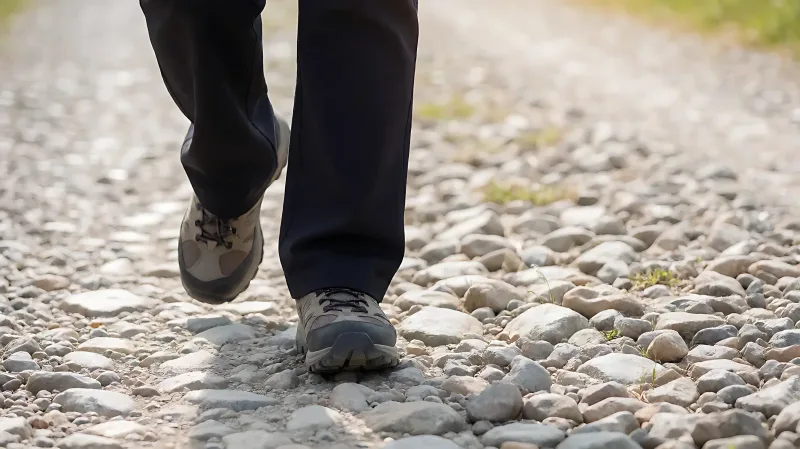
Struggling on cobblestones or gravel paths? Find out how nerve damage, spinal issues, and inner ear disorders combine to compromise your stability on uneven terrain.
Difficulty walking on uneven surfaces often signals dysfunction in the nervous system's balance pathways. The issue usually stems from peripheral neuropathy, spinal cord compression, or vestibular disorders. These conditions disrupt the sensory feedback required to adjust to irregular terrain, increasing fall risks significantly.
For more information, see NIA health information for older adults from the National Institute on Aging.
Why Does Uneven Ground Expose Balance Problems?
Walking on flat, predictable surfaces allows the brain to rely on routine motor patterns. When you step onto uneven ground, such as gravel, cobblestones, or a tilted curb, your nervous system must constantly process new tactile and proprioceptive data. The brain integrates input from your inner ear, visual system, and sensory nerves in your feet to adjust your gait in real-time. If one of these systems is compromised, the brain receives incorrect or delayed information, leading to instability.
This vulnerability is particularly evident in older adults. The National Institute on Aging notes that approximately 30 percent of adults over 65 fall each year, with many incidents occurring on uneven or irregular surfaces. The inability to quickly recalibrate your center of gravity is a key diagnostic clue for clinicians.
How Do Sensory Nerves Affect Foot Placement?
Peripheral neuropathy, often associated with diabetes or vitamin B12 deficiency, damages the sensory nerves in the legs and feet. These nerves act as sensors, telling your brain where your foot is relative to the ground. When they fail, you lose the sense of proprioception needed to feel the slope or texture of the surface. This explains why patients with neuropathy often report that their balance is much worse in low light or on uneven terrain, as they are forced to rely solely on vision and inner ear signals, which are less precise for foot placement.
Which Neurological Conditions Cause Gait Instability?
Several neurological disorders specifically impact the coordination and execution of walking. Identifying the specific pattern of imbalance helps narrow down the cause.
- Cerebellar Ataxia: The cerebellum coordinates movement. Damage here, often from multiple sclerosis or stroke, results in a wide-based, staggering gait. Patients struggle to maintain a straight line and often have clumsy hand movements alongside balance issues.
- Parkinsonian Gait: Caused by basal ganglia dysfunction, this leads to short, shuffling steps and a tendency to freeze when trying to start moving. Turning or navigating tight, uneven spaces is especially difficult, increasing fall risk.
- Vestibular Disorders: Conditions like Benign Paroxysmal Positional Vertigo (BPPV) or Meniere's disease affect the inner ear. While these often cause spinning, they also create a constant sense of unsteadiness that makes navigating uneven ground hazardous.
What Role Does the Spine Play in Walking?
Spinal cord compression, known as myelopathy, is a critical factor in gait imbalance. When the spinal cord is narrowed due to arthritis, a herniated disc, or stenosis, the signals from the brain to the legs and the sensory information from the feet to the brain are disrupted.
Patients with cervical myelopathy often report a stiff, spastic walk or a dragging of one leg. The loss of fine sensory control makes it nearly impossible to adjust to small changes in elevation, such as a 1-inch curb or a patch of loose gravel. The American Academy of Orthopaedic Surgeons emphasizes that new symptoms of hand clumsiness combined with leg weakness or balance issues warrant immediate spinal evaluation.
How Is Balance on Uneven Surfaces Evaluated?
Diagnosing the cause of gait instability requires a multi-system approach. A neurologist will perform a physical examination that includes specific tests designed to stress the balance system.
| Test | What It Assesses |
|---|---|
| Tandem Stance | Ability to stand with one foot behind the other; challenges cerebellar and sensory integration. |
| Heel-To-Toe Walk | Narrow-based walking tests coordination and cerebellar function. |
| Romberg Test | Standing with eyes closed; if balance is lost, it indicates sensory or vestibular issues. |
| Gait Observation | Watching how the patient walks across the room, turns, and navigates obstacles. |
Beyond the physical exam, physicians may order nerve conduction studies to measure electrical activity in peripheral nerves. MRI scans of the brain and spine are standard for ruling out tumors, strokes, or spinal cord compression. Blood tests check for metabolic causes like thyroid dysfunction or vitamin deficiencies.
When Should You See a Doctor Immediately?
Seek emergency care if sudden imbalance is accompanied by slurred speech, facial drooping, or weakness on one side of the body, as these are signs of a stroke. For gradual onset, schedule a prompt appointment if you experience frequent near-falls, new difficulty with buttons or fine motor tasks, or memory changes alongside gait issues.
Frequently Asked Questions
Can inner ear problems cause balance issues on uneven ground?
Yes. Vestibular disorders affect your sense of orientation. While they often cause dizziness, they also reduce your ability to stabilize your head and body during the micro-movements required to walk on uneven surfaces.
What is the difference between ataxia and vertigo?
Ataxia is a lack of muscle coordination, often causing a staggering gait without spinning. Vertigo is the false sensation that you or your environment is moving, typically originating from the inner ear or brainstem.
Do all balance problems indicate a neurological issue?
No. Many cases are musculoskeletal, such as hip arthritis or weak core muscles. However, if muscle strength is normal but balance is poor, or if symptoms worsen in the dark, a neurological cause like neuropathy or myelopathy is more likely.
How does spinal stenosis affect walking?
Spinal stenosis narrows the canal around the spinal cord or nerves. This compression can lead to a spastic, stiff gait and loss of sensory feedback from the feet, making it difficult to adjust to uneven terrain and increasing fall risk.