Managing Heart Failure at Home: Caregiver Guide
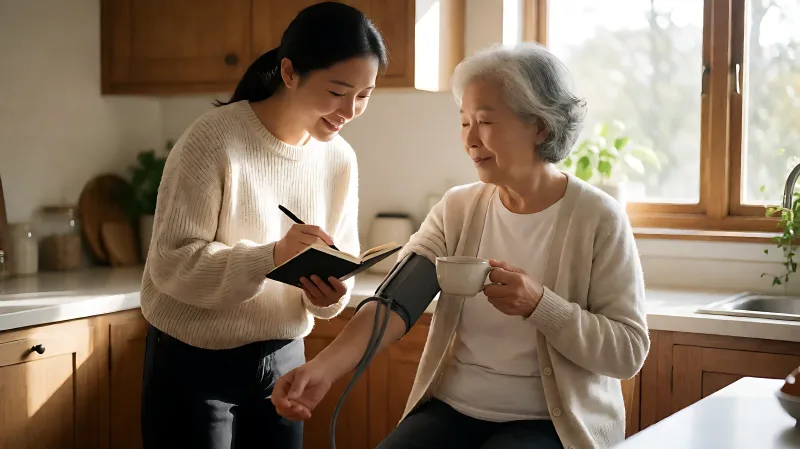
Caring for an older adult with heart failure requires consistent daily monitoring and emotional support. This guide provides a practical framework for tracking vital signs, managing medications, and recognizing when to seek help.
Managing heart failure in older adults is a daily commitment involving weight tracking, medication adherence, and symptom monitoring. Caregivers play a vital role by maintaining consistent routines, encouraging independence, and recognizing early warning signs of fluid retention or distress before they become emergencies.
For more information, see CDC resources on healthy aging from the CDC.
For many families, the transition from hospital discharge to home care feels unprepared. The American Heart Association (AHA) emphasizes that while patients must remain in control of their condition, loved ones are critical partners in this journey. Success relies on a structured, gentle approach that balances medical vigilance with the patient's need for autonomy and dignity.
What should you monitor every day at home?
Consistency is more important than precision in home monitoring. The goal is to establish a baseline so that deviations can be quickly identified. The AHA and clinical guidelines recommend tracking specific metrics daily to detect early signs of worsening heart failure, such as fluid buildup.
How do I track weight and fluid retention?
Weight is the most sensitive indicator of fluid changes in heart failure. Sudden weight gain often signals fluid retention rather than fat gain. Patients should weigh themselves at the same time each day, ideally in the morning after using the bathroom and before eating. Use the same scale and similar clothing daily.
The AHA advises reporting weight gains of more than two to three pounds in a day or five pounds in a week to a healthcare provider. However, thresholds vary by individual. Caregivers should confirm specific limits with the cardiologist and note them on the monitoring chart.
What other vital signs matter?
- Breathing: Monitor for new shortness of breath, especially when lying flat or during previously easy activities. Needing extra pillows to sleep is a common sign of congestion.
- Swelling (Edema): Check ankles, legs, and abdomen. Gently press the skin over the shin; if an indentation remains, note the level of swelling.
- Blood Pressure and Heart Rate: If prescribed, track these at the same time daily using the same device. Record values in a written log rather than relying on memory.
How can caregivers support medication routines?
Medication errors, such as missed doses or double dosing, are frequent causes of hospital readmission. A structured system reduces this risk without taking away the patient's independence.
What is the best way to organize daily pills?
Use a weekly pill organizer or a smartphone reminder system. The best system is one that is simple and sustainable. Caregivers can refill the organizer on a fixed day, like Sundays, and verify that doses were taken using a simple checkmark log. This prevents accidental duplicates while ensuring no doses are skipped.
It is crucial to encourage the patient to take their medication when they are able. Caregivers should prompt and assist only as necessary, respecting the patient's capability to manage their own care to maintain their confidence and agency.
When is a symptom a medical emergency?
While many heart failure symptoms are manageable at home with medication adjustments, some signs indicate acute decompensation. The AHA lists specific warning signs that require immediate attention.
Which symptoms require a 911 call?
Seek emergency care if the patient experiences:
- Sudden or severe shortness of breath that does not improve with rest.
- Chest pain, pressure, or tightness.
- Fainting or severe dizziness.
- Sudden new confusion or difficulty thinking clearly.
- Bluish lips or fingernails, indicating low oxygen levels.
For less urgent but worsening symptoms, such as increasing swelling, new fatigue, or a persistent cough, contact the primary care provider or cardiologist promptly. Keeping a written emergency plan from the doctor, detailing specific thresholds for calling, helps families act decisively.
How do I maintain a caregiver's mental health?
Caregiving for chronic conditions is a long-term commitment that can lead to burnout. The American Heart Association notes that caregivers are a vital part of the healthcare team and require their own support systems.
What resources are available for family supporters?
Caregivers should join support groups, both online and local, to connect with others facing similar challenges. Online communities provide a space to share advice and emotional support. Additionally, caregivers must prioritize their own physical and mental health. Schedule regular breaks, seek respite care if available, and communicate openly with the healthcare team about the patient's status.
Burnout prevents effective care. By establishing boundaries and utilizing professional home health services for periodic assessments, families can sustain the monitoring routine without overwhelming themselves.
Does physical activity improve daily function?
Yes. A recent study published in the Irish Journal of Medical Science found that home-based balance training supervised by nurses significantly improved cognitive function and daily living activities in older adults with heart failure. The study involved 75 participants who underwent 30-minute sessions four times a week for eight weeks.
Results showed that the training group had better scores on basic and instrumental activities of daily living compared to the control group. This suggests that safe, supervised physical activity, such as balance exercises, can enhance independence and reduce fall risks, which are common concerns in this population.
Frequently Asked Questions
How often should I check my loved one's weight?
Daily is the standard recommendation. Weighing at the same time each morning provides the most accurate trend data. The AHA suggests tracking this consistently to detect fluid retention early.
Can I just take over all their tasks?
No. While support is essential, the goal is to enable the patient to manage their condition. Taking over completely can lead to deconditioning and loss of confidence. Encourage independence in safe tasks like medication timing and simple mobility exercises.
What if they refuse to log their symptoms?
Resistance is common due to fatigue or feeling overwhelmed. Simplify the log to a single-page chart with large print. Make logging a shared activity during a calm moment, like morning coffee, rather than a clinical task. Emphasize that the data helps their doctors prescribe the right care.
Is heart failure curable?
Heart failure is a chronic condition that is managed rather than cured. While symptoms can be stabilized and quality of life improved with medication, diet, and lifestyle changes, ongoing management is required to prevent worsening heart function and hospitalizations.