How to Use COPD Inhalers Correctly
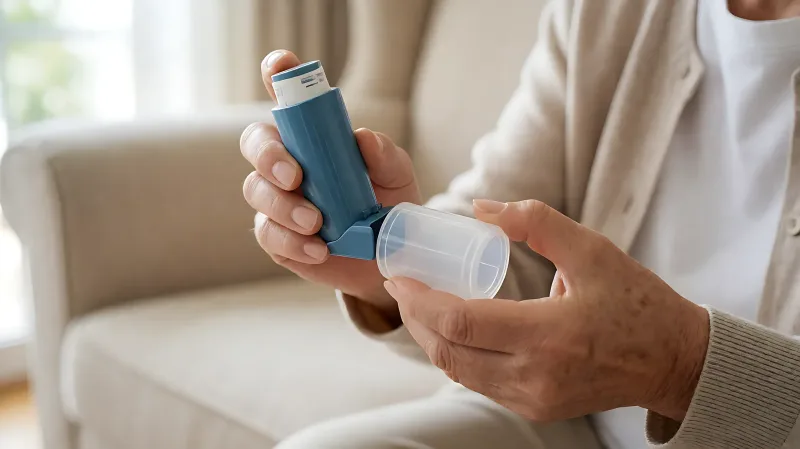
Incorrect inhaler technique significantly reduces medication delivery in COPD patients. Learn how to fix common errors and ensure every dose reaches your lungs.
Incorrect inhaler technique prevents a significant portion of prescribed medication from reaching the lungs in COPD patients. By mastering specific steps for each device type and scheduling regular technique checks, you can ensure proper drug delivery and reduce the risk of acute exacerbations. This guide outlines common mistakes and practical corrections for older adults.
For more information, see NIA healthy aging resources from the National Institute on Aging.
Why Do Inhaler Techniques Fail in Older Adults?
Chronic Obstructive Pulmonary Disease (COPD) management relies heavily on inhaled medications, yet errors remain prevalent. Research published in Frontiers in Pharmacology indicates that nearly 91 percent of patients in a large cohort did not perform correct inhalation techniques at baseline. The study found that error rates were high across all major device types, including the Handihaler, Turbuhaler, and metered-dose inhalers (MDIs).
For older adults, these errors are often compounded by age-related physiological changes. Reduced inspiratory flow makes it difficult to activate dry powder inhalers, which require a sharp, deep breath to release the medication. Additionally, cognitive factors such as memory lapses and physical limitations like arthritis can make the fine motor skills required for device operation challenging. The Global Initiative for Chronic Obstructive Lung Disease (GOLD) guidelines emphasize that device choice is as critical as drug choice; a device that is too complex for a patient's physical abilities will lead to persistent misuse.
What Are the Specific Mistakes with Metered-Dose Inhalers?
MDIs, often called puffers, require precise coordination between pressing the canister and inhaling. This hand-to-mouth coordination is the most common failure point. Many users exhale into the mouthpiece or press the canister too slowly. According to instructions from Australian health authorities, the correct technique involves breathing out fully before placing the mouthpiece in the mouth to avoid diluting the medication. Users should then breathe in slowly and deeply while simultaneously pressing the canister.
A common error is failing to hold the breath after inhalation. Pausing for five seconds allows the mist to settle in the deep lungs rather than being exhaled immediately. If you have significant difficulty coordinating this action, a spacer device is recommended. A spacer acts as a reservoir, allowing you to inhale the medication at a slower, more controlled pace. This accessory can significantly improve drug delivery for those who struggle with timing. Cleaning the spacer monthly with warm water and detergent is essential to prevent moisture buildup that can clump the medication.
How Do You Use Dry Powder Inhalers Correctly?
Dry powder inhalers (DPIs), such as the Turbuhaler or Ellipta, are often misunderstood as being easier than MDIs, but they require a strong, rapid inhalation to release the powder. A critical mistake for older adults is using these devices while still in a state of fatigue or low respiratory drive. If you cannot achieve the necessary inspiratory flow, the powder will not dislodge from the device and will not reach your lungs.
Technique varies significantly by device. For a Turbuhaler, you must twist the base to load the dose and ensure the dose counter changes before inhaling. For a Diskus or Ellipta, you must open the mouthpiece fully until it snaps shut, then inhale sharply and deeply. Exhaling into the mouthpiece of a DPI is a major error that can cause the powder to stick to the damp surface and prevent dose delivery. Always check the specific visual counter or indicator on your device to confirm that a dose has been loaded before you begin.
When Should You Check Your Inhaler Technique?
Guidelines from the National Institute for Health and Care Excellence (NICE) recommend assessing inhaler technique at every clinic visit. However, the Frontiers study highlighted a diminishing return on education over time, noting a decrease in the slope of correct technique at three months. This suggests that reminders are most effective when provided every three months.
Individualized training with a healthcare professional is far more effective than simply handing a patient a paper leaflet. The study found that one-to-one instruction significantly reduced the need to treat multiple patients to prevent one error compared to standard care. If you notice that your symptoms are not improving or that the medication feels like it is only hitting your throat and not your chest, this is a clear sign that your technique is failing. Schedule a demonstration with your pharmacist or nurse to have your specific device checked.
Frequently Asked Questions
What is the best inhaler for someone with COPD?
There is no single best inhaler for all patients; the choice depends on the specific medication required and the patient's inspiratory flow. For older adults with reduced lung function, a spacer used with a metered-dose inhaler is often preferred over dry powder devices because it requires less strength and coordination to operate.
How often should I clean my inhaler?
For metered-dose inhalers, you should wipe the mouthpiece with a dry cloth after every use to prevent clogging. If you use a spacer, it must be washed with warm water and mild detergent once a month and left to air dry. Dry powder inhalers generally do not require water cleaning, as moisture can cause the powder to clump; check your device's specific manual for maintenance instructions.
Why does my COPD medicine not seem to work?
If your medication is ineffective, it may be due to incorrect technique or poor adherence. Studies indicate that incorrect use is associated with increased hospital admissions and emergency room visits. It is crucial to have a healthcare provider observe your technique to identify specific mechanical errors before adjusting your prescription or dosage.