How Centenarian Gut Microbiomes Reveal Longevity Secrets
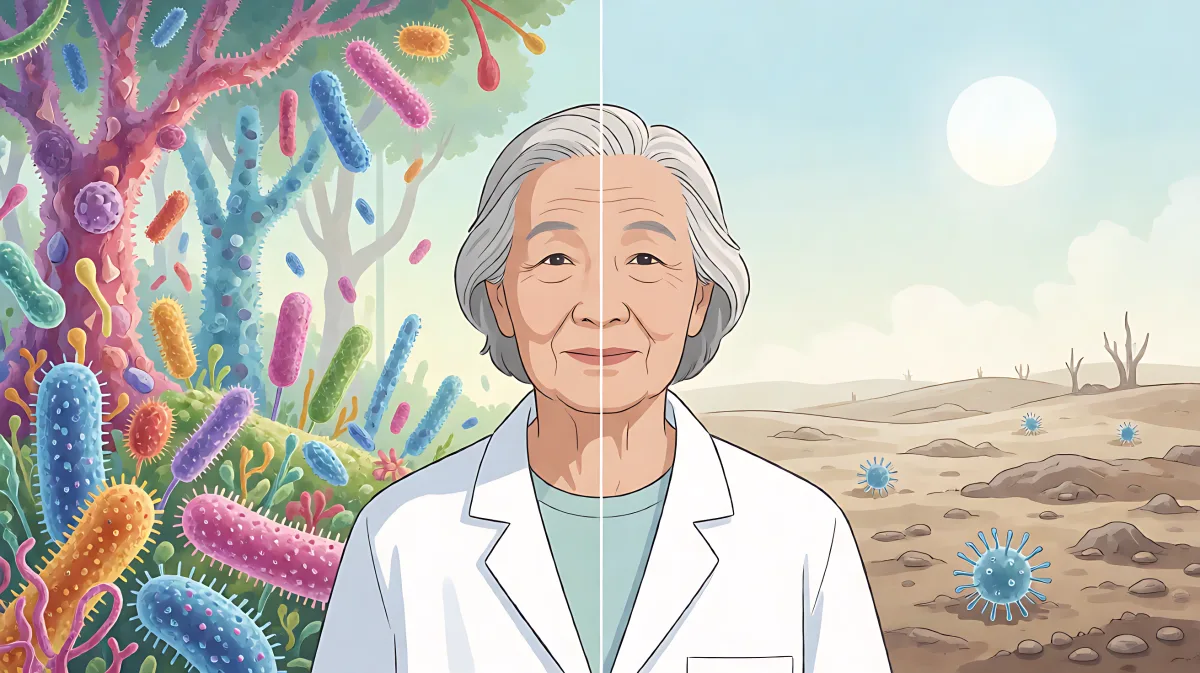
New research suggests that people who live to 100 often have gut communities similar to much younger adults. This article explores the science behind microbial diversity and provides a practical guide to nurturing a longevity-friendly microbiome.
Centenarians often possess a gut microbiome that resembles that of a younger person, characterized by higher diversity and specific beneficial bacterial communities. This 'youth-associated' microbial profile appears to support healthy aging by maintaining anti-inflammatory pathways and protecting against disease. By focusing on dietary diversity and lifestyle habits that promote microbial resilience, individuals can actively support their own gut health throughout their lives.
What makes the gut microbiome of centenarians unique?
While most people experience a significant drop in microbial diversity as they enter their 70s and 80s, those who live past 100 often defy this trend. A major study published in Nature Ageing involved 1,575 individuals from Guangxi province, China, including 297 centenarians. Researchers found that these ultra-long-lived individuals had gut communities with specific 'youth-associated' features. Their microbiomes showed a higher evenness of species, meaning no single type of bacteria dominated the ecosystem. Furthermore, their guts were enriched with beneficial Bacteroidetes and depleted of potential pathobionts, which are microbes that can cause harm when they overgrow.
This resilience is not just about having a large number of bacteria; it is about stability. Longitudinal analysis of 45 of these centenarians over a 1.5-year period revealed that their microbial communities remained stable over time. In contrast, older adults with lower microbial evenness tended to experience more drastic fluctuations in their gut health, suggesting that stability is a key marker of biological age.
How does diversity protect against age-related inflammation?
Normal aging is often accompanied by 'inflammaging,' a state of chronic, low-grade inflammation that drives many common diseases. The gut microbiome plays a crucial role in regulating this process. Centenarians tend to host bacteria that produce anti-inflammatory metabolites. For instance, higher levels of Bifidobacterium and Akkermansia muciniphila are commonly found in the guts of long-lived individuals. These bacteria help strengthen the intestinal barrier, preventing toxins from leaking into the bloodstream, and produce short-chain fatty acids like butyrate, which nourish the cells lining the colon and support immune regulation.
A distinctive feature identified in Japanese centenarians is their unique bile acid metabolism. Research suggests these individuals possess bacteria capable of producing secondary bile acids, such as isoalloLCA, which have antimicrobial properties. This specific metabolic capability helps inhibit the growth of harmful pathogens, acting as a natural defense system that persists even into extreme old age.
Which lifestyle factors contribute to a longevity-friendly microbiome?
The microbial profiles observed in centenarians are heavily influenced by lifelong lifestyle choices. Diets high in fiber, polyphenols, and prebiotic foods are consistently linked to higher microbial diversity. Foods such as legumes, whole grains, fruits, and vegetables feed the beneficial bacteria in your gut. Conversely, high-fat, low-fiber diets can promote the growth of harmful, pro-inflammatory species. Many families assume that probiotics alone are the solution to gut health, but in fact, prebiotic fiber is the primary driver of microbial diversity and resilience.
Regular physical activity also plays a modest but significant role in improving gut microbial diversity. It helps strengthen the gut's ability to resist disruption. Additionally, social connection and stress management are critical. Chronic stress can trigger dysbiosis, an imbalance in the microbial community that may lead to digestive issues and weakened immunity. Centenarian populations in 'Blue Zones' often share strong social bonds and habits of moderate caloric intake, such as the Okinawan practice of eating until only 80 percent full.
How can you support your own microbial diversity?
You do not need to match a centenarian's exact microbial composition, but you can adopt the behaviors that consistently produce longevity-associated profiles. The microbiome remains responsive to intervention throughout adulthood, though the degree of changeability may decrease with age. The goal is to build a resilient, diverse ecosystem that can withstand disruptions.
- Increase dietary diversity, focusing on 30 or more different plant sources per week to feed a wide range of bacteria.
- Consume fermented foods regularly, such as yogurt, kefir, kimchi, or sauerkraut, to introduce beneficial strains.
- Prioritize soluble fiber, which acts as a prebiotic, feeding bacteria that produce protective short-chain fatty acids.
- Limit unnecessary antibiotic use, as these drugs can wipe out beneficial microbes and reduce diversity for months.
- Engage in consistent, moderate physical activity to support gut motility and microbial health.
What are the common misconceptions about gut health and aging?
One prevalent myth is that the gut microbiome is fixed in childhood or early adulthood. In reality, it is a dynamic ecosystem that changes daily in response to diet, stress, and environment. Another misconception is that 'more bacteria is better.' A healthy microbiome is defined by balance and evenness, not just raw abundance. A diverse community with a stable core of beneficial bacteria is far more resilient than one dominated by a single species, even if that species is generally considered 'good.'
Frequently Asked Questions
Can I test my gut microbiome to check for longevity markers?
Yes, commercial tests are available that can analyze your microbial diversity and identify key bacteria. While these tests provide useful baseline data, they should be used as one piece of a broader health puzzle. Focus on the actionable insights regarding fiber intake and dietary diversity rather than worrying about specific 'missing' bacteria.
Is it too late to improve my gut health if I am already older?
No, the gut microbiome remains responsive to lifestyle changes at any age. While it may be harder to reverse significant long-term damage in very late adulthood, increasing fiber intake and reducing processed foods can still improve microbial diversity and metabolic health, contributing to better quality of life.
Do I need to take probiotic supplements to reach centenarian-level diversity?
Supplements are not necessary for most people. Whole food sources of probiotics, combined with a high-fiber, plant-rich diet, are generally more effective at sustaining long-term microbial diversity. Supplements can be helpful for short-term recovery, such as after an antibiotic course, but dietary prebiotics are the foundation of a resilient gut.