DXA Scan for Women: When & How Often to Test
A DXA scan is the gold standard for checking bone density. Discover who needs the test, how often to repeat it, and what your results mean for your health.
A DXA scan is a quick, painless imaging test that measures the density of your bones to check for osteoporosis. For women, screening is generally recommended starting at age 65, or earlier at 50 if you have specific risk factors like a family history of hip fractures. Most doctors suggest repeating the test every two to three years if your results are normal, or annually if you have osteoporosis or are on treatment.
For more information, see osteoporosis screening information from the Office on Women’s Health.
What Is a DXA Scan and How Does It Work?
DXA stands for dual-energy X-ray absorptiometry. It is the most common test used to measure bone mineral density (BMD). According to the CDC, this scan uses two low-energy X-ray beams to measure the thickness and strength of your bones, typically at the hip and spine. Unlike a standard X-ray, which just takes a picture, a DXA scan calculates how much mineral content, mostly calcium and phosphate, is in your bones.
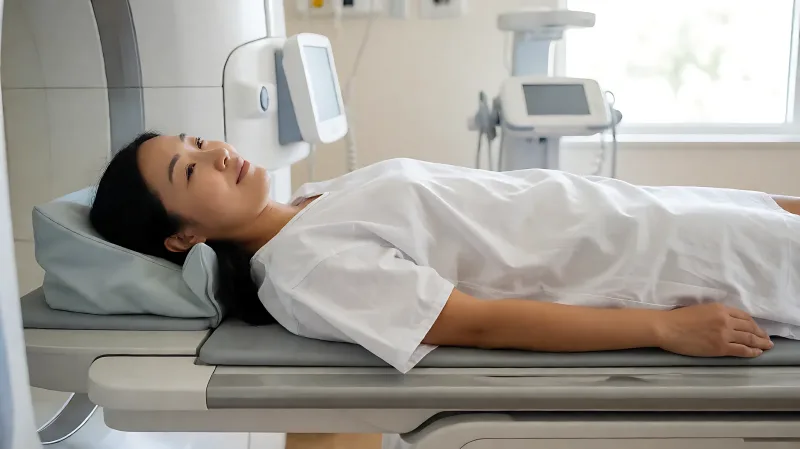
The process is non-invasive and takes about 15 to 20 minutes. You lie flat on a table while a scanning arm passes over your body. The machine detects how much radiation passes through versus is absorbed by your bones. The result is a detailed measurement that helps your provider assess your risk of breaking a bone in the future.
When Should Older Women Get a Bone Density Test?
Timing the right screening is crucial for preventing fractures. While age is a primary factor, your doctor will also consider other risks. Cleveland Clinic notes that women older than 65 should generally be screened. However, the U.S. Preventive Services Task Force recommends screening for women between 50 and 64 if their risk of osteoporosis is similar to that of a 65-year-old or older woman.
You may need a test earlier than age 50 if you have specific risk factors. These include:
- A biological parent or grandparent who had osteoporosis or a hip fracture.
- Low body weight or being under 100 pounds (45 kg).
- A history of a bone fracture after age 50.
- Use of corticosteroids for three months or longer.
- Medical conditions such as rheumatoid arthritis, chronic kidney disease, or early menopause.
If you have experienced a loss of more than 1.5 inches (3.8 cm) in height from your peak in your 20s, this is also a strong signal to get a scan.
How Often Should You Repeat the Test?
The frequency of your scans depends on your previous results and your current health status. There is no one-size-fits-all schedule, but general guidelines apply:
Normal Results: If your bone density is in the normal range, your doctor will likely recommend a scan every two to three years. This interval is sufficient because bone loss in healthy postmenopausal women is slow, usually around 1% to 2% per year.
Osteopenia: If you have low bone density but not osteoporosis (a condition known as osteopenia), you may need more frequent monitoring. Many providers suggest testing every one to two years to see if the condition progresses. Lifestyle changes and possibly medication might be introduced during this period.
Osteoporosis: If you are diagnosed with osteoporosis, annual scans are often recommended to monitor the effectiveness of medication and ensure your bones are not continuing to weaken. Once your treatment stabilizes your bone density, the frequency might decrease.
How Do You Prepare for a DXA Scan?
Preparation for a bone density test is minimal, but a few steps can help ensure accurate results.
- Remove Metal: Wear clothes without metal zippers, buttons, or buckles. Remove jewelry, watches, and glasses.
- Supplements: Avoid taking calcium supplements or multivitamins for 24 hours before the scan, as this can artificially raise your bone density reading.
- Previous Imaging: Tell your scheduler if you have had other imaging tests in the last 24 hours, as some contrast agents can interfere with DXA results.
- Pregnancy: Inform your doctor if you are pregnant or think you might be. While the radiation dose is low, it is generally advised to avoid DXA scans during pregnancy.
The procedure itself is painless. You will just need to lie still for a few minutes while the scanner takes the images.
What Do DXA Scan Results Mean?
Your results will be provided as T-scores and sometimes Z-scores. The T-score is the most critical number for diagnosis. It compares your bone density to that of a healthy 30-year-old of the same sex.
| T-Score Category | Classification | What It Means |
|---|---|---|
| Greater than or equal to -1.0 | Normal | Your bones are strong and healthy for your age. |
| Between -1.0 and -2.5 | Osteopenia | Your bone density is lower than normal but not low enough to be osteoporosis. You are at increased risk for bone loss. |
| -2.5 or less | Osteoporosis | Your bones are significantly weakened. You are at high risk for fractures. |
The Z-score is also provided, which compares you to people of your specific age and ethnicity. A low Z-score might indicate another medical condition is causing the bone loss.
Frequently Asked Questions
Does insurance cover a DXA scan?
Most major insurance plans in the U.S. cover DXA scans for women 65 and older as a preventive service. For women between 50 and 64, coverage is typically granted if you have qualifying risk factors. You should check with your provider and insurance company to confirm your specific benefits.
Is a DXA scan the same as a regular X-ray?
No. While both use X-rays, a regular X-ray takes a simple picture of the bones, which can miss early stages of bone loss. A DXA scan calculates the actual mineral density using two different energy levels, making it far more sensitive to detecting osteoporosis and osteopenia early.
Can I eat before the test?
Yes. Unlike blood tests, you can eat and drink normally before a DXA scan. There is no need for fasting. Just remember to hold off on calcium supplements for a day before the appointment.
What if my T-score is normal but I have low bone mass?
If your T-score is in the normal range, you likely do not have osteoporosis. However, you can still take steps to protect your bones. Engaging in weight-bearing exercises, ensuring adequate vitamin D and calcium intake, and maintaining a healthy body weight can help preserve bone strength as you age.
How long do the results take to arrive?
Results are often available quickly. Many clinics can provide a preliminary report on the day of the scan, while detailed reports from a radiologist may take a few days. Your doctor will review these with you to discuss next steps.