AFib Stroke Risk & Blood Thinners: Senior Management Guide
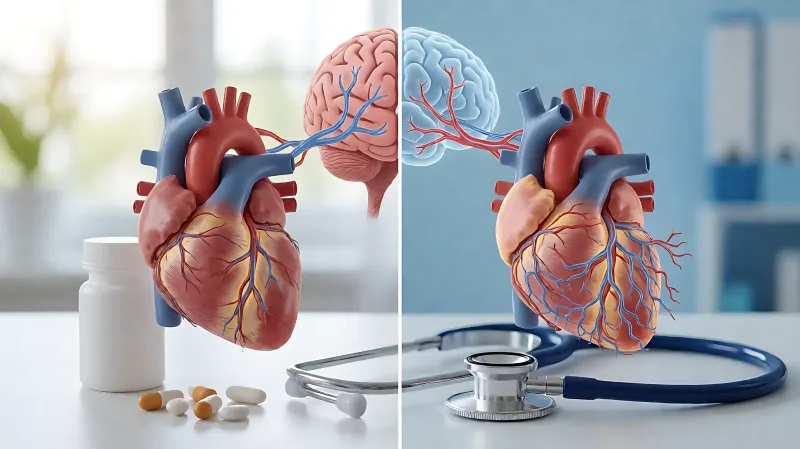
Atrial fibrillation increases stroke risk for seniors. This guide explains how to assess personal danger using standard scoring tools and manage medication safely to protect cognitive function and mobility.
Atrial fibrillation, commonly known as AFib, significantly raises the risk of stroke for older adults because blood pools in the heart chambers, forming clots that can travel to the brain. For seniors, managing this condition requires balancing the protection of anticoagulants against the potential for severe bleeding. The American Heart Association notes that AFib is the most common cause of embolic stroke, making careful medication management essential for independent living.
For more information, see CDC stroke information from the CDC.
How Does AFib Increase Stroke Risk for Older Adults?
In a healthy heart, electrical signals trigger a steady rhythm that pumps blood efficiently. When a senior has AFib, the upper chambers, called atria, beat rapidly and irregularly. This disorganized activity prevents the heart from emptying completely, causing blood to stagnate. Stagnant blood is prone to clotting, particularly in a small pouch on the left side of the heart known as the left atrial appendage. According to the Cleveland Clinic, a significant majority of stroke-causing clots in AFib patients originate in this area. If a clot breaks loose, it travels through the bloodstream to the brain, blocking a vessel and causing a stroke.
Statistically, the risk is substantial. The American College of Cardiology points out that people with AFib face a fivefold higher risk of stroke compared to those with a regular heartbeat. Furthermore, roughly one in three individuals with this condition will experience a stroke during their lifetime if untreated. For those over 80, the prevalence of the condition itself is high, with estimates suggesting that 10 percent of this age group may develop AFib. This baseline risk necessitates proactive management strategies, often involving daily medication.
How Is Personal Stroke Risk Calculated?
Doctors do not treat every AFib patient the same. To determine if a senior needs a blood thinner, clinicians use a specific scoring tool called the CHA2DS2-VASc score. This acronym stands for Congestive heart failure, Hypertension, Age 75 and older, Diabetes, Stroke history, Vascular disease, Age 65 to 74, and Sex category. Each factor assigns points to the total score, which correlates with the annual risk of having a stroke.
| Risk Factor | Points |
|---|---|
| Congestive Heart Failure | 1 |
| High Blood Pressure | 1 |
| Age 75 and Older | 2 |
| Diabetes Type 2 | 1 |
| Prior Stroke or Mini-Stroke | 2 |
| Vascular Disease | 1 |
| Age 65 to 74 | 1 |
| Female Sex | 1 |
A score of zero indicates a low likelihood of stroke, often meaning no blood thinner is required. A score of one suggests a low-to-moderate risk, while a score of two or more indicates a high risk where anticoagulation is strongly recommended. For example, a 75-year-old man with high blood pressure and diabetes might have a score of four. The American College of Cardiology explains that this corresponds to an annual stroke risk of nearly 5 percent. As the score rises, so does the danger; a score of six implies a 9.3 percent annual chance of stroke. These numbers help seniors and their caregivers understand why consistent medication adherence is critical.
What Are the Bleeding Risks of Blood Thinners?
While anticoagulants prevent clots, they also reduce the blood's ability to stop bleeding naturally. This creates a trade-off that seniors must manage carefully. The American College of Cardiology notes that while the average risk of a major bleeding event from these drugs is between 2 and 3 percent, the risk of stroke without treatment is often higher. Most minor bleeding, such as nosebleeds or easy bruising, is manageable and not life-threatening. However, serious bleeding, including intracranial hemorrhage, is rare but devastating. Experts emphasize that stroke often leads to long-term disability, whereas most bleeding incidents are reversible with medical intervention.
Individual risk varies based on other health conditions and medications. For instance, taking aspirin or non-steroidal anti-inflammatory drugs (NSAIDs) like ibuprofen can increase bleeding risk when combined with blood thinners. Seniors should discuss all over-the-counter products with their doctors. The Food and Drug Administration advises checking for interactions, particularly with supplements like fish oil or vitamin E, which may also affect clotting. Regular monitoring ensures that the medication remains within the therapeutic range, maximizing stroke protection while minimizing bleed risk.
Which Blood Thinners Are Best for Seniors?
There are two main categories of anticoagulants: warfarin and direct oral anticoagulants, often called DOACs. Warfarin, known by the brand name Coumadin, has been used for decades. It is effective but requires frequent blood tests, usually every two to three weeks, to monitor the international normalized ratio, or INR. Diet also impacts warfarin; leafy green vegetables contain vitamin K, which affects clotting, so consistency is key. DOACs, such as apixaban, dabigatran, rivaroxaban, and edoxaban, are newer options that do not require routine blood monitoring or have fewer dietary restrictions. They offer a convenient once-or-twice-daily dose, which is appealing to seniors managing multiple medications. The choice depends on cost, kidney function, and personal preference for convenience versus monitoring.
What Are Alternatives to Daily Blood Thinners?
For seniors who cannot tolerate long-term anticoagulation due to high bleeding risk or frequent falls, left atrial appendage closure is an option. This is a one-time procedure, such as the WATCHMAN implant, which seals off the pouch where most clots form. The Cleveland Clinic highlights that this device reduces the need for long-term blood thinners. While the procedure itself carries risks, such as infection or device migration, it offers a permanent solution for stroke prevention. Over 600,000 people have chosen this alternative, according to Boston Scientific data. Seniors should consult a cardiologist to determine if they are a candidate for this intervention versus medication.
How Can Seniors Safely Manage AFib at Home?
Safe management involves more than just swallowing a pill. Seniors should maintain a consistent medication schedule, using pill organizers if necessary to prevent missed doses. It is crucial to inform healthcare providers, including dentists and surgeons, about anticoagulant use before any procedure. They may need to adjust dosing or hold the medication temporarily. Watch for warning signs of bleeding, such as dark stools, pink or red urine, or unusual bruising. The Centers for Disease Control and Prevention recommends staying active to maintain cardiovascular health, but seniors should choose low-impact exercises to reduce fall risk, which is a major concern when on blood thinners. Regular follow-up appointments allow doctors to reassess the CHA2DS2-VASc score, as risk factors change over time.
Frequently Asked Questions
Can seniors stop taking blood thinners after an AFib ablation?
Not necessarily. The American College of Cardiology states that even after a successful ablation procedure, some patients may still require anticoagulation depending on their underlying risk factors. The decision depends on whether the AFib is completely cured and the individual's CHA2DS2-VASc score. Consult a specialist for a personalized assessment.
Is warfarin or a DOAC better for older adults?
DOACs are generally preferred for seniors due to convenience and fewer dietary restrictions. However, warfarin remains a viable option for patients with mechanical heart valves or severe kidney disease. The American Heart Association notes that DOACs are associated with a lower risk of intracranial bleeding compared to warfarin, making them a safer default for many older adults.
What should I do if I fall while on a blood thinner?
If you experience a significant fall, especially one involving head trauma, seek immediate medical attention. The American College of Cardiology emphasizes that intracranial bleeding is a rare but serious risk. Do not ignore symptoms like confusion or severe headache after a fall. Inform emergency responders that you are on anticoagulants.
Do I need to change my diet if I take DOACs?
No, unlike warfarin, direct oral anticoagulants like Eliquis or Xarelto are not significantly affected by vitamin K in leafy greens. You can maintain a consistent, balanced diet without strict monitoring of vegetable intake. The National Institutes of Health supports a heart-healthy diet for overall cardiovascular wellness, but specific food restrictions are not required for DOAC users.