5 Active Aging Strategies For A Healthier, Engaged Life
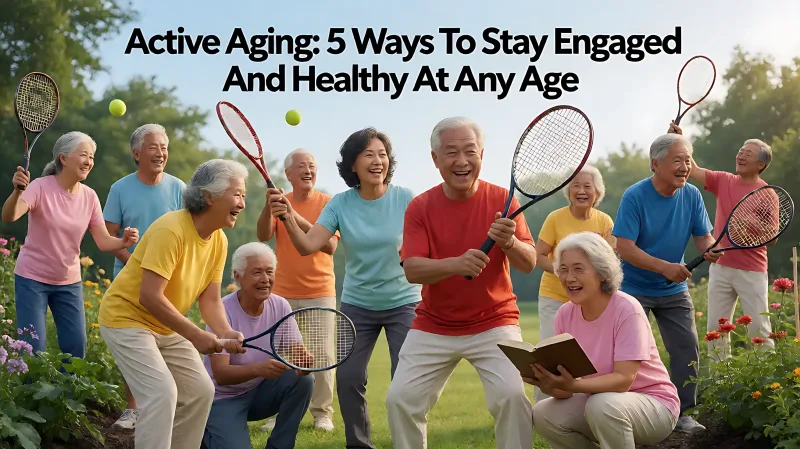
For decades, aging was synonymous with decline, a gradual retreat from public life into passive rest. Today, the paradigm has shifted dramatically. Active aging is no longer a concept reserved for the
For decades, aging was synonymous with decline, a gradual retreat from public life into passive rest. Today, the paradigm has shifted dramatically. Active aging is no longer a concept reserved for the golden years; it is a proactive lifestyle philosophy applicable to adults from their thirties onward. It is defined not merely by the absence of disease, but by the presence of vitality, engagement, and independence.
This approach encourages individuals to continuously manage the process of aging to enhance well-being through physical movement, mental stimulation, and social connection. By redefining what it means to grow older, we can dismantle the stigma of senescence and replace it with a framework of resilience.
This article explores five practical, evidence-based strategies to stay engaged and healthy at any age. We will examine how continuous learning, targeted physical fitness, psychological adaptability, and strategic lifestyle planning (including residential choices) contribute to a fulfilling life. Drawing on insights from longevity science and high-profile examples of resilience, we outline a roadmap for maintaining autonomy and quality of life regardless of chronological age.
For more information, see NIA healthy aging resources from the National Institute on Aging.
The Principle of Active Aging and Continuous Learning
At the core of active aging is the principle that the brain and body require consistent engagement to prevent atrophy. Neuroplasticity, the brain’s ability to reorganize itself by forming new neural connections, is a lifelong process, but it diminishes in potency if unused. Continuous learning acts as the primary catalyst for maintaining this plasticity. It is not limited to formal education or degree attainment; rather, it encompasses any activity that challenges the mind to process new information or learn new skills.
Cognitive Stimulation Beyond Memorization
Traditional views of mental exercise often focus on memorization, such as learning a language or playing chess. While these are beneficial, modern research suggests that "creative cognition" is equally vital. Engaging in activities that require problem-solving, critical analysis, and creative synthesis provides a more robust cognitive reserve. This reserve acts as a buffer against the effects of neurodegenerative diseases like Alzheimer’s and dementia. For instance, learning to play a musical instrument engages multiple areas of the brain simultaneously, including motor, auditory, and visual processing centers, creating stronger and more numerous neural pathways than single-task activities.
- Language Acquisition: Learning a second language after age 50 has been shown to delay the onset of cognitive decline by an average of 4.5 years.
- Digital Literacy: Mastering new software, coding basics, or AI tools prevents technological obsolescence, keeping individuals connected to the modern workforce and social spheres.
- Intergenerational Knowledge Exchange: Teaching younger generations specific skills (from gardening to history) reinforces one’s own mastery while providing social bonding and a sense of purpose.
The psychological benefit of continuous learning is equally significant. It combats the "loss of identity" that often accompanies career transitions or retirement. By adopting the mindset of a "forever student," individuals maintain a forward-looking orientation, which is strongly correlated with lower rates of depression and higher life satisfaction.
Physical Fitness and Mental Engagement for Long-Term Independence
Physical activity is the cornerstone of active aging, but the definition of "fitness" evolves with age. In younger adulthood, fitness may focus on hypertrophy and performance metrics. In later stages, the priority shifts to functional fitness: the ability to move through daily life with confidence and safety. The goal is not just to live longer, but to maintain independence (the ability to manage personal affairs, mobility, and health without reliance on others).
The Pillars of Functional Fitness
Effective physical engagement for long-term independence requires a balanced approach that targets four key pillars: cardiovascular endurance, strength, flexibility, and balance. Neglecting any one of these can lead to a disproportionate risk of falls, chronic pain, or cardiovascular events.
| Component of Fitness | Key Benefit for Independence | Recommended Activities (Age-Adaptable) |
|---|---|---|
| Strength Training | Preserves muscle mass (prevents sarcopenia), supports joint health, and enables independent movement (e.g., climbing stairs, carrying groceries). | Resistance bands, bodyweight exercises, weight lifting, tai chi (weighted). |
| Cardiovascular Endurance | Improves heart health, boosts energy levels, and supports brain health through increased blood flow. | Walking, swimming, cycling, dancing, water aerobics. |
| Balance and Flexibility | Reduces the risk of falls, which are a leading cause of disability in older adults. | Yoga, Pilates, tai chi, specific balance drills. |
Mental engagement through physical activity is a two-way street. Exercise releases endorphins and brain-derived neurotrophic factor (BDNF), a protein that promotes the growth of new neurons and synapses in the hippocampus, the brain region critical for memory and learning. Therefore, physical fitness is not separate from mental health; it is a primary driver of cognitive resilience. Adults who commit to regular moderate-intensity exercise for at least 150 minutes per week report significantly higher levels of self-efficacy and confidence in managing daily tasks.
Navigating Health Challenges: Resilience and Adaptation
Active aging does not imply the absence of illness. In fact, most adults will face chronic health conditions, mobility limitations, or sensory changes at some point. The distinction between "successful aging" and passive decline lies in psychological resilience and the capacity for adaptation. Resilience is the ability to bounce back from adversity, while adaptation is the flexible modification of behaviors and environments to accommodate new limitations.
Psychological Resilience and the Mindset of Growth
High-profile examples of longevity, such as centenarians in "Blue Zones," often attribute their health not just to diet or exercise, but to a strong sense of purpose and community. When faced with health challenges, individuals who adopt a growth mindset view obstacles as opportunities to adapt rather than insurmountable barriers. This perspective reduces the stress response and supports immune function. Conversely, a defeatist mindset can lead to social withdrawal and accelerated physical decline.
- Acceptance and Adaptation: Acknowledging a limitation (e.g., reduced vision) and proactively seeking tools (e.g., magnifiers, better lighting) allows one to continue hobbies independently.
- Social Support Networks: Resilience is rarely built in isolation. Strong social connections provide emotional support, practical help, and accountability, acting as a buffer against the stress of chronic illness.
- Preventative Maintenance: Active aging involves shifting from reactive healthcare (treating symptoms after they appear) to proactive health monitoring. Regular check-ups, blood work, and early screening for conditions like diabetes or heart disease allow for timely intervention that preserves quality of life.
Adaptation also extends to social identity. As physical capabilities change, so must the way one engages with the world. This might mean shifting from hiking long trails to water-based exercise, or from playing contact sports to strategic board games. The key is to maintain engagement without pushing the body to unsafe limits.
Lifestyle Choices: From Daily Habits to Residential Planning
Active aging is embedded in the fabric of daily life. It is influenced by micro-decisions regarding nutrition and sleep, as well as macro-decisions regarding housing and community integration. These choices collectively determine the degree of autonomy and social connection an individual retains over time.
Dietary and Sleep Optimization
Nutrition is the fuel for active aging. A diet rich in anti-inflammatory foods (such as fatty fish, leafy greens, nuts, and berries) supports cellular health and reduces the risk of chronic diseases. Protein intake must be sufficient to maintain muscle mass, a factor often overlooked in later years. Equally important is sleep hygiene. Chronic sleep deprivation impairs cognitive function and weakens the immune system. Prioritizing 7-9 hours of quality sleep is as critical as any physical exercise regimen.
Residential Planning for Vibrant Living
As independence remains the goal, the physical environment must support it. Many adults are rethinking their housing options to ensure that their surroundings encourage activity and social interaction rather than isolation. This includes considering "aging in place" modifications for existing homes or transitioning to residential options that foster community.
- Aging in Place Modifications: For those wishing to stay in long-term homes, installing grab bars, non-slip flooring, and smart home technology can prevent falls and reduce the need for caregiver assistance. This allows individuals to maintain their familiar environment while enhancing safety.
- Active Aging Communities: Unlike traditional retirement homes that may be facility-focused, modern active aging communities are designed around lifestyle. They feature fitness centers, wellness programs, and abundant common spaces that encourage spontaneous social interaction. Residents can maintain a high level of independence while having access to professional care if needed.
- Social Infrastructure: The most critical feature of any residential choice is the proximity to social hubs (libraries, parks, community centers, and cafes). Living in an area with active community infrastructure reduces the risk of social isolation, a major predictor of premature mortality.
The transition to new residential options should be viewed as an expansion of opportunities, not a restriction. It is a strategic move to align one’s living environment with one’s values of health, connection, and engagement.
Summary of Strategic Actions
| Category | Action Step | Outcome |
|---|---|---|
| Mental | Learn a new skill or hobby every year. | Increased cognitive reserve and novelty. |
| Physical | Combine strength, cardio, and balance training. | Reduced fall risk and higher independence. |
| Resilience | Cultivate social support and adaptive strategies for health changes. | Higher psychological well-being during crises. |
| Environment | Assess housing for accessibility and social connectivity. | Enhanced safety and sustained community engagement. |
Ultimately, the choice of where and how one lives is a profound expression of one’s commitment to active aging. It signals a desire to remain an active participant in society, rather than a passive recipient of care.
Conclusion
Active aging is a holistic lifestyle approach that transcends any single demographic. It is a commitment to staying engaged physically, mentally, and socially throughout every decade of life. By embracing continuous learning, prioritizing functional fitness, cultivating psychological resilience in the face of health challenges, and making strategic lifestyle and residential choices, individuals can define their later years by vitality and independence rather than decline. The path to a fulfilling life at any age is paved with small, consistent actions: the decision to learn, the habit to move, and the willingness to adapt. As we look to high-profile examples of longevity, the common thread is not genetics alone, but a life of purposeful engagement. By adopting these five strategies, adults can ensure that aging is not a period of waiting, but a dynamic phase of continuous growth and connection.