Fix Hearing Aid Wind Noise: Practical Tips & Tech
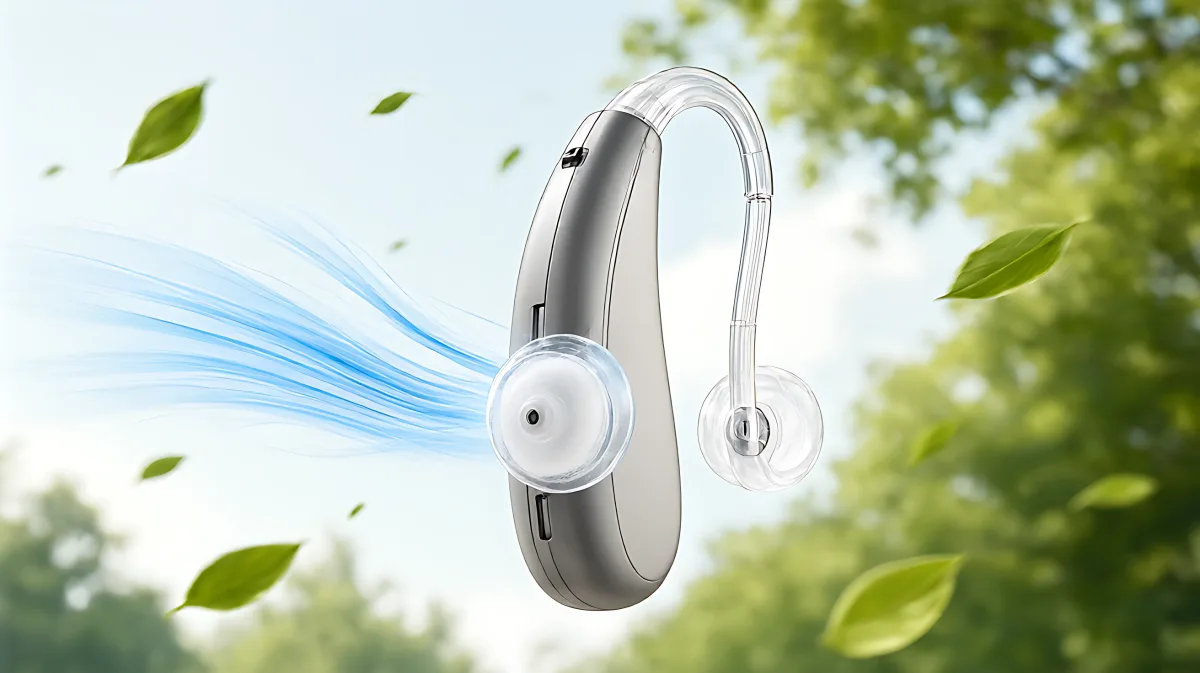
Wind hitting your hearing aid microphone creates a low-frequency roar that masks speech. Discover how physical barriers, directional mics, and specific settings solve the problem.
Wind noise causes a low-frequency roar in hearing aids by creating turbulence directly over the exposed microphones, not by carrying sound from a distance. To stop the feedback whine and keep conversations clear, use a wide-brimmed hat to shield the device, enable the built-in wind reduction program, and position yourself so the wind does not hit the microphone directly. These steps, combined with directional microphone technology, allow the aid to distinguish between rushing air and human speech.
Why does wind create a whine in my hearing aid?
Unlike traffic or music, wind noise is generated at the source of the microphone. When air moves past the tiny openings on your hearing aid, it tumbles and creates fluctuating pressure changes. This physical disturbance registers as a loud rumble or whooshing sound. Because the microphone is extremely sensitive, it amplifies this turbulence just as strongly as it amplifies a friend’s voice, resulting in a mix that can bury speech entirely. This explains why the volume of the roar matches the volume of the surrounding environment; the noise is not just 'out there,' it is being processed at your ear.
Which hearing aid styles are most affected by wind?
Not all devices suffer equally. Behind-the-ear (BTE) and receiver-in-canal (RIC) models typically have microphones that sit on the outer shell of the ear, exposing them directly to airflow. These styles are the most susceptible to the whine. In-the-ear (ITE) and completely-in-canal (CIC) devices benefit from the natural windbreak provided by your head and pinna, making them inherently more resistant to wind noise. However, even protected styles are not immune to strong gusts.
How do modern hearing aids technically block wind noise?
Advanced devices, such as those from Signia, use binaural processing and dual-microphone detection to identify wind. When wind hits one ear harder than the other, the system compares the signal from the less-affected side to compensate for the turbulence. This real-time adjustment preserves the clarity of the desired sound while attenuating the roar. Many higher-end models also include automatic environment detection, which seamlessly switches to a wind-optimized program without manual input.
What physical steps can I take immediately?
Hardware fixes are often the cheapest and most effective first line of defense. A wide-brimmed cap or hat breaks up the airflow before it reaches the microphone. For BTE users, specialized wind guards or foam sleeves can be attached to the device. These accessories act as physical barriers, reducing the turbulence that causes the whine. Additionally, positioning yourself on the sheltered side of a table or keeping a conversation partner on the side away from the wind prevents their voice from having to fight through the gusts.
Is turning down the volume a safe solution?
Many users assume that lowering the volume will quiet the wind roar without losing the conversation, but in fact, this usually backfires. Because the wind noise and the speech are processed together, turning down the gain lowers both the roar and the voice simultaneously. You end up losing the clarity of the conversation you were trying to maintain. The correct approach is to leave the volume steady and use specific wind-reduction features or physical shields to isolate the speech.
How can I train my brain to listen through gusts?
While no app can perfectly simulate the unique turbulence of your specific hearing aids, you can practice the skill of following speech in variable noise. Wind is not steady like a fan; it surges and drops. By practicing with background noise that rises and falls, you train your brain to catch speech in the quiet gaps between gusts. This cognitive training complements the technical features of your device, making breezy days less frustrating.
Common Mistakes and Misconceptions
Myth: I should remove my hearing aids when it gets windy to avoid the noise.
Fact: While removing them stops the whine, it also removes your alertness to hazards and your ability to communicate. The goal is to manage the noise, not eliminate the device. Keep the aids in and use the settings and accessories designed for outdoor use.
Checklist for Windy Day Success
- Inspect your gear: Ensure any foam covers or wind guards are clean and intact.
- Wear headgear: Put on a cap or hat with a brim to shield the microphones.
- Check settings: Open your hearing aid app or menu to confirm the wind reduction program is active.
- Position strategically: Sit or stand with your back to the wind and face the speaker.
- Communicate clearly: Tell your companion to keep their voice on the calm side of your body.
FAQ
Does a hat actually reduce the whine in hearing aids?
Yes. A brimmed cap or hat physically blocks the direct flow of air to the microphone, reducing the turbulence that causes the roaring sound. It is one of the most effective low-cost solutions available for outdoor use.
Can I just turn my hearing aids off when it's windy?
It is not recommended to turn them off completely if you need to hear for safety or conversation. Instead, use the wind reduction settings to manage the noise level while keeping the device active and useful.
Do all hearing aids have a wind noise feature?
Most modern digital hearing aids include some form of wind noise reduction, either as an automatic feature or a selectable program. If yours does not seem to have it, ask your audiologist to check the settings or look into manual adjustments.
Why is the noise different in my two ears?
Wind direction affects each side of your head differently. Advanced devices use binaural processing to compare these differences, using the cleaner signal from one ear to help restore clarity on the side where the wind is stronger.