Safe Entryway Design for Seniors with Low Vision
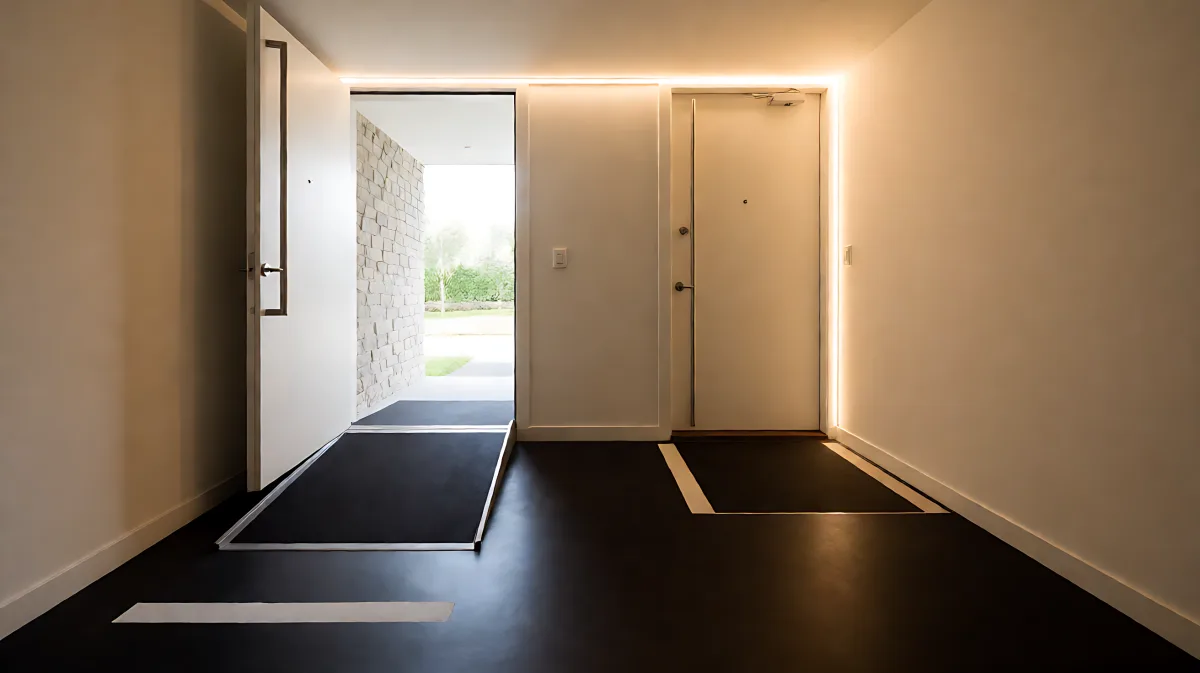
Creating a safe entryway for seniors with visual impairment requires more than just a doormat. It involves strategic lighting, high-contrast surfaces, and clear pathways to prevent falls and promote independence.
A safe entryway for seniors with visual impairment is defined by high-contrast surfaces, layered glare-controlled lighting, and clear, unobstructed pathways that allow for independent navigation without the risk of tripping or disorientation.
Why entryway safety matters for low vision seniors
The entrance to a home is often the most hazardous space for older adults living with visual loss. Glare from windows, low light levels at dusk, and unclear transitions between outdoor pavement and indoor flooring create significant fall risks. According to data cited by Caregiver Space, the personal costs associated with managing vision loss, including transportation and support, can approach $2,000 annually, making a safe, independent home environment a critical financial and emotional priority. For seniors with glaucoma or macular degeneration, the inability to clearly see the edge of a step or the threshold of a door can turn a simple routine into a source of anxiety. Designing this space with intention respects their autonomy while drastically reducing the likelihood of injury.
How to assess your current entryway risks
Before buying new lighting or flooring, you need a clear map of where the hazards lie. Many families assume that brighter lights solve all visibility problems, but in fact, unmanaged glare from glossy surfaces or direct sun can blind a person with low vision just as effectively as darkness. You must evaluate the physical flow from the street to the main living area.
- Map the traffic path: Trace the route a senior takes from the curb to the inner rooms. Note any thresholds, changes in floor material, or narrow turns.
- Check the contrast: Stand at the door and look at the floor. If the doormat blends into the tile, or if the door frame matches the wall, it becomes invisible to low vision eyes.
- Evaluate the lighting: Does the porch light cast sharp, dark shadows on the steps? Is there enough ambient light to see the handrail clearly during evening arrivals?
- Identify trip hazards: Look for coiled cables, loose gravel on the walkway, or clutter blocking the primary path.
What lighting strategies reduce glare and improve visibility
Lighting is the single most impactful upgrade for an accessible entryway. The goal is to create even, shadow-free illumination that highlights edges without creating reflections. The American Federation for the Blind advises that there is no single "right" light source, but rather a need for layered illumination.
Start by replacing standard porch bulbs with high-wattage, diffuse LED options. Use task lighting to illuminate the specific surface of the door knob and the immediate step. Avoid glossy finishes on all surfaces, including paint and flooring, as these reflect light and create disorienting halos for those with cataracts or glaucoma. For homes with strong afternoon sun, install adjustable blinds or exterior shades to control natural glare without blocking all daylight.
How to use color contrast and tactile cues effectively
Color is a wayfinding tool. You do not need to repaint the entire house, but you should focus on high-contrast zones. Paint the door frame in a color that differs significantly from the surrounding wall. If the door is white, a dark gray or black frame makes it instantly identifiable. Similarly, the edge of any step or change in elevation should be marked with a high-visibility tape or paint strip.
Tactile cues are equally vital, especially for seniors with total or near-total blindness. Use a change in texture at the threshold of the front door to signal the transition from outdoors to indoors. A rougher, non-slip surface at the entry point provides a physical feedback loop that alerts the resident they have moved safely inside. Keep these cues consistent; moving tactile markers can confuse the spatial memory of the resident.
Which flooring materials offer the best grip and safety
Slippery floors are a primary cause of falls in the home. The entryway is the first place where water and snow are tracked inside, making surface texture critical. Replace shiny, polished hardwood or smooth tile at the threshold with a non-slip alternative. Options include textured rubber mats, industrial low-pile carpet, or small-format tile with visible grout lines, which improve traction according to building safety guides. Ensure any mat used at the door has a heavy-duty, non-skid backing to prevent it from sliding when wet.
Is motion-sensor technology useful or confusing?
Adaptive technology can support independence, but it must be tuned carefully. Motion-sensor lights are excellent for hands-free navigation, allowing a senior to enter a dark hallway and have the light automatically adjust. However, many seniors find sudden, bright flashes startling. Choose sensors with a gradual "ramp-up" brightness feature and adjust the sensitivity so the light does not flicker on and off. Ensure the sensor covers the entire threshold and the first few steps into the home. Pair these with smart switches that allow remote control, but keep physical switches painted in a contrasting color as a backup.
FAQ
How much contrast is enough for an accessible entryway?
Aim for a distinct difference in lightness. A dark door on a light wall is effective, as is a light threshold strip on a dark floor. Test the contrast by squinting your eyes; if you can still clearly see the boundary, it is likely visible to someone with reduced visual acuity.
Should I install handrails on a flat entryway?
Yes. Even on a flat ramp or walkway, a low-mounted handrail provides a physical guide for orientation and stability. It helps seniors navigate the space without bumping into door frames or other furniture.
Are bright white lights better for low vision?
Not necessarily. Harsh white light can increase glare. Warm white LEDs with a high color rendering index are often more comfortable and provide better color differentiation for objects like buttons or doormats.
How do I secure a doormat without making a trip hazard?
Use a mat with a thick, interlocking pile that fits snugly under the door frame to prevent it from curling up. Alternatively, install a recessed mat tray or use heavy-duty industrial-grade interlocking tiles that do not shift underfoot.