Audio Barriers in Smart Homes
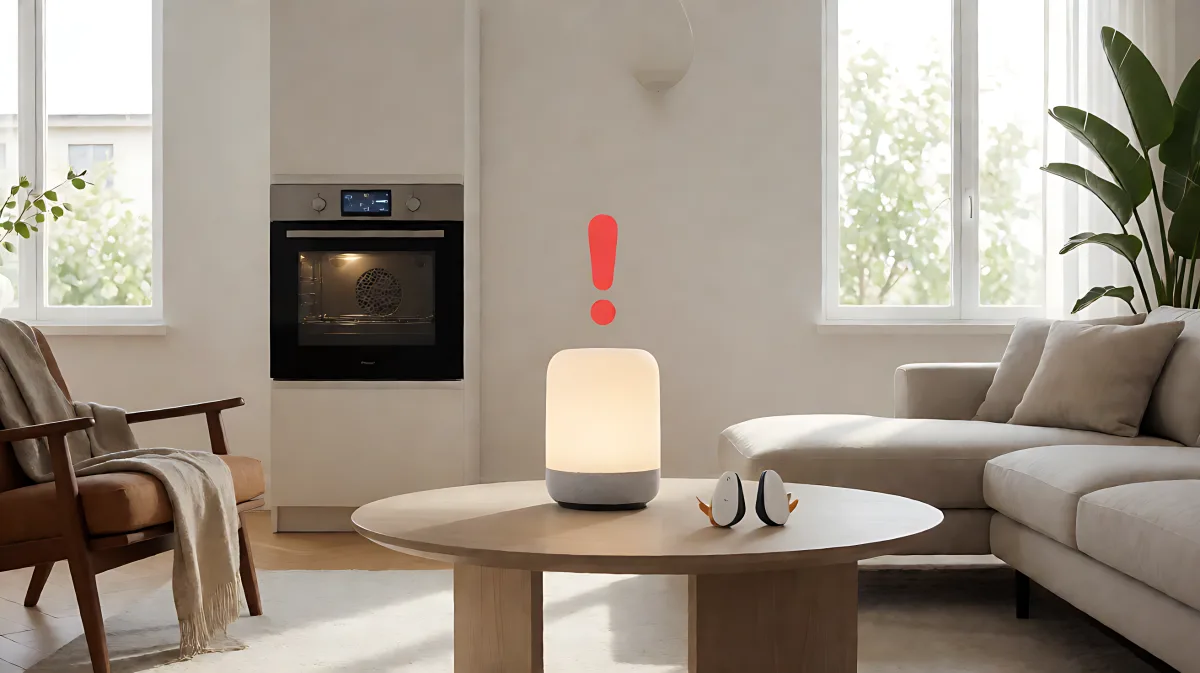
Smart homes rely on subtle sounds to deliver critical alerts. For users with hearing impairment, these invisible audio barriers create safety gaps and isolation. Modern digital hearing aids are bridging the gap, but full integration remains incomplete.
In 2026, the average smart home contains over 14 audio-enabled devices. For individuals with hearing impairment, this dense audio landscape presents an invisible barrier, as most devices rely on subtle chimes, high-pitched tones, or low-volume voice confirmations that fall outside the frequency range or sensitivity of many hearing-aid users.
Why Do Smart Homes Create Invisible Audio Barriers?
The proliferation of the Internet of Things (IoT) has transformed residential environments into multi-sensory ecosystems. However, audio is rarely designed with assistive listening in mind. Smart thermostats, doorbells, and kitchen appliances often emit a specific frequency—typically between 2,000 and 4,000 Hz—intended to be "unobtrusive." For a user with a significant hearing loss profile in those exact bands, the alert is effectively silent. This creates a safety hazard, as a user might miss a boiler warning or a smoke detector chime that blends into background noise. Unlike the analog world, where a loud bell was a universal cue, the digital home assumes a baseline of hearing ability that does not reflect the global population's audiometric reality.
How Do Voice Assistants Fail Deaf and Hard of Hearing Users?
Voice assistants like Amazon and Apple devices are the central hub of the modern home. Yet, the user interface is predominantly audio-first. When a user issues a command, the system provides a spoken confirmation. For users with sensorineural hearing loss, the lack of clear visual feedback makes it difficult to verify if the command was executed. In 2026, while some visual overlays exist in third-party apps, the native integration of large-print text and high-contrast visual cues in major operating systems remains inconsistent. Furthermore, the natural speech of voice assistants is often compressed to save data, which reduces the clarity of phonemes for users wearing hearing aids, making critical information like weather updates or calendar reminders difficult to process without straining.
What Does Digital Technology Add to the Equation?
Modern digital hearing aids function as powerful computers that process sound to make it intelligible. Manufacturers like ReSound and AN Direct have integrated Bluetooth streaming and adaptive sound processing. This allows hearing aids to bypass the "loudness" issue of smart devices by providing a personalized, noise-reduced audio feed directly to the ear. For example, the AN Direct MDHearing app allows users to fine-tune their hearing aid settings remotely, ensuring that the specific audio profile of their home environment is optimized. However, this requires the user to actively manage their hardware, creating a cognitive burden that automated smart homes were not designed to impose.
What Are the Practical Solutions for Modern Homes?
Building an accessible smart home in 2026 requires a proactive approach to audio design. The goal is to reduce reliance on subtle, high-frequency chimes and instead utilize multi-modal alerts. Below is a breakdown of current accessibility technologies and user strategies.
| Smart Home Element | Common Audio Barrier | Assistive Strategy |
|---|---|---|
| Video Doorbell | Short, faint chime (30ms) | Use a digital hearing aid with a "phone/multi-media" program that filters out background hum and amplifies the transient tone. |
| Voice Assistants | Low-volume confirmation phrases | Enable screen-reading features on companion apps to visualize transcriptions of voice commands in real-time. |
| Smart Appliances | Specific mechanical buzzes | Integrate third-party visual alert systems (LED strips or flashing lights) to translate device status. |
Furthermore, the "connected living" trend is shifting toward wearable technology. ReSound's digital hearing aids can pair directly with smartphones and tablets, turning the wearer's phone into a dedicated hearing-aid remote. This allows for discreet volume adjustments and program switching without touching the device, facilitating a more seamless experience when the sound environment changes from a quiet room to a bustling street. For users in mobility-restricted situations, organizations like Eye Care for Michigan are highlighting the importance of "universal design"—not just for vision, but as a broader philosophy of removing physical and digital barriers from home environments.
How Can You Audit Your Home for Accessibility?
Conducting a home audit is essential. Start by mapping every audible alert in your residence. Note the pitch and duration of each sound. If you use a hearing aid, test whether you can identify the source of the sound within three seconds. If not, that device is a barrier. Consult with a hearing care professional to see if a specific digital hearing aid program can prioritize the frequencies your smart devices use. Additionally, leverage the growing ecosystem of compatibility tools. As of 2026, most major hearing aid manufacturers support a "telecoil" function or Bluetooth LE Audio, which allows for direct, uncompressed audio streaming from devices, significantly improving speech-to-noise ratios.
FAQ
Do smart home devices support direct audio streaming to hearing aids?
Yes, many 2026-generation smart speakers and smartphones use Bluetooth Low Energy (BLE) and Audio to stream music and alerts directly to compatible digital hearing aids, bypassing the room's ambient noise.
What is the main difference between analog and digital hearing aids for smart homes?
Digital hearing aids use computerized processors to suppress background noise and enhance specific frequencies, making smart device alerts clearer, whereas analog aids simply amplify all sounds, often making the home environment uncomfortably loud.
Are there regulations requiring smart home audio accessibility?
While laws like the Americans with Disabilities Act (ADA) mandate accessibility in public spaces, smart home devices are largely treated as consumer electronics, leaving manufacturers with varying degrees of voluntary accessibility commitments.