Smartphone Battery Life Comparison
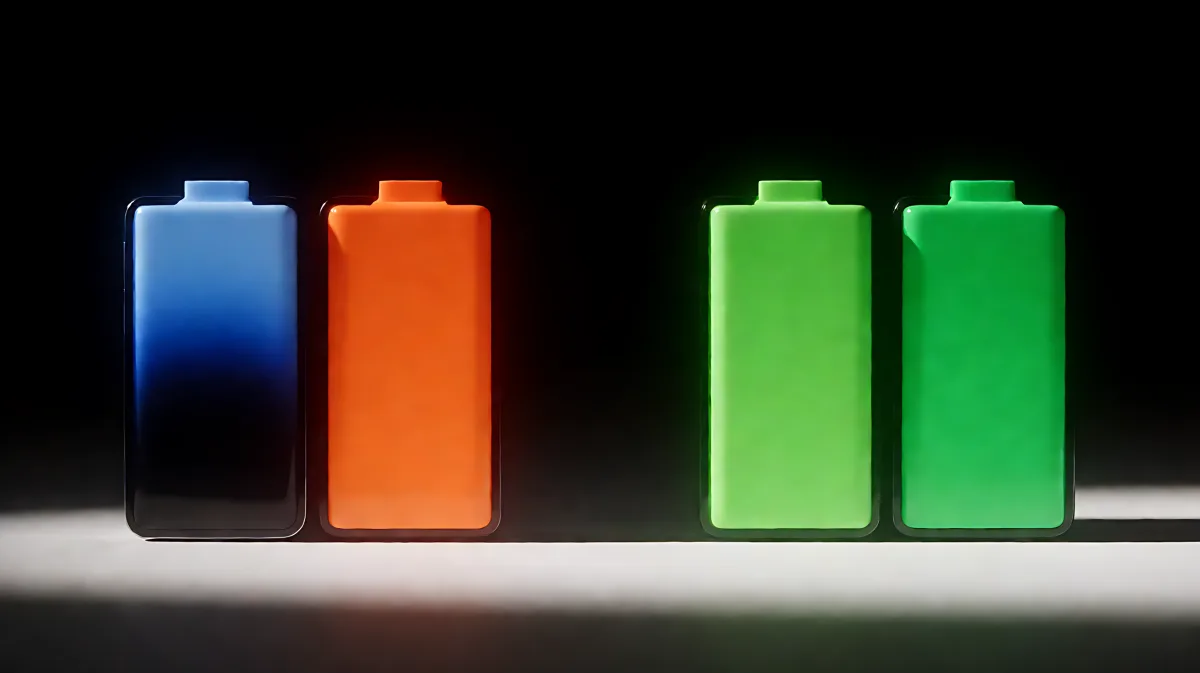
Discover which smartphones offer the best battery life in 2026 based on standardized discharge testing. Learn what actually affects your phone's endurance.
In 2026, smartphone battery performance varies significantly, with the OnePlus 15 leading recent standardized tests at an average of 1,779 minutes of video playback. This endurance exceeds many competitors, though the Samsung Galaxy S26 Ultra and Apple iPhone 17 Pro Max also offer strong performance, lasting approximately 1,725 and 1,561 minutes respectively.
Which Phones Have The Best Battery Life In 2026?
Recent independent testing by LTT Labs provides a clear hierarchy of smartphone endurance. The organization prioritizes reliability and repeatability in its discharge tests, which involve streaming muted video at a fixed brightness of 200 nits until the device powers off. This method ensures that results are comparable across different hardware and software ecosystems. The data reveals that larger batteries do not always guarantee longer runtimes, as efficient chipsets and thermal management play crucial roles.
Top Performing Devices In Recent Tests
The OnePlus 15 stands out as the current leader in this category. Equipped with a 7,300 mAh battery, it averaged 1,779 minutes in discharge tests, a significant margin over the next best device. The Samsung Galaxy S26 Ultra follows closely, delivering 1,725 minutes of uptime on its 5,000 mAh cell. The Apple iPhone 17 Pro Max, featuring a 5,088 mAh battery, recorded a duration of 1,561 minutes. These figures demonstrate that top-tier performance is no longer exclusive to one brand, with both Android and iOS flagships offering over 25 hours of continuous video playback under controlled conditions.
How Do Test Methodologies Affect Battery Results?
Understanding how a battery test is conducted is vital for interpreting the numbers. Many consumers assume that higher milliamperage (mAh) ratings always translate to longer battery life, but in fact, the efficiency of the processor and display technology often matter more. For instance, the REDMAGIC 11 Pro has a massive 7,500 mAh battery but only managed 1,322 minutes in the same test protocol, lagging behind devices with smaller cells. This discrepancy highlights the impact of power-hungry gaming processors versus more energy-efficient chipsets.
LTT Labs notes that mobile devices are complex "black boxes" where background processes can influence results. To maintain consistency, testers disable dynamic display responses and cloud syncing where possible. However, variance still exists; for example, the Google Pixel 9a showed a range of 1,189 to 1,307 minutes across multiple runs. This variability suggests that real-world usage may differ slightly from lab conditions, making standardized tests a benchmark rather than an absolute promise.
What Factors Should You Consider Beyond Raw Capacity?
While discharge time is the primary metric, other elements influence the user experience. The size of the battery affects charging times and the physical weight of the device. The Apple iPhone Air, with a compact 3,149 mAh battery, lasted 1,125 minutes, showing that slim designs can still offer a full day of use. Conversely, heavier devices like the OnePlus 15 may be preferred by users who prioritize all-day endurance over portability. When comparing devices, it is also important to look at the nominal capacity versus the usable capacity, as some manufacturers reserve a portion of the battery to protect long-term health.
Checklist For Choosing A Phone Based On Battery Life
- Identify Your Usage Pattern: Heavy video or gaming use requires a battery of 5,000 mAh or larger to ensure comfort.
- Check Processor Efficiency: Look for devices with the latest generation chipsets, which typically offer better power management.
- Review Charging Speed: A longer battery life is less valuable if the phone takes hours to recharge.
- Consider Display Technology: OLED displays tend to be more energy-efficient than LCD panels, especially in dark modes.
- Verify Real-World Reviews: Lab tests are controlled; user reviews often highlight how background apps affect battery drain.
Common Myths About Smartphone Battery Endurance
One persistent misconception is that battery life degrades linearly with age. Many families assume that a two-year-old phone will have half the battery capacity of a new one, but in fact, modern battery management systems are designed to minimize degradation. A better measure of longevity is the cycle life, which refers to the number of full charge cycles a battery can withstand before its capacity drops below 80% of its original level. Most major manufacturers now design batteries to retain this threshold for well over a thousand cycles, extending the functional life of the device significantly.
Frequently Asked Questions
What is the longest battery life recorded in recent smartphone tests?
As of 2026, the OnePlus 15 holds the record among major flagships with an average duration of 1,779 minutes in standardized video streaming tests. This equates to nearly 30 hours of continuous use under controlled conditions.
Does a larger battery always mean longer phone life?
No, capacity alone does not determine endurance. The REDMAGIC 11 Pro, with a 7,500 mAh battery, lasted only 1,322 minutes in tests, while the Samsung Galaxy S26 Ultra, with a smaller 5,000 mAh cell, achieved 1,725 minutes. Processor efficiency and software optimization are critical factors.
How accurate are lab battery tests compared to real-world use?
Lab tests prioritize repeatability by disabling variable factors like notifications and background syncing. While they provide a reliable comparison between devices, real-world battery life will vary based on individual usage habits, network signal strength, and ambient temperature.
Which phone offers the best value for battery life?
The Google Pixel 10a is often cited for offering strong battery performance relative to its cost. With a 5,100 mAh battery, it averaged 1,402 minutes in tests, providing substantial endurance for users who do not require the highest-tier processor power.