Aging Technology: Staying Independent at Home
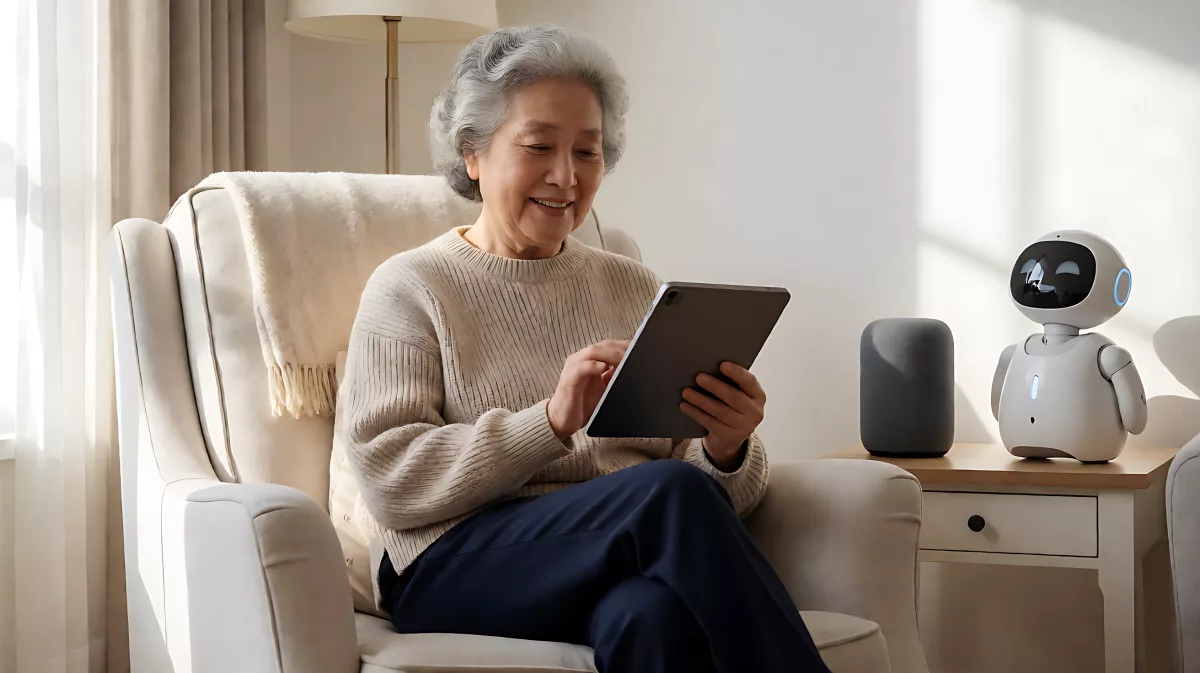
From fall detection to AI companions, technology is reshaping how older adults live independently. Here is what seniors want from their next-gen home devices.
As the US population ages, 70 percent of older adults say they prefer to remain in their own homes rather than move to care facilities. Aging technology, including Internet of Things (IoT) sensors, ambient assisted living robots, and artificial intelligence tools, is emerging as the key enabler for this independence. These systems monitor health, automate daily tasks, and provide social connection without requiring major lifestyle changes.
Why Is Aging in Place a Priority?
The United States Centers for Disease Control and Prevention reported that the average life expectancy for a 65-year-old retiree is now projected to reach 85. This increase in longevity raises the bar for retirement readiness, meaning many individuals will need to remain active and safe in their homes for decades. For most seniors, the home represents a deeply personal space where dignity and autonomy are preserved. Moving to institutional care is often viewed as a last resort, yet physical limitations and cognitive changes can make this independence increasingly difficult to maintain without assistance.
What Technologies Are Supporting Independent Living?
Modern assistive devices have moved beyond simple alert buttons to sophisticated ecosystems. The primary technologies driving this shift include:
- Internet of Things (IoT) Sensors: These devices track movement, temperature, and sleep patterns to detect anomalies, such as a missed morning routine or an unusual fall, alerting emergency contacts or family members automatically.
- Ambient Assisted Living (AAL) Robots: Unlike industrial robots, these are designed for domestic environments. They can fetch items, provide reminders, or offer basic companionship to reduce isolation.
- Artificial Intelligence (AI) Health Monitoring: AI algorithms analyze data from wearables and home sensors to predict health risks, such as heart arrhythmias or cognitive decline, allowing for earlier intervention.
Researchers at the University of California, San Diego, including experts from the Design Lab and the Sam and Rose Stein Institute for Research on Aging, have emphasized that these technologies must be integrated seamlessly into the home environment to be effective. Their work highlights that technology should support, not surveil, the user.
What Are the Main Barriers to Adoption?
Despite the potential benefits, uptake among older adults is not universal. A study involving 31 residents of retirement communities identified several key obstacles. The most significant barrier is low technology literacy. Many seniors are unfamiliar with current terminology and may feel overwhelmed by complex interfaces. Additionally, physical challenges, such as reduced fine motor skills or visual impairment, can make interacting with small touchscreens or buttons difficult.
Privacy is another critical concern. While seniors generally accept monitoring for safety, they strongly prefer systems that respect their autonomy. The design process has historically been "top-down," meaning engineers built products before consulting users. This often results in mismatches between the technology's capabilities and the user's actual needs. For example, a device might be highly advanced but require a password or Bluetooth pairing that the user finds frustrating.
How Can Technology Better Serve Older Adults?
The solution lies in user-centered design and co-creation. The UC San Diego team found that older adults are often eager to learn and have a strong interest in participating in the co-design of new tools. When involved early in the development process, seniors can provide essential feedback on usability, form factor, and interaction methods.
In 2026, the industry is seeing a shift toward "ambient" interfaces that do not require constant attention. For instance, instead of asking a user to put on a smartwatch, ambient systems use invisible sensors in the home. Furthermore, organizations like the University of Central Florida are investing in interdisciplinary research, such as a $2.3 million grant for fall prevention interventions, which combines engineering with community partnerships to create more realistic, effective solutions.
Stanford University's recent longevity framework suggests that the goal is not just to live longer (lifespan) or live healthier (healthspan), but to flourish. Technology plays a crucial role in this third span by enabling social connection and cognitive engagement. By embedding ethics and simplicity directly into engineering design, developers can create tools that seniors actually want to use.
FAQ
Is aging technology safe and private?
Modern systems prioritize privacy by processing data locally where possible and allowing users to control what information is shared. Studies show that seniors accept monitoring when it is transparent and when they retain control over the data. However, users should review the privacy policies of any IoT device to understand how their health data is stored and used.
Do I need to be tech-savvy to use these devices?
No, most effective aging technologies are designed for simplicity. The trend in 2026 is toward voice-controlled and ambient interfaces that require minimal manual input. Devices often come with setup assistance from family members or service providers, and many integrate with standard smartphone apps that can be managed remotely by younger relatives if needed.
What is the cost of setting up a smart home for seniors?
Costs vary widely. Basic fall detection pendants may cost less than $100, while comprehensive home automation systems with AI health monitoring can range from $500 to $2,000 or more. Many insurance providers and government programs in the US and UK now offer partial subsidies for certified assistive technologies, which can offset the initial investment.
Can robots replace human caregivers?
Not currently. Robots are designed to assist with specific tasks like medication reminders or carrying light objects, but they cannot provide the emotional support and complex care that human nurses and aides offer. The consensus in 2026 is that technology should augment, not replace, the human element of care.