Morning Routine Cue Cards for Dementia Care
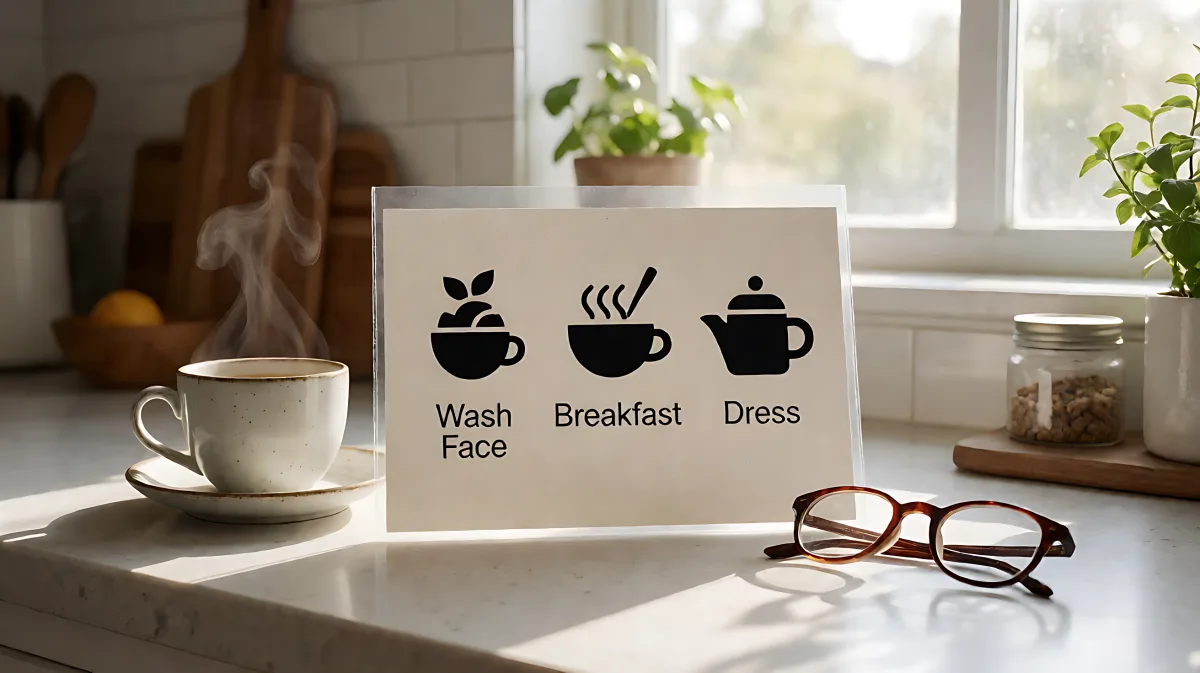
Dementia can make mornings feel chaotic. Learn how simple visual cue cards help structure the day, reduce agitation, and promote independence, with a practical checklist for caregivers.
Morning cue cards are visual aids that break down daily tasks into simple, sequential steps, helping individuals with dementia navigate their day with reduced confusion. By providing clear, low-stress prompts, these tools foster independence and lower caregiver workload.
Why Visual Cues Help in Morning Routines
For many people living with progressive dementia, verbal instructions can be difficult to retain or process, especially during the vulnerable morning hours when disorientation is common. The Alzheimer’s Association notes that structured routines help minimize agitation and improve mood by reducing the need for constant verbal prompting. Cue cards allow the person to self-direct activities, which preserves their sense of dignity and control.
As the condition advances, the ability to recall daily sequences diminishes. Visual supports act as external memory aids, bridging the gap between intention and action. This approach aligns with the principles of the Harvard Center for Brain/Mind/Memory, which suggests that structured activities help maintain existing skills and prevent frustration.
What Should Be Included on a Morning Cue Card?
Effective cue cards are not just lists; they are tailored visual guides. The content should be limited to three to five key steps to avoid overwhelming the user. According to University of Wisconsin Health guidelines, breaking tasks down into simple, one-step directions is crucial.
- High-contrast visuals: Use large, clear icons with minimal background clutter. Black text or symbols on white cardstock work well.
- Sequential order: Arrange steps logically, such as hygiene, dressing, and breakfast.
- Pictorial focus: Rely more on images than words, as visual processing is often retained longer than verbal processing.
How Do I Create the First Card?
Start by observing what the person currently needs assistance with. If they forget to brush their teeth but remember to wash their hands, omit the hand-washing step. Include only the tasks that require a prompt. Laminating the card makes it durable and easy to wipe clean. Keep the card in a consistent location, such as the bathroom mirror or the kitchen table, to serve as a stationary anchor in the routine.
How to Introduce Cue Cards Without Frustration
Introducing a new aid can initially feel like a loss of independence. Many families assume that needing a card implies severe cognitive decline, but in fact, using visual aids is a standard occupational therapy strategy that supports autonomy rather than replacing it. The key is gentle redirection rather than correction.
When the person looks at the card, encourage them to perform the step rather than saying, "You forgot to do that." This subtle shift preserves self-esteem. If resistance occurs, allow a brief moment of confusion to pass before gently pointing to the next step. Flexibility is essential; if a morning doesn’t go according to plan, it is better to skip a step than to force rigid adherence, which can increase anxiety.
Common Mistake: Over-Complexity
A frequent error is creating cards with too many tasks or overly complex language. The goal is not to schedule the entire day on one piece of paper. Stick to the immediate next three to four actions. If the person completes the card, you can move to the next set or allow for unstructured time. Simpler is always better for cognitive load.
A Practical Checklist for Implementation
To start using cue cards effectively this week, follow this step-by-step process derived from best practices in dementia care:
- Identify the specific bottleneck: Is it dressing, breakfast, or medication? Choose one area to start.
- Find or create simple icons: Use large, recognizable symbols. Draw them if necessary.
- Test the logic: Read the steps aloud to ensure they make sense in sequence.
- Laminate the card: Ensure it is sturdy and easy to clean.
- Place it strategically: Put it exactly where the action happens (e.g., next to the toothbrush).
- Observe for two days: Note if the card helps or causes agitation. Adjust visuals if needed.
How Do Routines Impact Long-Term Cognitive Health?
Consistent use of visual routines helps reinforce neural pathways associated with daily living. While dementia is progressive, maintaining a structured approach to familiar tasks can help preserve independence for longer than expected. The Alzheimer’s Society highlights that familiarity with regular activities helps individuals feel more in control of their surroundings.
Furthermore, predictable mornings reduce the stress hormone cortisol in the brain, which is beneficial for those with memory impairment. As noted by Herrick House, a not-for-profit assisted living organization, structure provides a lifeline to comfort and safety. When the morning routine runs smoothly, the rest of the day often follows a calmer pattern, reducing the likelihood of sundowning or afternoon agitation.
Frequently Asked Questions
Do cue cards work for all stages of dementia?
Cue cards are most effective in the early to middle stages of dementia, when individuals retain some ability to follow visual sequences. In the late stages, the need for hands-on assistance increases, but visual cues can still help signal transitions, such as moving from the bed to the chair. Always assess the individual’s current capabilities.
What if the person ignores the card?
If the card is ignored, it may be placed in an inconvenient location or the icons may be unclear. Try a different location or simpler visuals. Sometimes, pairing the card with a gentle verbal prompt works best initially, with the visual serving as a reference point. It is also possible that the task is not currently a challenge for them, in which case the card can be retired.
How many steps should be on a single card?
Limit a single card to three to five steps maximum. This prevents cognitive overload. If the routine requires more steps, create multiple cards that are flipped or moved to the next station as the day progresses.
Are there digital alternatives to physical cards?
Yes, tablets can display large icons, but physical cards are often more reliable because they do not require charging or navigating a digital interface. For many patients, the tactile nature of a physical card is less confusing. However, some individuals who were previously tech-savvy may prefer digital cues if the interface is simplified to a large, single-screen display.