Digital Friction Explained: How Technology Delays Slow You Down
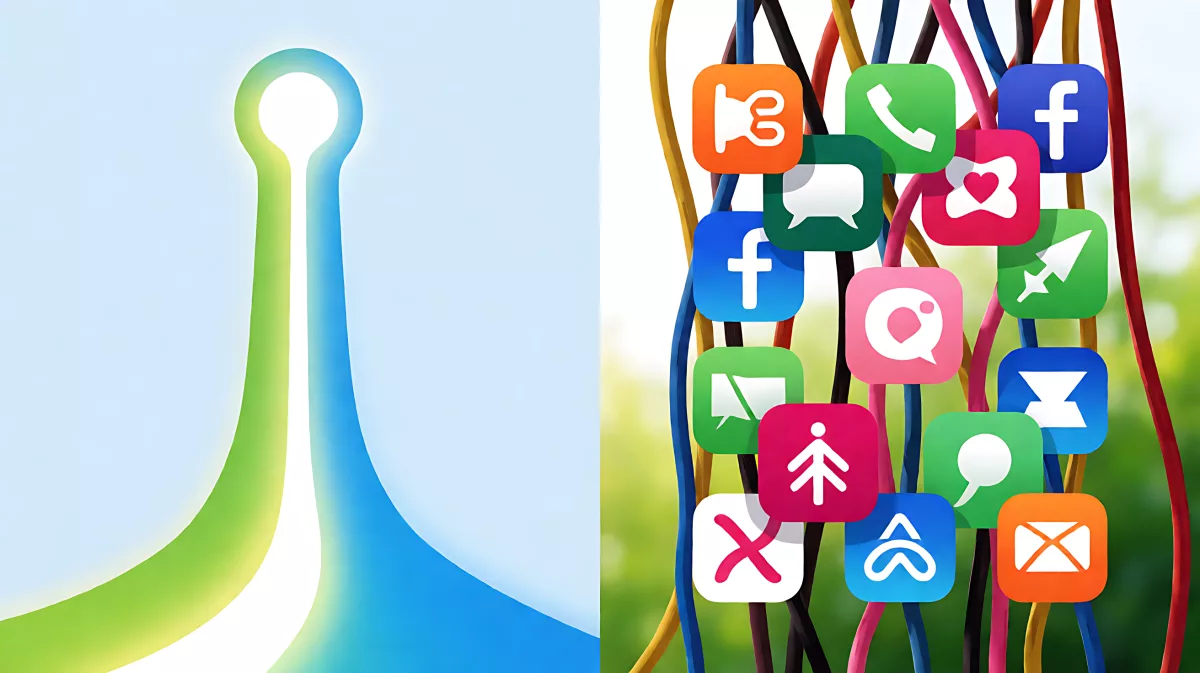
Digital friction drains your energy through app-switching and tool complexity. Learn how to reduce this invisible tax on your time management.
Digital friction is the unnecessary effort required to navigate technology, directly stealing time and causing burnout. In 2026, workers lose nearly an hour daily just locating information and switching apps. To minimize this, organizations must shift from rigid centralized control to flexible, employee-centric digital dexterity.
What Is Digital Friction in the Modern Workplace?
Think of digital friction as the invisible speed bump in your workflow. It is not a single broken tool, but the cumulative waste of time caused by overly complex systems, fragmented data, and poor software alignment. As of 2026, the Fourth Industrial Revolution has pushed work further into decentralized, hybrid environments. This shift makes technology the primary medium for productivity, but it also amplifies the cost of bad design. When a new application does not integrate smoothly with existing tasks, it creates resistance. This resistance forces the worker to spend mental energy just to start the work, rather than doing the work itself.
Why Does Technology Increase Friction Instead of Reducing It?
Many organizations deploy technology to centralize control rather than to empower individuals. This creates a mismatch between the tool's design and the user's reality. Gartner, the IT research and advisory firm, has long warned that monitoring tools are often perceived as intrusive by staff, increasing anxiety and slowing down communication. When software is treated as a rigid structure for supervision, it generates friction in the form of constant verification and reporting. Furthermore, a sheer increase in tools can cause what researchers call cognitive overload. The more apps a worker must monitor, the harder it becomes to maintain focus on deep, creative tasks.
How Much Time Is Lost to Digital Friction?
The impact of this friction is quantifiable and significant. Industry reports indicate that over 40% of knowledge workers spend excessive time switching between online tools. In terms of pure time, the average professional spends roughly 59 minutes every day simply trying to locate the information needed to complete a task. Add to this the stress of managing multiple notification channels, and it becomes clear that the total cost of digital friction represents a massive loss of potential output. In the UK, where the average workweek is 34 hours, wasting nearly an hour daily equates to a full day of lost productivity per week. In the US, it compounds similarly across a 40-hour workweek.
How Can Employees Minimize Digital Friction?
Minimizing friction requires a two-pronged approach: better organizational design and individual digital hygiene. Organizations must adopt an employee-centric approach that mimics customer experience design. This means auditing existing tools to remove those that do not provide clear value and investing in systems that aggregate data to provide actionable insights. Individuals can reduce friction by establishing clear work norms. Instead of defaulting to reactive communication, setting specific windows for deep work and turning off non-essential notifications creates a protected space for focus.
What Are the Key Pillars of Reducing Digital Friction?
Experts identify three critical shifts to move from digital friction to digital dexterity:
- From Rigidity to Flexibility: Structuring work duties around digital information management without strict geographic or temporal constraints.
- From Supervision to Trust: Prioritizing the quality of output over the monitoring of activity and online presence.
- From Chaos to Focus: Implementing clear, personalized workflows that reduce the mental load of distractions.
When these shifts are made, the technology stops feeling like an obstacle and starts feeling like a seamless extension of the user's intent.
What Is the Difference Between Digital Dexterity and Friction?
Digital dexterity is the ability to navigate technology with ease and confidence. It is not just about being fast with a keyboard; it is about how efficiently you can move between tasks without losing momentum. In a high-friction environment, dexterity is low because the user is constantly fighting the interface. In a low-friction environment, dexterity is high because the interface anticipates the user's needs. Companies that achieve this see a measurable improvement in employee satisfaction and retention. The goal is to make the technology invisible, allowing the human element to drive the outcome.
How Do Physics and Software Optimization Relate to Workflow?
While it may seem abstract, the concept of minimizing friction in software is often influenced by computational physics. For instance, advanced simulation engines use minimization functions to solve complex physical problems by iteratively reducing error between expected and actual states. In software design, a similar iterative process occurs. Engineers test a new feature, observe the friction it creates in the user journey, and then minimize that effort by refining the logic. This iterative loop of collision detection and correction is the same principle applied to human interaction. By continuously testing and reducing the 'resistance' in digital workflows, we achieve a smoother, more efficient user experience.
How Does Iterative Optimization Apply to User Experience?
Just as a physics engine refines a simulation frame by frame, a good organization refines its digital experience interaction by interaction. Instead of launching a massive, complex platform and hoping for the best, successful IT teams release small updates that address specific friction points. This iterative, user-centric approach ensures that the final system is robust and easy to use.
Frequently Asked Questions
Is digital friction a new problem?
No, the concept has evolved with technology. What has changed in 2026 is the volume of tools and the decentralized nature of work. The friction is no longer just about learning a new tool; it is about managing an entire ecosystem of fragmented digital resources that span multiple locations and time zones.
Can individuals reduce friction without changing their employer's software?
Yes. While systemic change is ideal, individuals can use browser extensions to block distracting notifications, consolidate email inboxes into single tabs, and adopt 'single-tasking' protocols during deep work sessions. These micro-level adjustments can significantly lower the cognitive load of navigating a complex corporate tech stack.
What role does AI play in minimizing friction?
By 2026, AI is no longer just a separate tool; it is embedded into platforms to automate the 'locating' phase of work. AI-driven search and context awareness reduce the 59 minutes daily lost to finding information. The best systems use AI to pre-fetch likely needs based on the current task, effectively removing the need for the user to manually navigate to different apps to gather context.