How to Use Time Blocking for Short Attention Spans
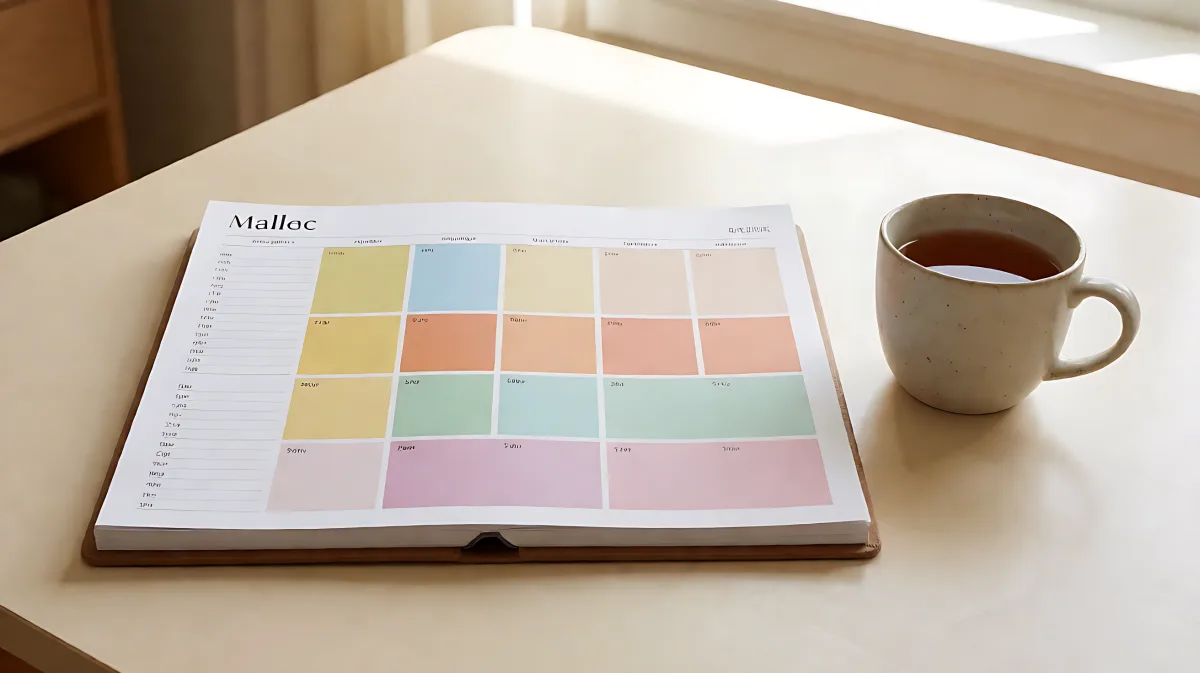
Traditional time blocking often fails people with short attention spans because it lacks flexibility. This guide explains how to use 'float blocks' and shorter durations to create a sustainable, low-stress productivity system.
Time blocking for people with short attention spans involves scheduling activities into short, flexible segments rather than rigid, long-duration slots. By using "float blocks" that focus on task categories instead of specific deadlines, and by keeping individual work segments between 15 and 30 minutes, individuals can reduce cognitive overload. This method helps manage distractibility and procrastination by providing clear, bite-sized structure without the pressure of a dense, unbroken calendar.
Why standard time blocking often feels overwhelming
Many people assume that a fully packed calendar is the sign of a productive life, but in fact, rigid scheduling can trigger avoidance behaviors in those with short attention spans or ADHD-like traits. When every minute is accounted for, a single missed block can make the rest of the day feel like a failure, leading to the abandonment of the system entirely. This is particularly true for older adults or anyone whose executive function varies by energy levels and interest. The goal is not to control every moment, but to provide a GPS-like structure that allows for recalculating routes without penalty.
Neurological research highlights that attention is not a constant resource. It fluctuates based on sleep, interest, and novelty. For individuals with short attention spans, a block scheduled for the afternoon may feel abstract and non-urgent until it arrives. To counter this, the time blocking method must shift from strict time-allocation to energy-mapping. This means matching the type of task to your current mental state, rather than forcing a complex task into a low-energy window simply because the calendar says so.
How to design flexible "float blocks"
Instead of assigning a specific task to every slot, use the anchor-float model. First, identify your "anchors" these are fixed commitments like doctor appointments, meal times, or social events. Then, fill the open spaces around them with "float blocks." Each float block is dedicated to a category of work, such as "admin," "creative work," or "rest," rather than a single item.
This approach allows for flexibility. If you are feeling sharp in the morning, you can pull a demanding creative task from your float block pool. If you are tired, you can switch to low-stakes admin tasks. This prevents the "all-or-nothing" mindset that often causes schedule collapse. By categorizing tasks by cognitive demand, you ensure that your brain is asked to do the right kind of thinking at the right time.
What is the ideal block length for short attention spans?
Most people find their sweet spot between 15 and 30 minutes for focused work. While traditional productivity advice often suggests 45 to 60-minute blocks, research into attention spans suggests that shorter intervals are more effective for those who struggle with sustained focus. A 2026 review of productivity methodologies for neurodivergent users indicates that 25-minute intervals, similar to the Pomodoro technique, yield higher completion rates when paired with mandatory 5-minute breaks. These micro-breaks are not rewards; they are neurological necessities that reset the attention system.
- 15–20 minutes: Ideal for quick admin tasks, email triage, or reading.
- 25–30 minutes: Best for creative or challenging work that requires some depth.
- 5–10 minutes: Mandatory reset time for stretching, hydration, or a walk.
It is crucial to keep these times visible. Using a physical timer or a large-print calendar can help ground the abstract concept of time into reality. When the timer rings, stop. This external cue helps the brain disengage from the current task, a skill that is often difficult when attention spans are short.
How do you prevent schedule collapse?
Buffer time is the most overlooked component of effective time blocking. For people with short attention spans, transition time between activities is longer. A practical rule is to add 25% to your estimated task duration. If a task takes 20 minutes, schedule 25 to 30 minutes. This extra time accounts for the "gear-shifting" required to move from one activity to another. Without buffers, one running long causes a cascade effect where every subsequent block is thrown off, leading to frustration and system abandonment.
Furthermore, digital detoxing during these blocks is essential. Notifications train the brain to seek instant gratification, making it harder to stay in the current block. Turning off non-urgent alerts or using a "do not disturb" mode helps maintain the integrity of the short focus window. By eliminating these interruptions, the 15-to-30-minute window becomes a protected space for genuine progress.
Common mistakes to avoid in your schedule
One frequent error is using social media or email as a "break." Many families and individuals assume that checking a quick notification is a harmless way to rest, but in fact, these activities maintain high cognitive load and prevent true mental recovery. A true break involves sensory change or movement, such as stepping outside, stretching, or drinking water. This restores the executive function needed for the next block.
Another misconception is that the system must be perfect on day one. A meta-analysis of time management strategies in 2026 found that individuals who treated their schedule as an experiment rather than a rule saw a 40% improvement in organizational skills. Start with just two or three blocks a day. Observe what works. Adjust the lengths. The goal is a sustainable routine that fits your natural rhythms, not a rigid prison of time.
FAQ
What is the best duration for a time block if I have a short attention span?
For most people, blocks of 15 to 30 minutes are optimal. This length is short enough to maintain focus without overwhelming the brain, but long enough to make meaningful progress. Always follow this with a 5 to 10 minute break to reset your cognitive state.
How do I handle it if I lose focus before the timer goes off?
If you lose focus, do not punish yourself. Use the time to perform a "micro-check-in." Ask yourself what is distracting you. If it is a physical need, address it (e.g., thirst, fatigue). If it is mental clutter, note it on a paper next to you and return to the task. It is okay to shorten the block to 10 minutes and start over; consistency matters more than length.
Can I use a digital calendar for time blocking?
Yes, but be mindful of the visual clutter. For short attention spans, a paper planner or a minimal digital view that shows only the next few hours can be more effective. The key is having a visible reminder of the current block and the next one. Many users find that a large, clear display or a physical sticky note on the monitor helps anchor them in the present moment.
Why do my time blocks keep failing by the afternoon?
This usually happens because the schedule lacks buffer time or fails to account for energy dips. Mapping your energy windows is critical. If you are consistently low-energy in the afternoon, reserve that time for low-stakes admin or rest, not for high-focus creative work. Misaligning task difficulty with your natural energy levels is the leading cause of schedule collapse.
Do I need to have a diagnosis to use these techniques?
No. These strategies are beneficial for anyone who finds traditional long-hour work sessions difficult. Whether you are an elderly adult, a busy professional, or someone with a shorter natural attention span, the principle of breaking work into smaller, categorized segments reduces cognitive load and improves completion rates.