Home Office Transition: Retirement & Grandparenting Guide
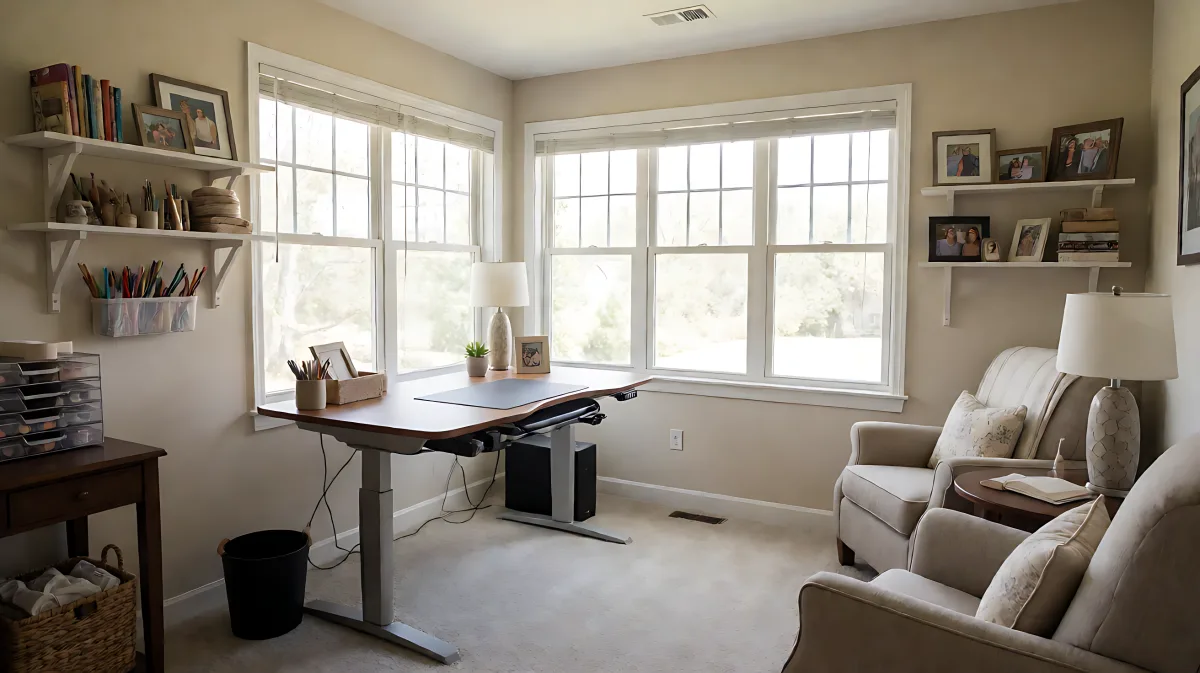
Retiring changes the purpose of your home office. This guide offers practical steps to repurpose your workspace for legacy projects and grandparenting, balancing ergonomic comfort with emotional well-being.
Transitioning to retirement requires reimagining your home office from a corporate hub into a versatile sanctuary for legacy projects and family. By prioritizing ergonomic comfort, intentional decluttering, and multi-generational flexibility, you can create a space that supports both cognitive engagement and emotional well-being. This approach ensures your workspace remains a source of joy rather than stress.
Why Does Your Home Office Need a Major Redesign After Retirement?
Many families assume that the office set up for career milestones remains useful for retirement, but in fact, the primary function of the room has fundamentally shifted. You no longer need to support high-volume document processing or daily video conferencing. Instead, the focus moves toward accessibility, ease of use, and emotional comfort. As noted by professional organizers, a dedicated space serves as a mental container; when the space is cluttered with outdated career artifacts, it creates visual noise that hinders the mental clarity needed for new hobbies or family interactions.
The shift is not just aesthetic; it is functional. According to insights from the National Institute on Aging, grandparents who remain cognitively engaged through activities like writing, crafting, or managing family archives report improved cognitive function compared to those who are inactive. Your office should therefore be designed to facilitate these stimulating tasks without physical strain.
How Can You Repurpose the Space for New Priorities?
Consider the five main archetypes for a post-retirement workspace: a hobby studio, a learning center, a family gathering nook, a health and relaxation zone, or an intentional storage archive. For example, if you plan to spend time with grandchildren, the space must accommodate safety and movement. If you are focusing on writing memoirs, lighting and sightlines become critical. Designers recommend removing one of the desks to create open floor space, allowing for the addition of comfortable seating that invites conversation or solitary reflection.
What Ergonomic Upgrades Are Essential for Comfort?
Your body changes as you age, meaning that standard office furniture may no longer provide adequate support. Investing in high-quality equipment is not a luxury; it is a health necessity. Here is a checklist of key upgrades to consider for a senior-friendly workspace:
- High-End Ergonomic Chair: Look for features like live-back technology that adapts to your spine and 360-degree armrests that support natural movement. A chair like the Steelcase Gesture, while a significant investment, offers a 12-year warranty and superior long-term comfort for those sitting for more than four hours a day.
- Smart LED Lighting: Traditional lamps often create glare. Modern smart lamps with auto-dimming sensors and color temperature controls allow you to shift from crisp daylight for reading to warm, soft light for evening relaxation, reducing eye fatigue.
- Accessible Organization: Keep frequently used items at waist height. Heavy-duty storage solutions should be easy to access without requiring you to lift or reach excessively.
Lighting is particularly critical. A 150% wider illumination field, as found in advanced e-reading lamps, ensures that documents are evenly lit without harsh hotspots. This is vital for those who enjoy reading physical books or reviewing photos.
How Do You Declutter Without Losing Sentimental Value?
The physical transition is often blocked by emotional attachment to career achievements. Many retirees hesitate to discard files from their working years, fearing they will lose part of their identity. However, professional organizers suggest that holding onto unused items creates "undone things" that prevent you from doing what you actually want. The goal is to curate, not accumulate.
To manage this process, adopt a systematic approach. Scan physical documents using a high-speed document scanner capable of processing up to 40 pages per minute. This technology allows you to preserve vital records in searchable digital formats while freeing up physical drawers. For fragile items like family photos or heirlooms, use a flatbed scanner to avoid damage. Remember, you can always take photos of sentimental items before deciding to donate or discard the physical object, preserving the memory without the bulk.
What Role Does Grandparenting Play in Your Home Layout?
If your new chapter involves regular care for grandchildren, your home office may need to double as a safe play or activity zone. This requires a different spatial logic. You might convert a portion of the room into a "gathering space" with child-safe furniture and open floors. It is crucial to balance your need for solitude with the energetic demands of childcare. Designers often suggest a zoning approach: keep the work desk tucked in a corner where it is not visible from the entry, allowing the rest of the room to serve as a relaxed lounge area. This psychological separation helps you switch between "work mode" and "grandparent mode" seamlessly.
How Can You Support Your Financial and Emotional Health?
Grandparenting can have significant financial implications, from adjusting living arrangements to covering transportation and extracurricular costs. It is wise to review your retirement savings and travel plans with a financial advisor before committing to primary caregiving roles. Emotionally, building a support network is vital. Joining local grandparenting groups or online communities can provide the social connection that combats the isolation often associated with empty nest syndrome. These groups offer not just advice, but a sense of belonging that complements the physical changes in your home.
Frequently Asked Questions
Should I sell my office furniture before setting up the new space?
Not necessarily. Before buying new items, audit your current furniture. If you have sturdy desks that can be repurposed for crafting or storage, keep them. However, if your current office chair causes back pain, invest in a replacement immediately. Comfort is the priority in the post-retirement phase.
Is it too late to change my home office if I have already settled into a routine?
No. Spaces should evolve with your life. If you feel stagnant or stressed in your current setup, it is a signal that the environment no longer supports your needs. Small changes, such as rearranging lighting or adding a comfortable seating area, can significantly improve your daily experience.
How do I manage the guilt of throwing away career documents?
Frame the process as archiving, not deleting. Use digital scanners to preserve the information in a secure, accessible format. Once you see the digital copy is complete and searchable, the physical paper becomes merely bulky. Letting go of the paper frees up mental space for new achievements.
Can I make my home office kid-friendly without sacrificing my personal space?
Yes, by using zoning. Designate a specific corner or rug area for children's activities, keeping it away from your primary desk. This physical boundary helps you maintain a clear separation between work and play, ensuring you still have a quiet, private sanctuary when you need it.