Hearing Loss and Cognitive Decline: What the Research Says
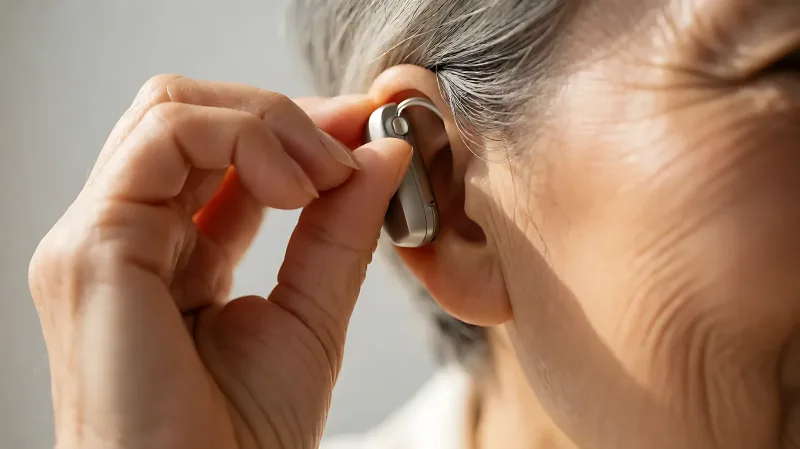
Untreated hearing loss is linked to a 24% higher risk of cognitive issues in older adults. Learn how hearing rehabilitation may influence brain health and dementia risk.
Untreated hearing loss is associated with a 24 percent increased risk of cognitive issues in older adults. Research suggests that while the link is strong, definitive proof that hearing aids prevent dementia is still emerging. Addressing hearing health is a key modifiable factor in healthy aging strategies.
For more information, see NIA hearing loss resources from the National Institute on Aging.
Does Hearing Loss Increase Dementia Risk?
The connection between auditory impairment and brain health has become a major focus in geriatric research. A significant 2013 Health ABC Study followed 1,984 older adults for six years. The findings indicated that participants with untreated hearing loss had a 24 percent higher likelihood of experiencing cognitive decline compared to those with normal hearing. Furthermore, the study revealed a dose-response relationship; as the severity of hearing loss increased at the start of the study, the rate of cognitive decline accelerated. This suggests that the brain may struggle more when it cannot adequately process sound signals, potentially leading to social isolation and reduced cognitive stimulation.
What Do Recent Longitudinal Studies Show?
More recent data provides a nuanced view of this relationship. A prospective cohort study published in the Journal of Neurology analyzed 3,590 non-demented participants over a period of roughly 4.4 years. The researchers found that hearing loss was indeed associated with lower baseline cognitive function. However, when they adjusted for non-linear age effects, the acceleration of cognitive decline linked specifically to hearing loss became statistically insignificant. This suggests that much of the observed decline might be a natural part of aging rather than a direct result of the hearing issue itself. Despite this, the association remains strong enough that major health organizations continue to list hearing loss as a key risk factor for dementia in their prevention guidelines.
Can Hearing Aids Slow Cognitive Decline?
The role of intervention is complex. A landmark study involving over 3,000 older adults, including a trial cohort of 977 participants, investigated whether hearing treatment could maintain cognitive function. The primary analysis found no significant difference in cognitive decline between the group that received hearing intervention and the control group that received only general health education. While some preliminary sensitivity analyses hinted at potential benefits, the broader study did not support a definitive causal link between hearing aids and preserved cognition. This does not mean hearing aids are ineffective; rather, it highlights that their impact on long-term brain health is not yet fully understood or consistent across all patient groups.
Why Is It Important to Treat Hearing Loss?
Even without a proven guarantee against dementia, treating hearing loss is critical for overall well-being. Unaddressed auditory impairment leads to significant social withdrawal, which is independently linked to depression and loneliness. These factors contribute to cognitive strain as the brain works harder to decode sounds. Additionally, hearing loss affects balance and fall risk, particularly in adults over 70. Addressing these issues improves quality of life and mental acuity. The Centers for Disease Control and Prevention notes that effective communication is vital for maintaining social connections, which serve as a buffer against cognitive decline. Therefore, seeking an audiologist for a hearing evaluation is a prudent step for any adult noticing difficulty in noisy environments or following conversations.
What are the early signs of age-related hearing loss?
A: Common early signs include asking others to repeat themselves, turning up the volume on the TV, difficulty understanding speech in crowds, and ringing in the ears (tinnitus). These symptoms often develop gradually, so regular screenings after age 50 are recommended.
How often should older adults get their hearing checked?
A: The National Institute on Deafness and Other Communication Disorders suggests a hearing test every 10 years for adults in their 20s and 30s, every 5 years in their 40s and 50s, and every 2 to 3 years for those over 60. More frequent checks are advised if symptoms are present.
Is cognitive decline reversible with hearing treatment?
A: Current research does not show that hearing aids can reverse existing cognitive decline. However, treating hearing loss may help prevent further deterioration by reducing social isolation and improving sensory input to the brain. Early intervention is always better than late-stage treatment.
What lifestyle factors interact with hearing health?
A: Cardiovascular health, diabetes, and tobacco use all impact hearing. High blood pressure and smoking can damage the inner ear. Managing these conditions through a balanced diet, regular exercise, and avoiding smoke helps protect both heart and hearing.