Group Brain Games for Seniors: Boosting Cognitive Reserve
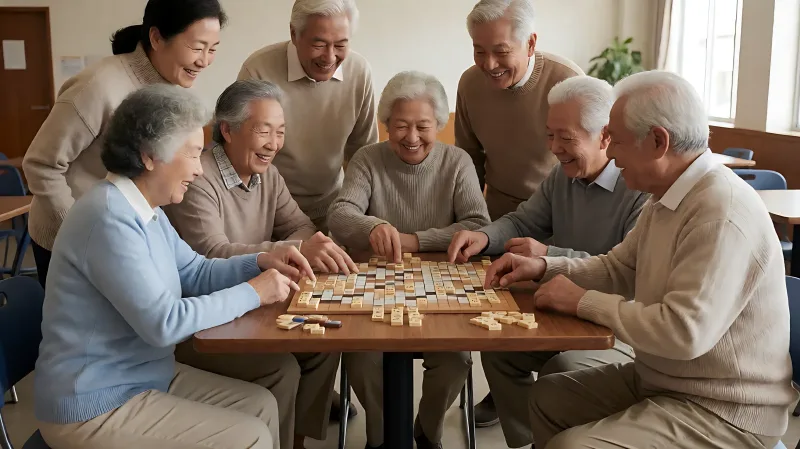
Building cognitive reserve through social group activities is one of the most effective ways to support brain health in later life. Here is how regular mental stimulation can help.
Building cognitive reserve through regular mental stimulation and social interaction helps older adults maintain sharp decision-making skills and delay symptoms of cognitive decline. Research indicates that engaging in group-based brain training activities, such as puzzles and strategic games, can improve processing speed and memory recall. By combining the benefits of social connection with targeted cognitive challenges, seniors can create a mental buffer that supports long-term brain health and emotional well-being.
For more information, see NIA healthy aging resources from the National Institute on Aging.
What Is Cognitive Reserve and Why Does It Matter?
Cognitive reserve refers to the brain's ability to adapt and compensate for damage. Think of it as the brain's resilience. The more mental effort and variety a person experiences over their lifetime, the better their brain becomes at navigating the neural pathways needed for daily function. According to the Alzheimer's Association, individuals with higher cognitive reserves can often maintain independent function for longer, even in the presence of underlying brain changes associated with dementia. This concept suggests that active mental engagement is not just about keeping the mind sharp, but about building a structural buffer against age-related decline.
For older adults, this reserve acts as a safeguard. When the brain faces stressors such as vascular issues or neurodegeneration, a high level of cognitive reserve allows the brain to recruit alternate networks to perform tasks. This flexibility is crucial for maintaining independence and quality of life. The Centers for Disease Control and Prevention (CDC) highlights that modifiable risk factors, including low physical and cognitive activity, are significant contributors to cognitive impairment. Therefore, prioritizing mental exercise is a proactive step toward healthy aging.
How Do Group Activities Enhance Brain Health?
While individual puzzles are beneficial, group-based cognitive stimulation offers a unique advantage: social engagement. Social isolation is a known risk factor for cognitive decline, often comparable to smoking or physical inactivity. When seniors participate in group brain training sessions, they are not just solving problems; they are communicating, collaborating, and forming social bonds. This dual stimulation of social and cognitive networks creates a robust effect on brain health.
Group activities provide immediate feedback and accountability. A study published in the journal Neurology found that older adults who engaged in problem-solving activities showed slower cognitive decline compared to those who did not. The social component adds a layer of motivation that solo practice often lacks. For example, a trivia night or a collaborative jigsaw puzzle forces participants to retrieve information and explain their reasoning to others. This retrieval practice strengthens neural connections more effectively than passive recognition tasks.
What Are the Most Effective Mental Stimulation Games?
Not all games create the same level of cognitive demand. To maximize the building of cognitive reserve, it is essential to choose activities that challenge working memory, processing speed, and executive function.
- Strategic Board Games: Chess, Go, and complex card games require forward planning and pattern recognition. These activities engage the prefrontal cortex, which governs executive functions.
- Digital Cognitive Apps: A study in Scientific Reports analyzed 12,000 subjects aged 60 to 80 and found that those who used cognitive mobile games improved their processing speed and scores over 100 sessions, regardless of their age. These apps offer adaptive difficulty, ensuring the challenge remains in the optimal learning zone.
- Complex Puzzles: Unlike simple matching games, complex jigsaw puzzles or logic riddles require spatial awareness and sustained attention.
It is important to mix these activities with creative tasks. Learning a new instrument, painting, or speaking a new language stimulates different neural pathways. Variety prevents the brain from automating a task, which reduces the cognitive benefit over time.
Can Group Brain Training Delay Dementia Symptoms?
While no activity can guarantee the prevention of Alzheimer's disease, evidence strongly supports the role of cognitive engagement in delaying the onset of symptoms. The World Health Organization estimates that 50 million people live with dementia globally, with nearly 10 million new cases each year. Given that age is the primary risk factor, non-pharmacological interventions like cognitive training become critical parts of a prevention strategy.
Research indicates that consistent mental stimulation helps maintain neural plasticity, the brain's ability to form new connections. When seniors engage in regular group activities, they are not only preserving existing connections but also fortifying the brain's capacity to rewire around damaged areas. This is the essence of cognitive reserve: maintaining function despite biological aging. The National Institute on Aging (NIH) recommends that adults keep their minds active through lifelong learning and social engagement to support healthy brain function.
How Can Families Support Cognitive Engagement at Home?
Supporting a loved one's brain health does not require a formal program. Families can integrate mental stimulation into daily life with a few simple strategies.
Schedule Regular Social Brain Sessions. Plan weekly activities such as playing a board game or solving a word puzzle together. Consistency is key to building and maintaining neural pathways.
Introduce Novelty. The brain responds best to new challenges. If a family usually plays cribbage, try a different card game or a complex Sudoku puzzle. Novelty forces the brain to create new connections, which is the core of building reserve.
Encourage Social Connection. Facilitate visits with friends or participation in community groups. Isolation hampers cognitive performance, while social interaction boosts mood and executive function.
Monitor and Celebrate Progress. Tracking small improvements in memory or problem-solving skills can boost motivation. Recognizing milestones helps maintain a positive association with cognitive effort.
FAQ
How often should older adults engage in mental stimulation activities?
Experts recommend daily or near-daily engagement. Consistency is more important than intensity. A 20 to 30-minute session of focused cognitive activity, such as puzzles or strategic games, several times a week is beneficial. Mixing in social interaction during these sessions amplifies the health benefits.
Do digital brain training apps work for seniors?
Yes. A large-scale study involving 12,000 adults found that users improved in processing speed and cognitive scores over a period of 100 sessions. These apps are effective because they adapt to the user's skill level, providing the right amount of challenge to stimulate neural plasticity without causing frustration.
What is the difference between cognitive reserve and resilience?
Cognitive reserve is the amount of neural support a person has built through education, complex work, and mental engagement. Resilience is the brain's ability to withstand damage. High cognitive reserve contributes to high resilience, allowing the brain to maintain function for longer periods even when damaged by aging or disease.
Can group activities help with memory loss?
Group activities can help manage memory challenges by providing social support and structured cognitive practice. While they do not cure memory loss, they help maintain the skills necessary for daily life and can delay the functional impact of conditions like mild cognitive impairment.