Dementia-Proofing Home Checklist: Expert Safety Tips
Living with dementia changes how a person perceives their environment. This guide breaks down room-by-room strategies to reduce hazards, prevent wandering, and ensure safety for your loved one.
Living with dementia alters how individuals perceive their surroundings, making standard home environments potential hazards. This comprehensive checklist outlines the critical modifications needed to prevent falls, wandering, and accidental injuries. By adapting your space with targeted safety features—from securing sharp objects to improving lighting—you can create a secure environment that promotes independence while significantly reducing risks for your loved one.
Why Does Dementia Change Home Safety Risks?
Dementia is not just memory loss; it is a progressive condition that affects judgment, spatial awareness, and motor skills. Tara Liberman, DO, associate chief of the Division of Geriatrics and Palliative Medicine at Northwell Health, explains that changes in depth perception and coordination can lead to serious falls. The home, which used to be a place of familiarity, can become a source of confusion. Walls may look like open spaces, and doors may appear as barriers. Implementing a structured safety plan is essential to mitigate these evolving risks.
How Can You Make Stairways Safer?
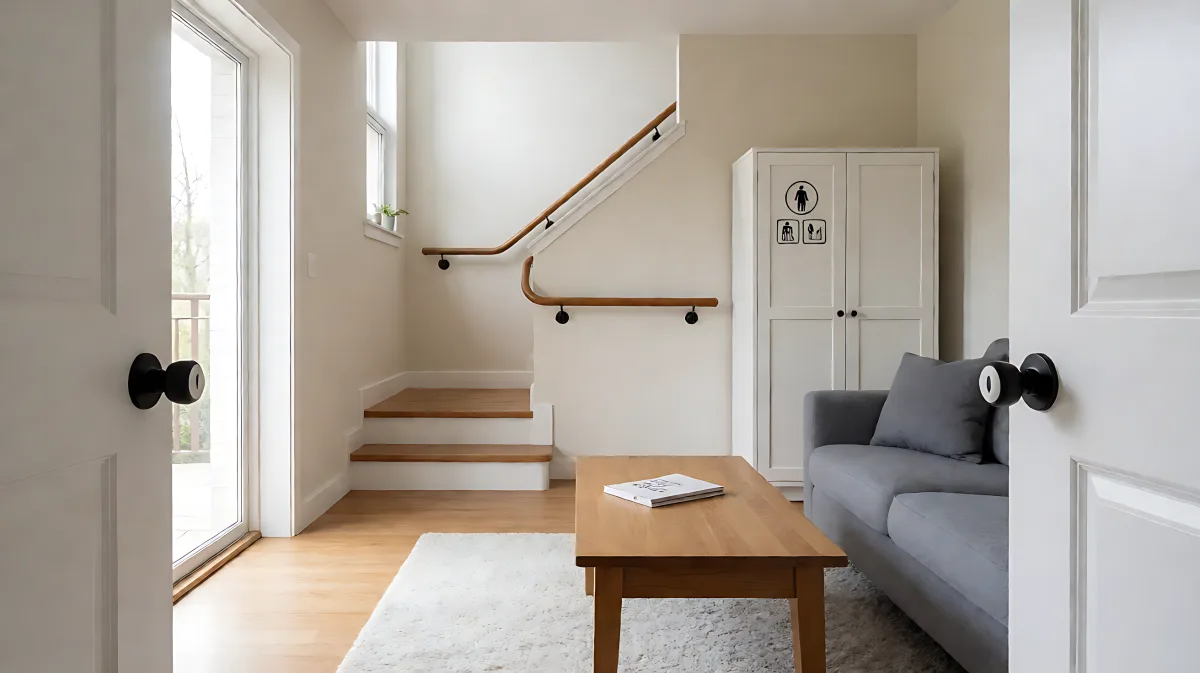
Stairs are one of the most common places for falls in dementia patients. The goal is to increase visibility and provide support. Experts recommend installing handrails on both sides of the staircase. In the early to moderate stages of the disease, patients can often be directed to hold both rails simultaneously, which greatly reduces the chance of a tumble. Ensure the stair treads are deep enough to support a full foot. Adding glow-in-the-dark tape along the edges of the steps helps with navigation at night or on overcast days. If space allows, consider installing a ramp as an alternative to the stairs entirely.
What Kitchen Modifications Are Critical for Safety?
The kitchen contains numerous hazards that need careful management. For individuals in the early stages of dementia who may still live alone, it is advisable to have gas-burning stoves and ovens disabled by a professional. Sharp objects and small electrical appliances should be moved to locked cabinets or drawers. Baby-proofing latches can be used to secure these areas. Remove doormats and small throw rugs, as they are easy to trip on. Tuck away extension cords and keep cleaning supplies in locked storage. Dementia can dull sensitivity to temperature, so installing temperature-controlled water faucets is a wise precaution. Additionally, unplug the microwave and ensure food items are within easy reach so that a stool is not required.
How To Dementia-Proof Living Spaces and Bedrooms
Living areas and bedrooms should be simplified to reduce cognitive load. Busy wallpaper patterns and clutter can be confusing. Wall mirrors can be problematic because patients may struggle to distinguish reflections from reality. Large glass doors and windows can be perceived as open space, leading to a person walking into them. To prevent this, apply removable stickers, bright tape, or decals to the glass. Remove swivel chairs and chairs with wheels, which pose a tipping hazard. Consider investing in a recliner that has a lift-assist feature to help the person stand up safely. Install motion-sensor lights in hallways and near the bed; these are easier for patients to use than manual switches. Place a phone near the bed and favorite seating areas so help is readily available.
What Bathroom Changes Prevent Falls and Confusion?
Falls in the bathroom are extremely common, particularly for those with vascular dementia who may have reduced mobility. Install sturdy handrails in the shower and around the toilet. An elevated toilet seat is highly recommended, as lowering oneself to a standard toilet height is difficult for older adults. A shower chair makes bathing safer and easier for caregivers to assist. Consider a walk-in tub with a door to eliminate the need to step over the tub’s edge. Keep surfaces dry to prevent slipping. Set the hot water heater to a temperature that prevents scalding. Lock up medicines, vitamins, razors, and cleaning supplies. It is also advisable to remove locks from bathroom doors to ensure the person cannot get trapped inside alone.
How Can You Prevent Wandering and Outdoor Hazards?
Wandering is a significant risk, especially in the early stages when patients are still mobile. Install an alarm system that notifies caregivers when someone tries to exit the house. Many families use wearable lifelines or wander guards that alert authorities if the individual leaves a designated safe zone. Keep outdoor lighting bright at all entrances, as shadows can be misinterpreted as threats. Ensure pathways leading to the house are well-lit and free of broken steps. If you have a swimming pool, hot tub, or fenced yard, ensure it is securely locked and equipped with alarms. Lock up outdoor chemicals, grilling tools, and power tools to prevent accidental ingestion or injury. Cover and lock your outdoor barbecue grill when not in use.
What Technology Can Assist in Dementia Care?
Technology offers powerful tools for monitoring and safety. Motion sensor lights are a simple yet effective upgrade for night-time navigation. Wearable devices can range from simple pendants with locator functions to advanced sensors that detect falls automatically. Floor sensors and smart cushions can alert you when a person is getting up from a chair, helping to monitor unusual activity patterns. Allswell Alert and similar providers offer communication devices designed for seniors with declining dexterity and vision. These tools allow for quick contact with family or emergency services without the complexity of a standard smartphone.
FAQs
Should I lock the doors to prevent wandering?
Yes, secure all exterior doors and windows with high locks or door stoppers if necessary. However, you must be able to unlock them quickly from the inside in an emergency. An alarm system is often the best balance between safety and freedom of movement within the home.
Are mirrors dangerous for people with dementia?
Mirrors can be confusing and distressing because the person may not recognize their own reflection or may perceive it as another person. It is often safer to cover mirrors with large sheets of paper or tape, or to replace them with non-reflective wall art.
How do I keep the house clean without removing things?
Clean clutter regularly but keep essential items in consistent, labeled locations. Use large, high-contrast labels on drawers and doors. Avoid having one giant pile of 'random' items, which creates cognitive overload. Simplicity is key to a manageable environment.
Is it safe to let them use the stove?
Generally, no. The risk of fire and burns is too high. Use induction cooktops if they must cook, as they turn off when a pan is removed, but for many patients, it is safer to have meals prepared by caregivers or to rely on pre-prepared safe foods.