Best Voice Amplifiers For Group Home Conversations In 2026
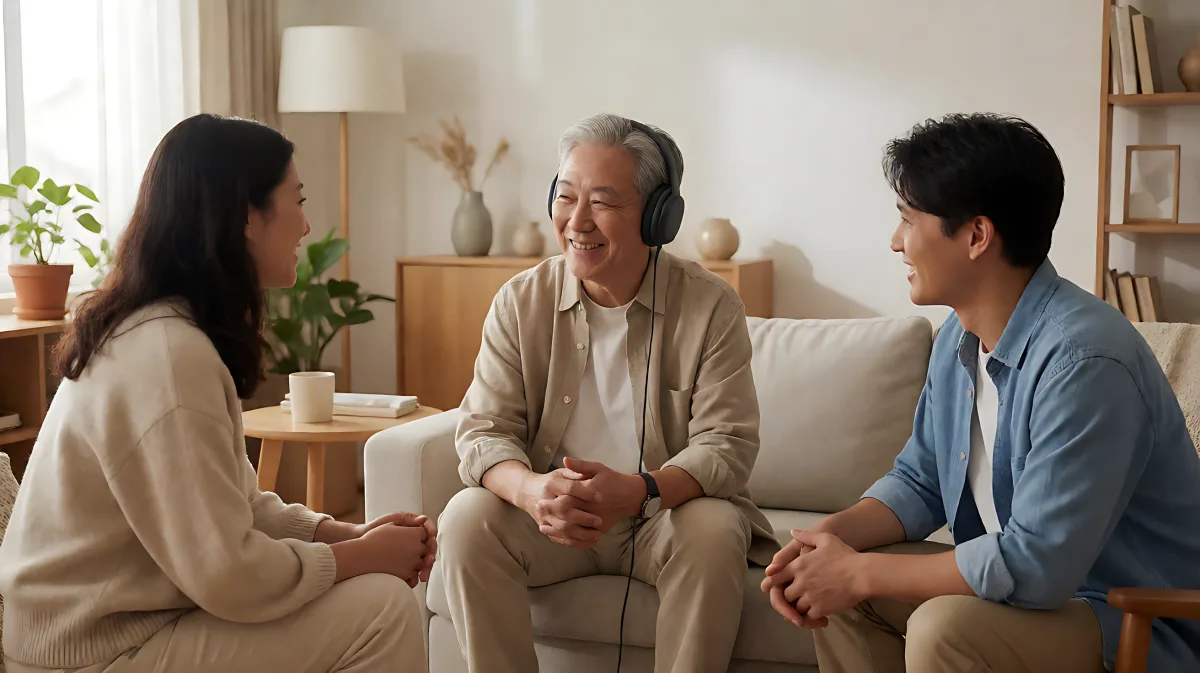
Many families assume a single device fits all listening needs, but group conversations require specific directional microphones and gain settings. This guide explains how to choose the right personal sound amplifier for noisy home environments.
Personal sound amplifiers make group conversations easier by boosting nearby speech without damaging ears. These devices use directional microphones to isolate voices from background noise, helping users follow discussions in kitchens or living rooms. They are not medical hearing aids but offer immediate, adjustable volume control for social situations.
How do personal amplifiers differ from medical hearing aids?
Many people assume that personal sound amplifiers are cheap, ineffective versions of medical hearing aids. In fact, they serve different purposes. Medical hearing aids are fitted to individual audiograms and often use complex signal processing to reduce feedback loops. Personal amplifiers, on the other hand, are over-the-counter devices designed for temporary or situational use. According to consumer technology reviews from 2026, top models like the Williams Sound Pocketalker Ultra DUO now include both earbuds and headphones, giving users flexibility that basic medical models may not offer in casual settings. The American Council of the Blind and other advocacy groups note that these OTC devices are vital for quick, accessible communication support without the need for a clinical prescription.
What features matter for group settings?
When shopping for a device for family dinners or social gatherings, focus on microphone design and battery life. Directional microphones are crucial because they focus on a specific speaker, filtering out ambient chatter. A device claiming 110dB of gain, such as the Reizen Loud Ear, can pick up sound from up to 100 feet away, which is excellent for large living areas. However, for close-quarters talking, lower-gain, high-clarity models are often better to avoid distortion. Battery performance is another key factor; the SuperEar SE7500 is listed with up to 80 hours of battery life, making it ideal for multi-day use without charging stops. Compare these metrics against rechargeable options, which offer convenience but require strict charging routines to remain functional.
Which models are best for ease of use?
Users often prefer simple, tactile controls over complex apps. The Pocketalker 2.0 is frequently cited in 2026 buyer guides for its straightforward button controls, which allow for quick volume adjustments without fumbling with menus. For those who need discreet listening, the Audien Atom One offers an over-the-ear style that is less conspicuous than a handheld unit. However, this discretion comes at a cost: it is less flexible for shared listening sessions where you might want to switch between two different audio inputs. If you prioritize robustness and shared access, the Williams Sound Ultra DUO remains a top pick because it supports both earbuds and full-sized headphones, allowing different family members to take turns listening without changing device settings.
| Model | Key Feature | Best For |
|---|---|---|
| Williams Sound Pocketalker Ultra DUO | Dual listening options (earbuds and headphones) | Flexible group use and sharing |
| SuperEar SE7500 | 80-hour battery life | Long events without recharging |
| Audien Atom One | Discreet over-the-ear design | Low-profile, individual listening |
How should you set up your amplifier for maximum clarity?
Proper setup is critical to avoid feedback or muffled sound. Follow this checklist before your next gathering:
- Test in Silence: Adjust the tone and volume in a quiet room first. If the sound is harsh, lower the treble; if it is muffled, raise it.
- Position the Microphone: For group talk, hold the device 6 to 12 inches away from the main speaker. Do not aim it directly at a fan or air conditioning vent, as this picks up low-frequency rumble.
- Limit Gain: Many users turn the volume to the maximum setting. In fact, using a gain of 30 to 50 percent is often sufficient for normal speech and prevents the "screeching" feedback loop that occurs when the microphone is too close to the earpiece.
- Manage Batteries: If your device runs on AAA batteries, keep a spares kit nearby. Rechargeable units should be plugged in overnight, but note that inconsistent battery reporting is a common complaint in 2026 user reviews for some budget brands.
What are common mistakes buyers make?
One frequent error is buying a general-purpose amplifier for a specific problem. If the main issue is hearing a single person across a crowded room, a two-microphone system like the ConvoAssist is superior because it wirelessly transmits one person's voice clearly to the listener, blocking out others. Buying a standard pocket amplifier for this purpose will result in a mix of all background voices, making it hard to isolate the person you want to hear. Another misconception is that all amplifiers have the same sound quality. Premium brands like Williams Sound invest in better noise cancellation algorithms, whereas cheaper, unbranded units on marketplaces often amplify the room's hum as much as the speech, leading to fatigue during long conversations.
Frequently Asked Questions
Are personal sound amplifiers safe for my hearing?
When used responsibly, yes. These devices are designed with safe output limits. However, you should start with the lowest effective volume. If you experience ringing, pain, or tinnitus, stop using the device and consult an audiologist. Prolonged use at maximum gain can cause fatigue, so take breaks during long social events.
Can I use these amplifiers with hearing aids?
You can, but be cautious. Running both simultaneously can create a feedback loop (a high-pitched whine). It is generally recommended to use either the hearing aid or the amplifier, not both. Some advanced hearing aids have their own remote-microphone modes that may achieve the same goal without the need for a separate personal amplifier.
How far can a voice amplifier pick up sound?
This depends on the model's directional capability. Standard pocket amplifiers are effective within 10 to 15 feet. Higher-end models with enhanced directional mics can isolate speech from up to 100 feet, but clarity drops significantly in noisy environments. For home use, the effective range is usually within the same room or adjacent space.