APD vs. Hearing Loss in Older Adults: Key Differences
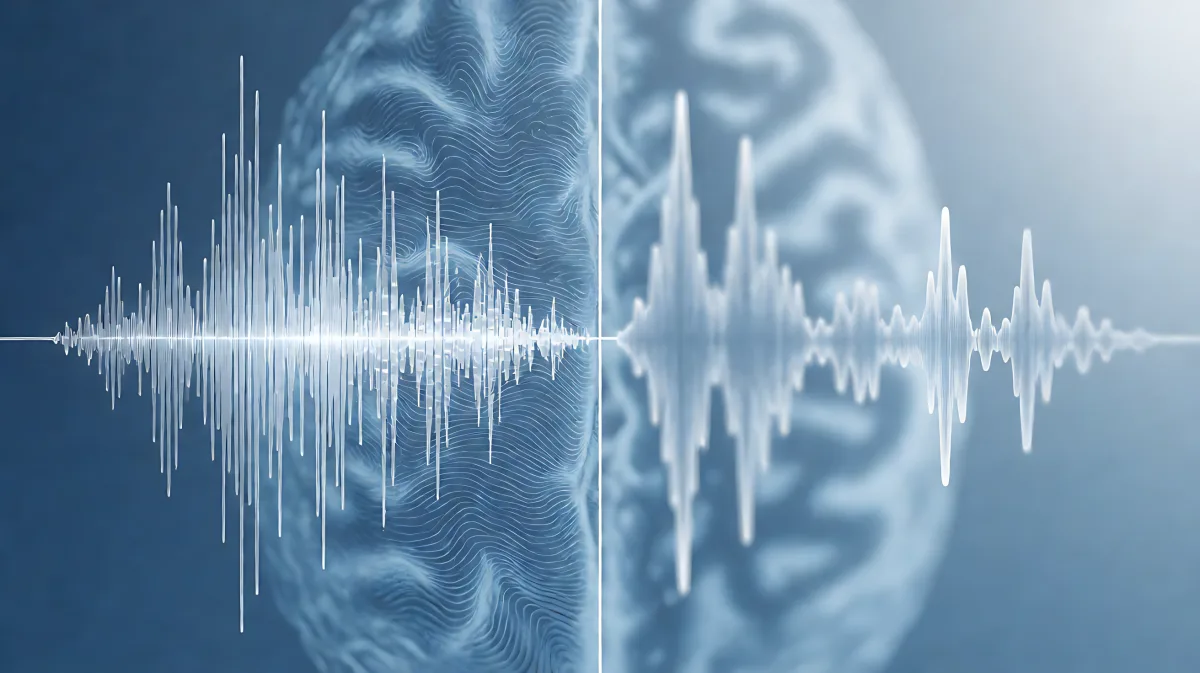
Learn how to distinguish between hearing loss and auditory processing disorder. If your hearing tests are normal but you still struggle in noisy environments, this guide explains the neurological differences, diagnostic steps, and management strategies specifically for older adults.
While age-related hearing loss is the most common cause of hearing difficulty in older adults, a normal audiogram does not guarantee you will understand speech in all environments. Auditory processing disorder (APD) is a neurological condition where the brain struggles to interpret sounds it hears, distinct from the physical damage to the ear structures seen in hearing loss. For those over 60, APD may manifest as an inability to filter background noise or follow rapid conversation, even when pure-tone hearing tests are within normal limits. Differentiating these two conditions is critical because hearing aids alone often fail to resolve the cognitive processing gaps associated with APD, requiring targeted cognitive training and assistive technology instead.
What is the fundamental difference between hearing loss and APD?
To understand why two people might both struggle to hear a colleague at a busy restaurant, we must look at the journey of sound. Hearing loss is a mechanical or sensory issue. It occurs when the structures of the outer, middle, or inner ear—such as the eardrum, the tiny bones of the middle ear, or the hair cells in the cochlea—are damaged. This damage prevents sound waves from being converted into electrical signals effectively. As sound frequency data moves from the ear to the brain, the signal is weak or distorted before it even reaches the auditory cortex.
In contrast, auditory processing disorder is a processing issue. The ears may receive the sound perfectly, but the brain’s auditory cortex struggles to organize, interpret, or prioritize that information. The American Audiology Association describes this as a mismatch where the signal arrives intact, but the "decoder" in the brain is malfunctioning. For an older adult, this might mean that while they can hear the individual words a person is saying, their brain cannot quickly extract the meaning from the stream of speech, especially when competing voices are present.
How do symptoms of APD differ from those of hearing loss in older adults?
The symptoms of both conditions overlap significantly, which is why misdiagnosis is common. However, specific triggers can help distinguish them. A person with pure hearing loss often reports that sounds are muffled or quiet. They may need to turn up the volume on television and phone calls and struggle to hear high-pitched sounds, such as birds chirping or a woman's voice, even in a quiet room.
Those with auditory processing disorder, on the other hand, often state, "I can hear you, but I can't understand you." Their primary struggle is with complexity and noise. They may be perfectly fine in a quiet one-on-one conversation but become mentally exhausted in a noisy cafe or a room with multiple speakers. They might frequently mishear similar-sounding words, struggle to follow multi-step verbal instructions, or find it difficult to shift their attention from one speaker to another in a group. Unlike hearing loss, which is often static or progressive based on physical damage, APD symptoms can fluctuate based on cognitive load, fatigue, and stress levels.
Why is APD often mistaken for age-related hearing loss?
In the realm of geriatric care, any complaint of hearing difficulty is routinely assumed to be presbycusis, or age-related hearing loss. This assumption persists because physical decline in sensory organs is a visible and expected part of aging. However, the American Geriatrics Society notes that cognitive changes are equally common in aging and can affect how we perceive the world. An older adult who passes a standard pure-tone audiogram but still reports difficulty in daily life is a prime candidate for APD evaluation. Without specific testing, healthcare providers may prescribe hearing aids that amplify sound but do not help the brain process that amplified sound, leading to patient frustration and continued communication breakdowns.
What diagnostic tests confirm APD in adults?
Diagnosing APD requires moving beyond the standard audiogram. While a standard hearing test measures the sensitivity of the ear to specific frequencies, APD testing evaluates the central auditory system. This typically involves a battery of tests that assess how the brain handles complex auditory tasks. For example, tests might include understanding speech in noise, distinguishing between different sequences of tones, and memory for spoken lists. Specialized assessments, such as the clinical evaluation of language fundamentals or functional magnetic resonance imaging (fMRI), can map how the auditory cortex responds to stimuli. It is crucial to see a specialist, such as an audiologist who focuses on central auditory processing or a neurologist, rather than a general hearing care provider who may only screen for peripheral hearing loss.
How is auditory processing disorder managed in older adults?
Because APD is a neurological condition, the treatment focuses on training the brain and using assistive strategies rather than physical repair. While there is no "cure" for APD, evidence-based interventions can significantly improve quality of life. Cognitive auditory training programs help the brain improve its ability to filter noise and track speech. Assistive listening devices (ALDs) that focus on a single speaker, such as remote microphone systems, can bypass the need to process background noise. Furthermore, environmental modifications, such as sitting at the front of rooms, reducing background music, and using visual cues like lip-reading, can supplement auditory input. It is also recommended to manage any underlying hearing loss concurrently; if an older adult has both mild hearing loss and APD, hearing aids are necessary to restore volume, but cognitive therapy is needed to handle the processing load.
What is the link between APD and cognitive decline?
Recent research has highlighted a strong connection between auditory processing difficulties and broader cognitive health. The auditory system is deeply intertwined with the brain's language and memory centers. Struggling to process sound can lead to social withdrawal, which is a risk factor for cognitive decline. Conversely, early cognitive impairment, such as that seen in the pre-dementia stages, can manifest as difficulty processing complex auditory scenes before other symptoms appear. As of 2026, clinical guidelines increasingly recommend that unexplained auditory processing difficulties in adults over 60 be evaluated in the context of overall cognitive health, not just hearing health.
FAQ
Can hearing aids help with auditory processing disorder?
Hearing aids can help if you have concurrent hearing loss, as they restore sound clarity and volume. However, they do not fix the brain's inability to process complex sounds. For APD, hearing aids may actually be frustrating if they amplify background noise without helping you understand speech. They are often paired with assistive listening devices that isolate the target speaker's voice.
Is auditory processing disorder permanent?
APD is generally considered a lifelong neurological characteristic, meaning the structural differences in the brain remain. However, the impact of the disorder can be managed and reduced through therapy and environmental strategies. The brain's plasticity, or its ability to adapt, means that targeted training can improve processing efficiency, even in older adults.
How is APD different from ADHD?
While the symptoms can look similar—such as poor listening or distractibility—ADHD is a disorder of executive function and impulse control, whereas APD is a sensory processing issue. A person with ADHD may be able to hear and process the words clearly but lacks the focus to retain them. A person with APD has the focus but struggles to decipher the auditory signal. Proper diagnosis requires ruling out both conditions through comprehensive testing.
Where can I get tested for APD?
Testing for APD is not available at every hearing clinic. You typically need to consult a hospital-based audiology department, a university clinic, or a specialized private practice that offers central auditory processing evaluations. A referral from a primary care physician or a neurologist is often required to access these specialized services.