Voice Assistant False Triggers Explained
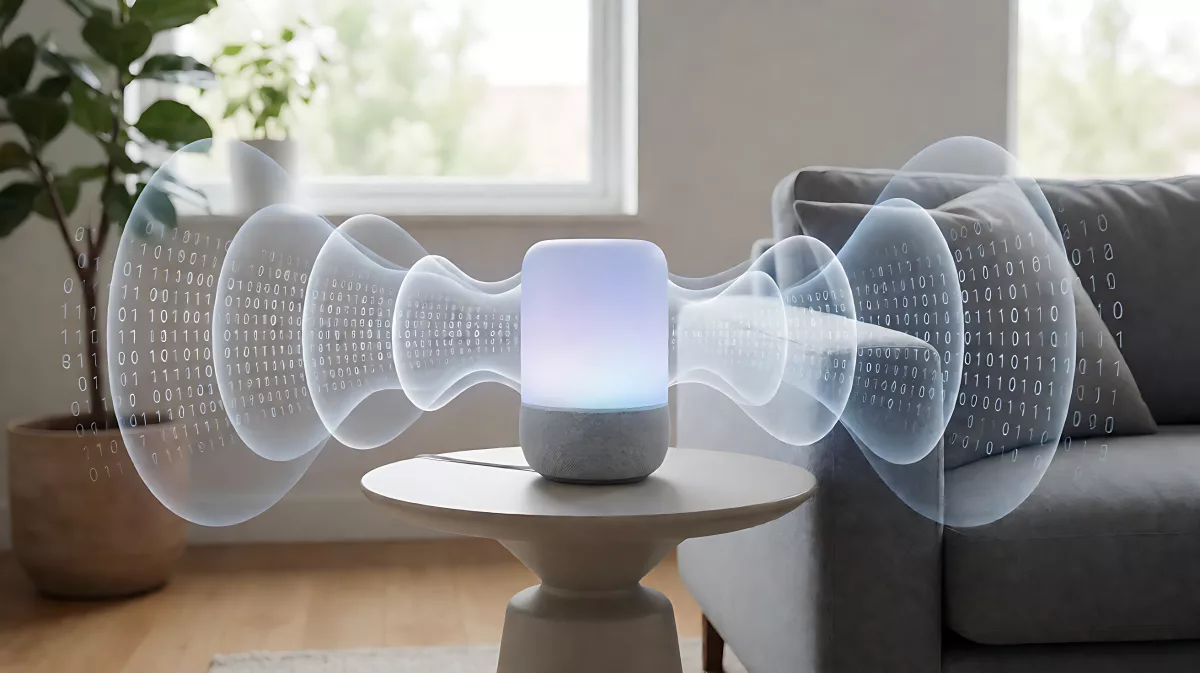
Your smart speaker may be listening to you even when you haven't used the wake word. Explore the science behind false triggers, the data implications, and how engineers are fixing these gaps.
Your smart speaker is likely listening to more than just your wake word. Recent research confirms that devices from major tech companies activate on common English phrases due to acoustic similarities, uploading audio snippets to the cloud for analysis. This means casual conversations may be transmitted to manufacturers without explicit user intent, raising privacy and security concerns for households in the US and UK.
What causes voice assistants to wake up unexpectedly?
False triggers occur when a voice recognition system mistakes ordinary speech for a command like "Alexa" or "Hey Siri." Researchers at the University of Ruhr-Bochum and the Max Planck Institute tested eleven smart speakers from companies including Amazon, Apple, Google, and Microsoft. They found that the devices use forgiving acoustic models to ensure high reliability, which leads to over-triggering. The team compiled a list of over 1,000 phrases in English, German, and Chinese that repeatedly activated the devices. Common English words such as "election," "Montana," and "cool" were identified as significant triggers for different brands.
How do manufacturers test these devices?
To measure false trigger rates, researchers use controlled setups equipped with light sensors. These sensors detect when a device's LED indicator turns on, signaling that the assistant has entered an active state. By playing hours of pre-recorded audio, including TV series like Game of Thrones and news broadcasts, scientists can catalog exactly which phrases cause the device to wake. The data is then manually evaluated to distinguish between intended commands and accidental activations.
What happens to your audio when a false trigger occurs?
When a false trigger happens, the device typically performs a two-stage verification process. First, the on-device processor checks if the audio contains a valid wake word. If it suspects a match, it uploads a short audio clip to the manufacturer's cloud servers. More powerful cloud-based models then analyze the transcript. If the cloud determines it was a false alarm, the device stays silent, but the audio data has already left your home. This clip may be transcribed by human operators to help improve the system's accuracy.
| Device Brand | Known False Trigger Phrase |
|---|---|
| Amazon Alexa | "And the zone" |
| Apple Siri | "A city" |
| Google Assistant | "OK, cool" |
| Microsoft Cortana | "Montana" |
How can we reduce false triggers with machine learning?
Engineering teams are developing new methods to mitigate these errors without sacrificing responsiveness. A 2026 study proposes using knowledge transfer techniques to create a small, efficient model that runs directly on the device. This on-device system analyzes acoustic features to determine if speech is actually directed at the speaker. By rejecting false triggers locally, the audio never reaches the cloud. This approach maintains a 99% true positive rate for valid commands while successfully blocking 87% of accidental activations, significantly enhancing user privacy.
Why is this balance between privacy and performance difficult?
Manufacturers must keep the wake-word system sensitive enough to respond to users speaking in different environments. As experts from the University of Ruhr-Bochum note, the goal is to err on the side of starting up once too often rather than missing a valid command. This engineering compromise means that some degree of unintended audio capture is a feature of the technology, not just a bug. Improvements in on-device processing are helping to shift this balance toward greater data protection.
Frequently Asked Questions
Are all smart speakers vulnerable to false triggers?
Yes, most voice assistants are designed to be highly sensitive to acoustic patterns. Devices from Amazon, Apple, Google, and Chinese manufacturers like Xiaomi have all been found to trigger on non-command phrases. While some models are more prone to specific errors than others, the underlying technology makes all smart speakers susceptible to accidental activations.
Does my smart speaker send audio to the cloud every time I talk?
No, the speaker only sends audio to the cloud if the local processor believes it has heard a wake word or an active command. During a false trigger, the audio is uploaded for verification, but the device may not respond to you if the cloud analysis determines the command was invalid. This process is how the company gathers data to refine its models.
How can I test if my speaker has a false trigger issue?
You can listen to common media in your home and note if your speaker's light indicator turns on without you issuing a command. Manufacturers often provide settings to adjust sensitivity levels, which can help reduce the frequency of accidental wake-ups. Keeping your device's software updated is also essential, as new models use advanced on-device checks to prevent most false triggers from leaving the house.