Telehealth Data Privacy Risks for Seniors Explained
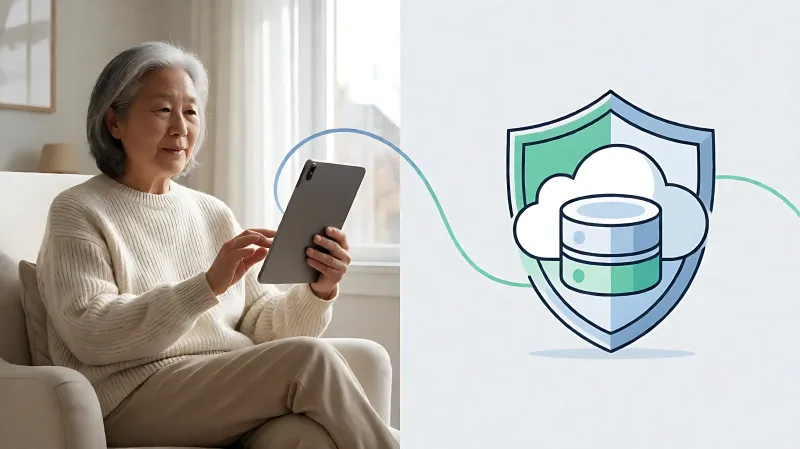
As virtual visits become routine for older adults, understanding how health data is stored, transmitted, and shared is critical. This guide breaks down the technical and environmental privacy risks specific to seniors and offers actionable steps to mitigate them.
Telehealth data privacy risks for remote seniors primarily involve unsecured home environments, third-party app vulnerabilities, and complex insurance billing mismatches that can expose personal health records. While a significant portion of Medicare fee-for-service users accessed virtual care in recent years, the lack of standardized security protocols in home settings creates distinct gaps compared to clinical facilities. Protecting data requires verifying HIPAA compliance of specific platforms and monitoring how personal identifiers link to sensitive medical information.
Why Do Telehealth Privacy Risks Rise for Older Adults?
The shift to virtual care accelerated during the pandemic and has remained a staple of modern healthcare. A survey by the American Medical Association found that 60 percent of physicians agreed telehealth enabled high-quality care, and over 80 percent reported better patient access. However, this rapid expansion has widened the gap of risks, including cyber and technology-related data security exposures. For seniors, who constitute a growing portion of telehealth users, these risks are magnified by specific environmental and technological factors identified in systematic reviews of privacy and security challenges.
What Are the Main Environmental Privacy Threats?
Home environments rarely offer the controlled acoustics and visual privacy of a clinic. Research indicates that vulnerable populations, including seniors, often lack private spaces where sensitive health information can be discussed remotely. This environment risk includes unintended audience exposure, where family members, caregivers, or even smart devices with microphones may inadvertently capture personal medical details. Additionally, the physical setup of the camera can capture background documents or items that inadvertently reveal patient identity or health status, creating a permanent digital record that is harder to control than in-person interactions.
How Do Technical Factors Compromise Data Security?
Telehealth is delivered through live video, asynchronous messaging, and remote patient monitoring (RPM). Each modality introduces specific technical vulnerabilities. RPM devices, such as blood pressure monitors and glucose meters, transmit continuous data streams to cloud servers. If these devices or the associated apps are not rigorously audited for security, they become entry points for data breaches. Studies show that many consumer-grade health devices lack end-to-end encryption, meaning data is vulnerable while in transit. Furthermore, limited access to high-speed internet in rural areas can force users to rely on unsecured public Wi-Fi networks, increasing the risk of interception.
The proliferation of third-party applications also complicates security. When a senior uses an unapproved app to connect with a provider, data may flow through servers not compliant with federal health information laws. This creates a gap between the patient's expectation of confidentiality and the actual technical safeguards in place.
What Role Do Insurance and Operational Factors Play?
Insurance coverage for telehealth has expanded, but the administrative complexity introduces its own privacy layers. In 2026, nearly three million Medicare beneficiaries used telehealth, with 25% of fee-for-service users participating. However, operational factors such as reimbursement denial and payer documentation requirements can lead to data being shared with multiple third-party billing companies. Each transfer point increases the surface area for potential data leaks. Seniors using Medicare Advantage plans or Accountable Care Organizations may find their data shared between primary care providers and specialist networks, sometimes without clear, concise consent disclosures tailored to older adults.
How Do Reimbursement Gaps Affect Patient Trust?
Out-of-pocket costs for uninsured telehealth visits can range from $40 to $100, but for insured seniors, the risk is less about cost and more about data handling for verification. Payers often require detailed claims documentation, which may include clinical notes and diagnostic codes. If these documents are mishandled by billing intermediaries, sensitive patient information can be exposed. The American Telemedicine Association advocates for building virtual care on a foundation of privacy protection, but policy implementation often lags behind technological adoption, leaving operational security protocols inconsistent across providers.
What Can Seniors and Families Do to Protect Health Data?
Proactive measures can significantly mitigate these risks. First, verify that the telehealth platform used by a provider is certified secure. Providers adhering to Health Insurance Portability and Accountability Act (HIPAA) standards must use vendors that sign Business Associate Agreements. Families should ask providers which specific app they use and whether it requires multi-factor authentication. Second, manage the home environment by closing blinds, using background virtual scenes if appropriate, and ensuring no unauthorized individuals are in the camera frame. Finally, review insurance policies to understand which data fields are shared for billing purposes and request annual disclosures of health information transactions.
For seniors with mobility challenges or chronic conditions, remote patient monitoring is vital but must be configured carefully. Ensure that connected devices are updated with the latest security patches and that access to health portals is restricted to authorized users only. Sharing login credentials with caregivers is a common practice but increases the risk of credential theft if the caregiver's own digital hygiene is poor.
How Do Technology Access Barriers Increase Risk?
A study found that 82% of homebound seniors needed help connecting to telehealth. This dependency on third-party assistance, such as family members or paid caregivers, creates a trust boundary that is difficult to enforce legally. When a grandchild manages a senior's health app, the data effectively leaves the control of the HIPAA-covered provider. This human element is a critical privacy risk factor that technical solutions alone cannot address.
| Privacy Risk Factor | Specific Threat to Seniors | Mitigation Strategy |
|---|---|---|
| Environmental | Lack of private space; smart devices listening | Use noise-canceling headphones; disable microphone on unattended devices |
| Technical | Unsecured Wi-Fi; outdated app security | Use password-protected home Wi-Fi; update apps; enable 2FA |
| Operational | Data sharing for insurance billing | Review privacy policies; limit data fields shared; audit transaction logs |
Frequently Asked Questions
Does Medicare track my location during telehealth visits?
Medicare generally does not require real-time location tracking for standard virtual visits. However, some remote patient monitoring programs may use location data to ensure services are delivered in appropriate settings, particularly for rural exemptions. Providers must disclose this in their consent forms, and patients can review their privacy notices to understand specific data collection practices.
Are my health records more at risk with telehealth than in-person care?
In-person care is not risk-free, but it occurs in controlled, secure clinical environments. Telehealth shifts the risk to the home domain, where users have less control over who is present or what devices are active. The risk is higher if the specific app or device used is not commercially secure or HIPAA-compliant, making vendor selection and usage habits critical factors.
How can I check if my telehealth provider is HIPAA compliant?
You can ask your healthcare provider directly which electronic health record system and video platform they use and whether they have a Business Associate Agreement in place for their technology vendors. Reputable providers will be able to confirm their compliance with federal privacy laws and share their specific security protocols for protecting patient data during remote encounters.