Chronic Illness Exclusions Explained for Policyholders
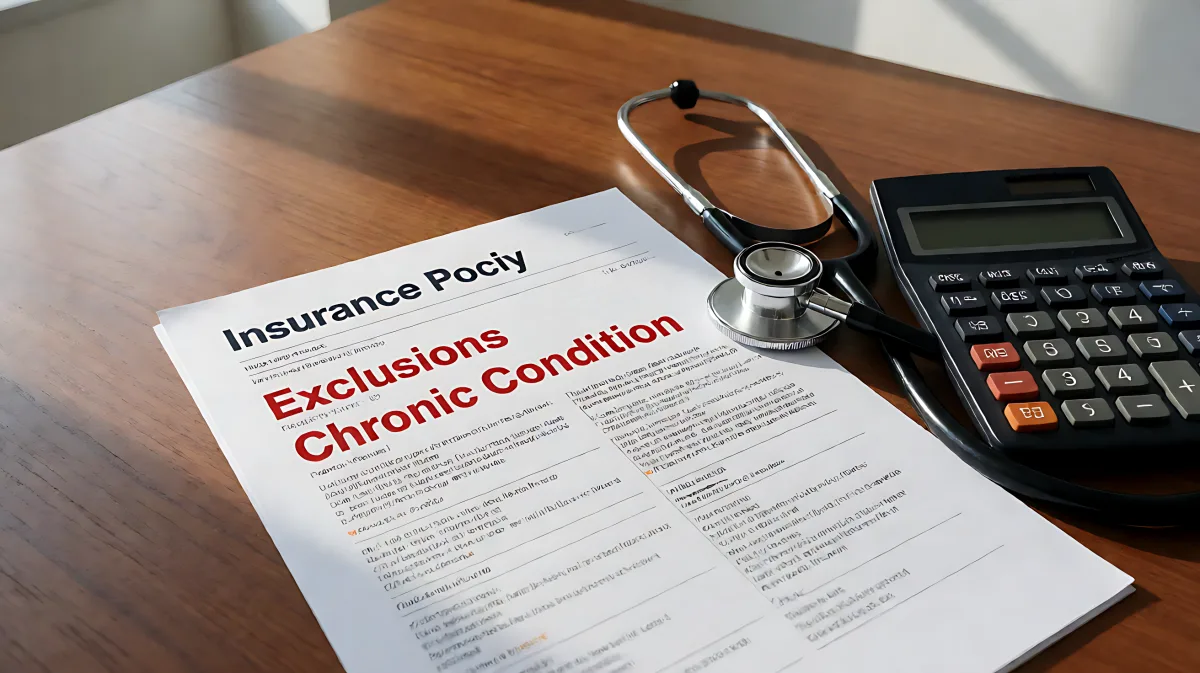
Understanding the fine print is essential. This guide breaks down how chronic illness exclusions work in health and critical insurance policies, highlighting common pitfalls and steps to secure adequate protection.
Chronic illness exclusions in insurance policies refer to specific pre-existing medical conditions, extended waiting periods, or lifestyle factors that prevent a policy from covering treatment or payouts. Most standard plans deny claims for conditions diagnosed before the effective date. Additionally, many policies impose a 90-day waiting period where specific chronic diagnoses are not covered. Reviewing the Summary of Benefits and underwriting disclosures is critical to avoid claim rejections.
Why do insurers exclude chronic conditions from coverage?
Insurers use exclusions to manage risk and prevent adverse selection. If a person knows they have a progressing chronic illness, they might buy insurance specifically to cover that known risk. To protect against this, policies typically exclude any condition that existed, showed symptoms, or was under treatment before the policy start date. For individuals with chronic issues like diabetes or hypertension, this means the policy may cover acute complications like a heart attack but explicitly exclude the ongoing management of the underlying chronic disease.
What is the difference between an exclusion and a limit?
An exclusion completely denies coverage for a specific item or condition. A limit or cap sets a maximum payout amount for a covered service. For example, a policy might have an exclusion for cosmetic surgery, meaning it will never pay for it. Conversely, it might have a limit of $500 per year for physical therapy. Exclusions are binary; they either apply or they do not. Limits provide partial coverage up to a financial threshold.
How do waiting periods affect chronic illness claims?
Most critical illness and health policies include a moratorium period, typically lasting 90 days. During this initial window, claims for specific conditions, including cancer and cardiovascular events, are often rejected even if the diagnosis happens after the policy starts. The key detail is that if symptoms were present during this period, the claim will be denied. For some conditions, like Parkinson's disease, the waiting period can extend to one full year. This timeline is crucial for anyone managing a chronic condition who is considering new coverage.
Does the survival period apply to chronic cases?
Yes, many critical illness policies include a survival period, usually 30 days for cardiovascular conditions and 14 days for others. This clause ensures that the insured person survives the diagnosis or procedure for a specific timeframe to qualify for the lump-sum payout. While this is often associated with acute events like heart attacks, it also impacts chronic management. If a chronic condition leads to a covered critical event and the patient passes away within the survival window, the critical illness benefit is not paid, though life insurance may apply.
What specific chronic conditions are commonly excluded?
While every policy is different, certain conditions are frequently subject to specific exclusions or severity thresholds. The Association of British Insurers and similar US regulatory bodies provide model definitions that insurers often follow. These definitions determine what qualifies as a "covered" event versus an excluded one.
- Early-stage cancers: Standard definitions often exclude non-melanoma skin cancers, such as basal cell carcinoma. They also frequently exclude pre-malignant conditions and ductal carcinoma in situ unless a specific enhanced definition rider is purchased.
- Cardiac events: Not all heart issues qualify. The ABI model definition requires specific biochemical evidence of myocardial damage. Angina attacks or minor enzyme elevations without confirmed damage are often excluded.
- Neurological disorders: Conditions like multiple sclerosis and Parkinson's disease have extended waiting periods. Additionally, some policies exclude certain types of dementia or require the policyholder to demonstrate specific functional impairments for a qualification period before payout.
- Substance-related illnesses: Policies commonly exclude conditions substantially contributed to by alcohol or drug misuse. For example, liver failure resulting from chronic alcohol abuse may be denied based on medical evidence provided during the claims process.
How do pre-existing condition exclusions work in practice?
When applying for a policy, full medical disclosure is mandatory. If a history of atrial fibrillation is disclosed, the insurer might apply a specific exclusion for that condition. The wording matters significantly. A broad exclusion for "any cardiac condition" could deny a claim for an unrelated heart issue, whereas a targeted exclusion for "the specific atrial fibrillation diagnosed previously" allows for other cardiac claims. Negotiating for the narrowest possible exclusion wording is a vital part of the underwriting process.
What mistakes do policyholders make when reading clauses?
Many families assume that a critical illness policy automatically covers every serious diagnosis. In fact, coverage is limited to a finite list of conditions, often ranging from 40 to 60 distinct items in premium providers. Anything not on that list is excluded by omission. Furthermore, many policyholders fail to distinguish between a diagnosis and a claim. A diagnosis of a chronic illness does not guarantee a payout; the illness must meet the specific severity criteria defined in the policy document. For instance, a diagnosis of "malignant cancer" is not enough if the tumor is non-invasive and excluded by the specific policy definition.
Is family history enough to trigger an exclusion?
Usually, family history alone does not create an automatic exclusion clause, but it can lead to a loading, which is a higher premium. Underwriters assess the risk of the policyholder developing a condition based on genetic predisposition. If a policyholder has a strong family history of heart disease, they may be charged more for the same coverage, or they may be offered a policy with a waiting period extended to ensure the risk is accurately priced.
How can you audit your policy for chronic illness gaps?
Reviewing your policy requires a systematic approach to ensure that your chronic conditions are managed correctly within the context of your coverage. Use this checklist to identify potential risks.
- Verify the waiting period status: Confirm if your 90-day or one-year moratorium has passed. Check your medical records to ensure no symptoms of covered conditions were present during this window.
- Check the definition of covered conditions: Compare your diagnosis against the specific model definitions (like ABI standards) in your policy. Ensure your condition meets the severity thresholds.
- Identify specific exclusion wording: Locate the section on pre-existing conditions. Ensure the exclusion is targeted to your specific diagnosis rather than a broad category that might exclude unrelated issues.
- Review lifestyle clauses: If your chronic condition is linked to lifestyle factors, such as smoking or alcohol, check if the policy includes clauses excluding conditions "substantially contributed to" by these factors.
- Confirm rider options: Determine if you have optional riders for early-stage cancers or specific chronic therapies that might modify the standard exclusions.
What should you do if a claim is denied?
If a claim for a chronic illness is denied, the policy document is the first place to look. Most denials cite a specific exclusion clause. You can request a detailed explanation of why the clause applies to your medical records. In many cases, providing additional medical documentation that proves medical necessity or disputes the application of a broad exclusion can overturn a denial. Consulting with a specialist who understands insurance law and specific policy wording is often necessary for complex chronic illness cases.
Frequently Asked Questions
Do I need to disclose a stable chronic condition when buying insurance?
Yes, you must disclose all known medical conditions, including stable ones like type 2 diabetes. Failing to disclose can lead to the policy being voided or claims being denied later. The insurer will then assess whether to offer cover with a specific exclusion, a higher premium, or to decline the application entirely.
Can I add chronic illness coverage after a diagnosis?
In most cases, no. Standard policies will exclude the condition that was diagnosed before the policy effective date. Some insurers offer post-diagnosis insurance, but these are specialized products with significant restrictions, higher premiums, and exclusions for the specific illness you already have.
What is a 'loading' in the context of chronic conditions?
A loading is an extra amount added to your regular insurance premium because you present a higher risk than the average applicant. For example, a smoker with a family history of heart disease might pay a 20 percent loading. This allows you to keep your cover without specific exclusions, but at a higher cost.
Does critical illness insurance cover long-term care costs?
Generally, no. Critical illness insurance provides a lump sum payout upon a specific diagnosis. It is not designed to pay for ongoing nursing home care or custodial assistance, which are typically excluded from standard health and critical illness policies. You may need separate long-term care insurance for those costs.