How Social Isolation Affects Brain Health and Memory
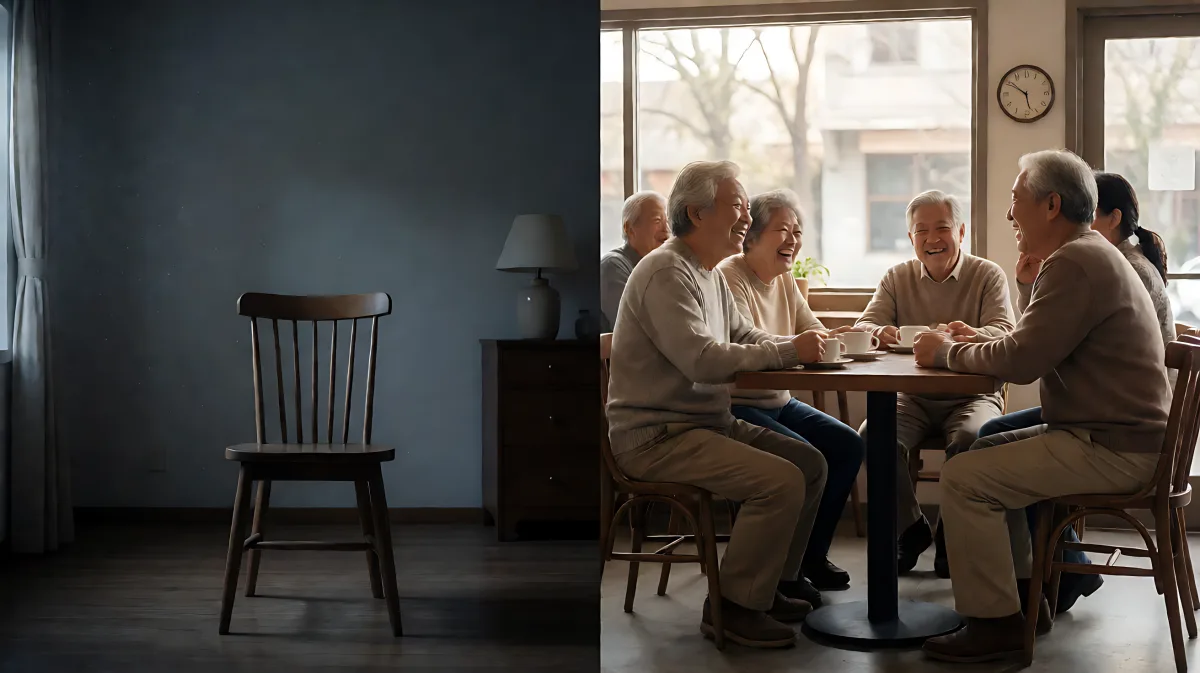
Social isolation isn't just a social issue; it's a biological one. Research shows that lacking human connection can accelerate memory loss and increase dementia risk. Here is how to protect your brain by staying connected.
Social isolation significantly accelerates cognitive decline in older adults, with studies suggesting a 60 percent increase in dementia risk for those with limited social connections. Unlike simple loneliness, which is a subjective feeling, isolation is an objective lack of human contact that directly impacts brain structure and function. Keeping active social relationships serves as a critical buffer against memory loss and neurodegeneration.
How does social isolation affect brain structure and function?
Researchers at the University of the Balearic Islands conducted a systematic review analyzing twelve longitudinal studies to understand how isolation interacts with cognition in healthy older adults. Their findings revealed that both social isolation and loneliness are associated with poorer performance in memory, attention, and overall cognitive processing. The data suggests that the brain requires consistent social stimulation to maintain efficiency. Without it, executive functioning drops, and individuals experience faster cognitive decline.
Neuroimaging evidence supports this biological link. Studies from Cacioppo and colleagues indicate that lonely individuals show reduced activation in the ventral striatum, a region linked to reward and motivation. This means that social stimuli simply do not provide the same neurological benefit to isolated people, creating a cycle where the brain becomes less responsive to connection. Furthermore, abnormal brain structures in the prefrontal cortex and hippocampus are often observed in those reporting high levels of loneliness, areas critical for memory and emotional regulation.
What is the role of depression in cognitive decline?
While isolation directly harms the brain, depression often acts as the middleman. A 2025 study involving 1,230 older adults used network analysis to map the relationship between social isolation, depressive symptoms, and subjective cognitive decline. The researchers found that depressive symptoms, particularly feelings of hopelessness, serve as the central bridge between being isolated and feeling cognitively worse. If you are isolated, you are more likely to become depressed, and that depression then impairs your ability to process information and remember details.
This bidirectional relationship is dangerous. As cognitive abilities fade, individuals may withdraw further due to embarrassment or frustration, deepening the isolation. The American Brain Foundation notes that this psychological stress triggers physical changes in the body, affecting the hypothalamic-pituitary-adrenal axis and the immune system. Chronic stress from isolation keeps the body in a state of alarm, which over time can damage neural tissue.
Why is the risk of dementia so high for isolated seniors?
According to the Centers for Disease Control and Prevention, about one in four adults in the United States reports a lack of social and emotional support. For those over 65, the risk is compounded by factors like retirement, bereavement, and mobility issues. One significant study suggested that social isolation can increase a person’s risk of dementia by approximately 60 percent. This risk is comparable to smoking fifteen cigarettes a day. Isolation isn't just about feeling sad; it is a physical health risk that impacts survival rates and the likelihood of surviving major health events like heart attacks or strokes.
What is the difference between loneliness and social isolation?
It is easy to confuse these two terms, but they are distinct. Social isolation is an objective fact: it refers to having a limited number of relationships, living alone, or having little contact with family and friends. Loneliness, however, is subjective. It is the painful feeling that your social life is less satisfying than you would like. You can be isolated without feeling lonely, and you can feel lonely even in a crowd. Research shows that these two states have modest correlations, meaning they do not always overlap. A person might have many acquaintances but feel profoundly lonely, or live in solitude and feel perfectly content. Both states, however, carry risks for brain health, though through different pathways. Isolation often leads to a lack of cognitive stimulation, while loneliness leads to emotional distress and inflammation.
How can you protect your cognitive health through social connection?
Because social isolation is a modifiable risk factor, it can be changed. The key is to prioritize regular, meaningful interactions. You do not need to become a social butterfly, but you do need to keep your brain active. Consider joining a book club, a walking group, or an adult education class. These activities combine physical movement or mental challenge with social interaction, which is ideal for brain health.
For those who have been isolated for a long time, reconnecting can feel intimidating. Start small. A simple phone call to a neighbor or a brief visit to a community center can break the cycle of withdrawal. Volunteering is another powerful tool, as it provides a sense of purpose and structure. If you are caring for someone who is isolated, stay in touch regularly. Acknowledge their feelings of shame or frustration, as these are common barriers. Remember that social contact is not just a nice-to-have; it is a vital health behavior, much like exercise or diet, that keeps the brain resilient against disease.
What should you do if you or a loved one feels isolated?
First, assess the frequency of your interactions. How many times a week do you speak to someone face-to-face? If the number is low, set a goal to increase it. Reach out to friends or family members you have lost touch with. If the isolation is driven by depression or anxiety, consider speaking with a therapist or counselor. Professional guidance can help break the cycle of withdrawal. Organizations like UsAgainstAlzheimer’s recommend understanding the link between isolation and dementia and asking yourself honest questions about your social habits. The goal is not to eliminate solitude entirely, but to ensure it does not become a chronic state that starves the brain of necessary stimulation.
FAQ
Can social isolation cause permanent brain damage?
While social isolation does not "damage" the brain in the same way a stroke does, it is linked to abnormal brain structure and reduced gray and white matter density in areas like the hippocampus. These changes are associated with Alzheimer’s disease pathology, including higher amyloid burden. However, because social connection is modifiable, engaging in new relationships can help mitigate these risks and improve cognitive resilience.
Does online communication count as social connection?
Recent studies indicate that both online and offline social isolation have similar impacts on mental health. While in-person interaction is generally better for cognitive stimulation due to the complexity of non-verbal cues, virtual connection is better than no connection at all. The key is consistent interaction that provides emotional support and mental engagement, regardless of the medium.
How much social interaction do I need to prevent cognitive decline?
There is no single "magic number," but research suggests that regular, meaningful interactions are more important than quantity. Aim for frequent friendly conversations and participation in group activities. The goal is to keep the brain engaged and to reduce the stress hormones associated with loneliness. Even brief, regular check-ins with a friend or family member can help break the cycle of isolation.
What are the early signs that social isolation is affecting my cognition?
Watch for a persistent feeling that you are forgetting things more often than usual, difficulty following conversations, or a lack of interest in hobbies you used to enjoy. These can be signs of subjective cognitive decline. If you notice these changes alongside increased withdrawal from friends and family, it is a strong indicator that social isolation is impacting your brain health. Consulting a healthcare provider for a cognitive assessment is advisable.