Neuroplasticity benefits of social dancing for seniors
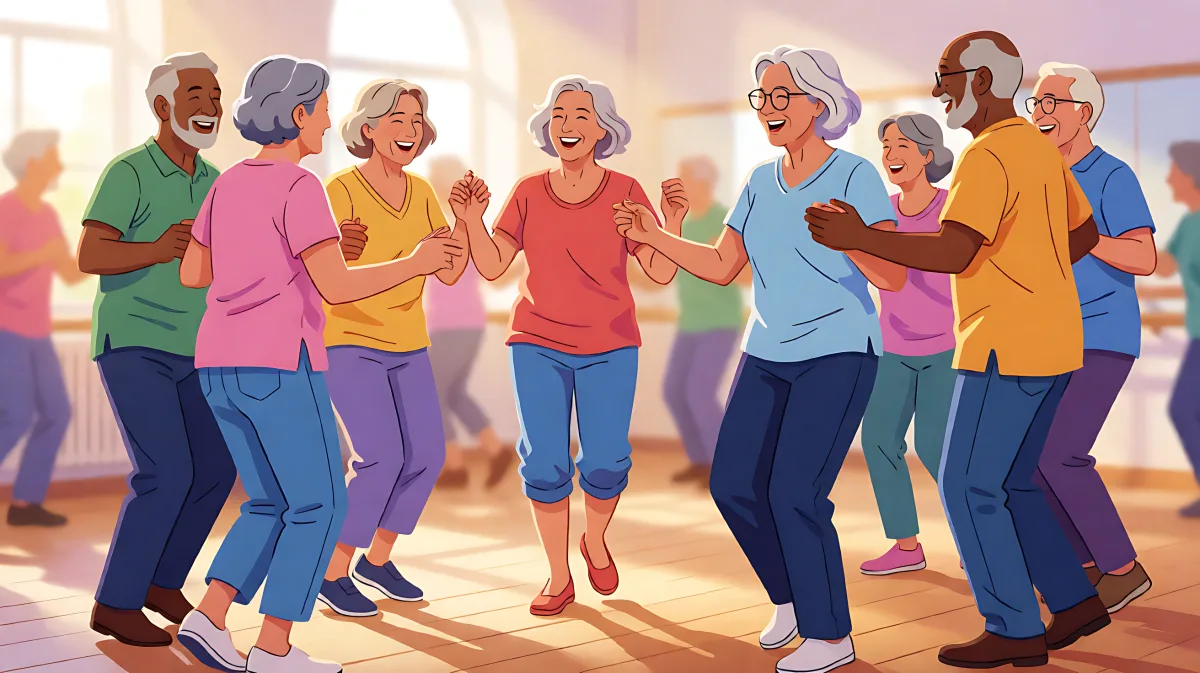
Social dancing is one of the most effective ways to stimulate neuroplasticity in older adults. By combining movement, music, and social connection, it strengthens neural pathways, improves memory, and reduces the risk of cognitive decline.
Social dancing is one of the most powerful activities for maintaining brain health in older adults. It triggers neuroplasticity, the brain's ability to rewire itself, by simultaneously engaging motor skills, memory, and social cognition. Research indicates that frequent dancing can reduce the risk of dementia by up to 76%, a benefit superior to other leisure activities like reading or jogging.
Why Is Social Dancing Better for the Brain Than Other Exercises?
Most physical exercises isolate specific muscle groups or require repetitive, automatic movements. Dancing, particularly partner dancing, is unique because it demands a complex mix of cognitive and physical tasks at once. Your brain must process music, track a partner's movements, remember a sequence of steps, and navigate a crowded space, all while managing balance and posture.
This multi-system engagement activates several key areas of the brain simultaneously. The motor cortex plans the physical movements, while the cerebellum handles coordination and timing. The prefrontal cortex works on decision-making and memory retrieval, and the limbic system processes the emotional response to the music. Because these systems are constantly communicating, dancing forces the brain to build new neural connections more efficiently than single-task activities like walking or swimming.
How Does Dance Specifically Boost Memory and Neuroplasticity?
Neuroplasticity peaks when you learn something new that is moderately challenging. Dancing fits this description perfectly. Every session presents a new combination of partner, music, and movement, which forces the brain to adapt. This variety prevents the brain from becoming automatic, keeping the neuroplasticity window open throughout adulthood.
The memory benefits are structural as well as functional. Studies on ballroom dancers have shown increased gray matter volume in regions responsible for spatial reasoning. This is not just a performance improvement; it reflects a physical reorganization of the brain. When you dance, you are binding memories using multiple pathways: auditory (music), motor (steps), and spatial (location of partner). This creates a robust network of retrieval routes that helps protect against age-related cognitive decline.
What Is the Role of Social Connection in Brain Health?
The social component of partner dancing is not just about fun; it is a critical cognitive challenge. When you dance with a partner, you are performing dual-task processing. You must monitor your own movement while simultaneously interpreting your partner's lead or follow. This requires divided attention, which is one of the strongest predictors of cognitive function in later life.
Furthermore, social dancing combats loneliness, which is a known risk factor for cognitive decline. The release of dopamine during the dance activates the brain's reward center, improving mood and reducing anxiety. The sense of connection and empathy generated through shared movement strengthens social bonds, creating a positive feedback loop that supports overall mental well-being.
What Are the Physical Health Benefits of Dancing for Seniors?
Beyond cognitive gains, social dancing significantly improves physical health. It is a weight-bearing activity that helps maintain bone density, reducing the risk of osteoporosis. The continuous movement improves cardiovascular health, keeping the heart rate within a moderate to vigorous range, which is essential for circulatory efficiency.
Balance is another key area of improvement. The constant shifting of weight and the need to stay oriented in space directly translate to a lower risk of falls. For older adults, fall prevention is one of the most critical aspects of maintaining independence and quality of life.
How Can Older Adults Start Dancing Safely?
You do not need to be a professional to reap these benefits. Community centers, senior centers, and many local dance studios now offer classes specifically designed for older adults. These classes often focus on low-impact movements, seated dance options, or simplified partner dances that accommodate physical limitations.
It is essential to consult with a healthcare provider before starting a new exercise regimen, especially if you have pre-existing heart or joint conditions. However, for most seniors, gentle social dancing is a safe and highly effective way to keep the brain sharp and the body strong.
Frequently Asked Questions
How often should I dance to see cognitive benefits?
Research suggests that frequent dancing is key. Aiming for at least one to two social or class-based sessions per week is a good target. Consistency is more important than intensity, as the goal is to keep the brain in a state of moderate challenge and adaptation.
Is partner dancing better than solo dancing for the brain?
Partner dancing is generally more cognitively demanding because it requires real-time coordination with another person. This adds a layer of social cognition and divided attention that solo dance does not provide, making it a stronger stimulus for neuroplasticity in older adults.
Can I still benefit from dancing if I have mild cognitive impairment?
Yes. Studies indicate that dance can be particularly effective for individuals with mild cognitive impairment. The multi-sensory nature of dance helps reinforce neural pathways that may be beginning to weaken, potentially slowing the progression of symptoms.
Do I need to learn complex choreography?
No. Simple, repetitive partner dances like the basic waltz or swing steps are sufficient. The benefit comes from the combination of movement, music, and social interaction, not from memorizing long, complex routines. The key is the continuous adaptation to a new partner or partner cue.