Remote Monitoring for Rural Seniors: Overcoming Broadband Gaps
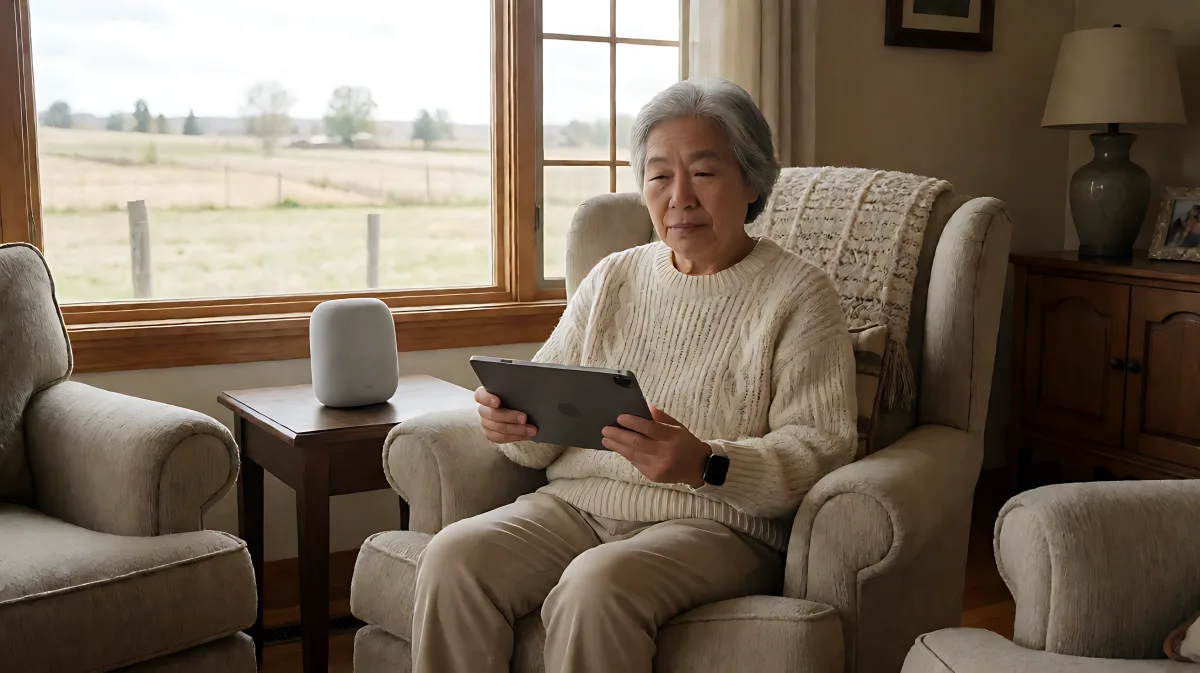
Many rural seniors face health monitoring barriers due to limited internet. This guide explains how low-bandwidth technologies and community hubs bridge the digital divide for older adults.
Remote monitoring for rural seniors without high-speed internet relies on low-bandwidth apps, satellite links, and community hubs. These solutions allow older adults to track vitals and consult doctors without needing stable, fast connections. By using audio-only backups and shared devices, families can maintain health oversight even in areas with significant digital gaps.
Why Do Rural Seniors Struggle with Standard Telehealth?
While urban areas often have robust fiber-optic networks, rural communities face a persistent infrastructure deficit. The Federal Communications Commission notes that over 19 million Americans, primarily in rural zones, lack adequate broadband access. For an older adult living in a remote farmhouse, this gap creates a paradox: modern medicine demands data-rich video consultations, but the local infrastructure supports only slow, intermittent connections. Standard high-definition video apps often crash or freeze on these networks, leading to missed appointments and delayed diagnoses for chronic conditions like heart disease and stroke.
Is Low-Bandwidth Technology Reliable for Critical Health Alerts?
Yes, when designed for resilience. Many consumers assume that only fast 5G or fiber connections can handle medical data, but in fact, low-bandwidth platforms like Doxy.me and VSee prioritize audio transmission and compressed video. These tools feature automatic quality adjustments that drop video resolution to keep the audio call clear. Furthermore, wearables such as smartwatches can store data locally and sync when a connection is briefly available, ensuring that fall detection and heart rate alerts are not lost due to temporary outages.
How Can Families Implement Low-Bandwidth Monitoring?
You do not need enterprise-grade hardware to start. You can create a resilient monitoring stack using existing devices and targeted software. The key is prioritizing data efficiency over visual fidelity. Focus on tools that function over cellular data or satellite internet, which is becoming more accessible through LEO satellite networks.
- Select Adaptive Software: Use telehealth apps that offer audio-only modes. These require significantly less data than video calls and are ideal for routine check-ins.
- Leverage Wearables: Equip the senior with a smartwatch that tracks heart rate and falls. These devices can transmit critical alerts via cellular networks without needing a Wi-Fi hotspot.
- Utilize Satellite Connectivity: For areas without cellular coverage, consider satellite internet providers. Amazon’s Project Kuiper, for example, is deploying Low Earth Orbit satellites to serve hard-to-reach rural regions, offering a viable backup for medical portals.
- Establish Community Hubs: Identify local libraries or senior centers with better connections. Many rural institutions now host 'telehealth hubs' where volunteers help seniors access video care when home internet fails.
What Are Common Misconceptions About Digital Literacy for Seniors?
Many families believe that seniors are naturally resistant to new technology, but in fact, the primary barrier is usability, not willingness. The National Poll on Healthy Aging found that 45 percent of adults over 65 are uncomfortable with video conferencing, often due to small icons and complex login procedures rather than a lack of desire. Simplifying the interface changes the outcome.
Large-font displays and voice-activated controls, such as those built into Amazon Alexa or Google Assistant, remove the need for precise touchscreen manipulation. This is crucial for individuals with arthritis or tremors. By allowing seniors to say 'call my doctor' or 'set a medication reminder,' the technology becomes a bridge rather than a hurdle.
How Much Does It Cost to Set Up This System?
Affordability is a major concern for those on fixed incomes. Broadband service averages about $64 per month in the U.S., a figure that can be prohibitive when combined with device costs. However, strategies can lower this burden significantly.
| Component | Estimated Cost | Notes |
|---|---|---|
| Basic Smartwatch | $100 - $300 | One-time purchase. Look for models with cellular plans. |
| Cellular Data Plan | $20 - $40/month | For smartwatch and simple app usage. Less expensive than full broadband. |
| Low-Bandwidth App | Free - $50/month | Many platforms offer free tiers or sliding-scale fees. |
| Community Hub Access | Free | Often provided by local libraries or health departments. |
For families struggling with costs, the FCC’s Affordable Connectivity Program offers subsidies that can reduce monthly internet bills. Additionally, some hospitals participate in tablet and hotspot loan programs, lending devices to patients for the duration of their care. Checking with local health resources before buying new equipment can save hundreds of dollars.
What Steps Can You Take Today to Improve Remote Monitoring?
Take action by auditing your current tech setup. If you are using a standard video app that lags, switch to a low-bandwidth alternative. Ensure your senior has a device that can make emergency calls. Most importantly, set up a 'warm line' support system where a family member or neighbor is on standby to help connect during the actual appointment. This human safety net often reduces anxiety and prevents the frustration that leads to abandoning digital health tools.
What is the main benefit of low-bandwidth monitoring for rural seniors?
It ensures continuous health oversight without requiring expensive, fast infrastructure. It allows for reliable audio consultations and data syncing over cellular or satellite links, keeping care accessible even in remote areas.
How can families reduce the cost of remote monitoring tech?
Use shared community hubs for video visits, rely on cellular data for wearables instead of high-speed home broadband, and apply for federal subsidies like the Affordable Connectivity Program. Loan programs from hospitals can also provide free devices.
Are satellite internet options a realistic alternative for 2026?
Yes. With the expansion of Low Earth Orbit satellite networks like Project Kuiper, rural areas without fiber access are gaining reliable broadband options. This makes real-time remote monitoring feasible for the first time in many isolated communities.