Long-Term Care Insurance Claim Cost Breakdown
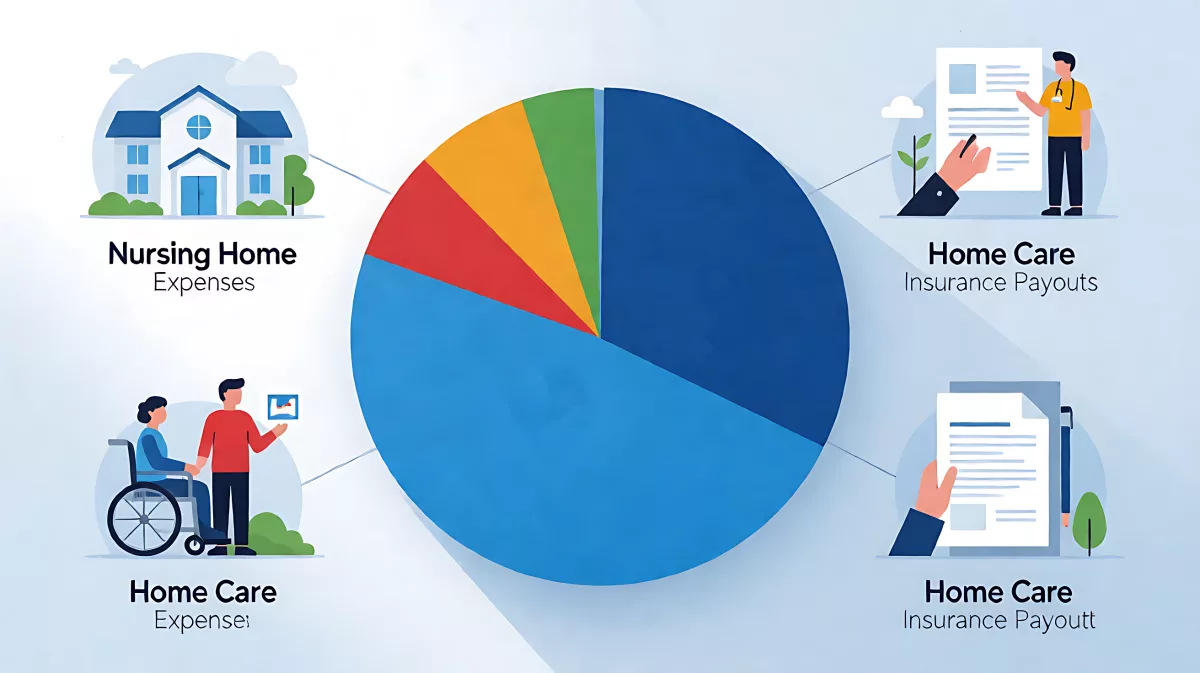
Understanding the financial impact of filing a long-term care insurance claim involves looking beyond just premiums. This breakdown details the average costs, regional variations, and the factors that determine your final benefit payout.
Filing a long-term care insurance claim typically results in a monthly payout that offsets service costs, which average $80,800 per year for private in-home care as of 2026. However, the actual cost to the policyholder is defined by their premium payments, which average $3,750 annually for a 55-year-old woman, alongside potential claim adjustment fees or administrative costs that vary by carrier.
What determines the total cost of a long-term care claim?
The financial impact of a claim is not a single flat number. Instead, it is a complex calculation involving your ongoing premiums, the specific benefits triggered by your care needs, and any administrative adjustments made by the insurance company. In 2026, the landscape for these costs has shifted slightly due to rising service rates tracked by industry leaders. To understand the true expense, you must look at the interplay between what you paid to keep the policy active and what the insurer pays out when you file for benefits.
For many Americans, the decision to purchase long-term care insurance is driven by the high cost of care without coverage. According to data from the American Association for Long-Term Care Insurance (AALTCI), the average annual premium for a 55-year-old man in the US was $2,200 in their 2025 price index, which serves as the baseline for current 2026 estimates after adjusting for inflation. For women of the same age, this figure rises to approximately $3,750. These premiums are the "cost" you pay before ever filing a claim. When you do file, the insurer evaluates the situation. There is no universal "claim fee," but there are administrative processes that can affect how quickly and fully you receive your benefits.
How much do long-term care services actually cost in 2026?
The value of your claim payout is best understood by comparing it to the actual cost of care. Genworth Financial, which has tracked these metrics since 2004, provides the most reliable benchmarks. While their last major published median data set is from 2023, the 2026 figures reflect a continued upward trend of roughly 4% to 5% annually. Here is what you should expect to pay if you were not covered:
- Private Room in a Nursing Home: The median annual cost was $129,575 in 2023. By 2026, with inflation adjustments, this figure likely exceeds $140,000 per year.
- Assisted Living Facility: Costs rose 5% in the year leading up to 2023, reaching a median of $74,400 annually. In 2026, expect this to hover around $80,000 to $85,000.
- Non-Medical In-Home Caregiver: The median cost for a private duty nurse or caregiver was $80,800 in 2023. This remains one of the most common claim triggers.
- Adult Day Health Care: This more affordable option has a median annual cost of approximately $26,000 in 2026.
Your insurance policy will pay a daily benefit amount up to a maximum cap. If your daily benefit is $200, and your care costs $300 per day, you are responsible for the difference. This gap is where most financial strain occurs during a claim.
What are the key factors that adjust your claim benefits?
When you submit a claim, the insurer does not simply send a check for a random amount. They apply several factors that act as adjustments to your benefit. Understanding these helps you predict the net cost to your family.
How does inflation protection affect the payout?
Most experts recommend purchasing a policy with a 3% annual inflation rider. This means your benefit amount grows each year. If you buy a policy at age 55 and file a claim at age 85, your benefit could increase significantly. The AALTCI notes that a benefit of $165,000 at purchase could become $400,500 by age 85 with a 3% escalator. This adjustment is crucial for keeping up with the rising cost of care.
What is the impact of the elimination period?
Most policies have an elimination period, often 30, 60, or 90 days, during which you must pay out-of-pocket before benefits begin. If you have a 90-day elimination period, you will likely spend $25,000 to $45,000 in initial costs before your insurance kicks in. Shorter periods cost more in premiums but result in a lower immediate out-of-pocket expense when you file the claim.
How do health conditions change the premium and claim approval?
Your health status at the time of purchase affects both your premium and your ability to file a claim. Conditions such as dementia, muscular dystrophy, or cystic fibrosis often disqualify applicants because the risk of immediate payout is too high. If you are in good health, your premiums will be lower. However, if your health deteriorates before you apply, you may not be able to purchase coverage at all, meaning the cost of care falls entirely on you.
What are the typical regional cost differences?
Care costs are not uniform across the US or UK. In the US, the cost of a nursing home bed in a state like New York or California can be significantly higher than in the South or Midwest. The US Department of Health and Human Services provides tools to estimate these state-by-state variations. For UK residents, the National Health Service (NHS) covers much of the medical care, but self-funded long-term care can still be expensive, with private home care averaging £30,000 to £40,000 per year in major cities like London as of 2026.
| Service Type | Median Annual Cost (US 2026 Estimate) | Typical Insurance Coverage Trigger |
|---|---|---|
| Skilled Nursing Home | $140,000 - $150,000 | Requires 2 of 6 ADLs |
| Assisted Living | $80,000 - $85,000 | Requires 2 of 6 ADLs |
| Home Health Care | $85,000 - $90,000 | Requires 2 of 6 ADLs |
| Adult Day Care | $26,000 - $28,000 | Cognitive Impairment |
How do tax benefits offset the cost of premiums?
One often overlooked cost-saver is the tax deduction. Premiums paid for long-term care insurance may be eligible for an income tax deduction in the US. The deductible amount depends on your age. For individuals over 70, the IRS allows a higher percentage of premiums to be deducted. Additionally, benefits paid from a long-term care contract are generally excluded from taxable income. This tax shield effectively reduces the net cost of your insurance premium, making the overall financial burden lighter over the life of the policy.
Frequently Asked Questions
Does the insurance company charge a fee to process the claim?
No, most insurers do not charge a separate "claim filing fee." The cost of the claim is absorbed through the premiums you have already paid. However, if you use a third-party administrator or an advocate to help file, there may be professional service fees, but these are separate from the insurance company.
What happens if my care costs exceed my daily benefit?
You are responsible for the difference. If your policy pays $200 a day and your care facility charges $300 a day, you must pay the $100 difference out of pocket. This is why matching your daily benefit to the actual cost of care in your region is critical.
Can I file a claim if I only need one activity of daily living help?
Generally, no. Most policies require that you cannot perform two of the six standard activities of daily living (ADLs), such as bathing, dressing, eating, toileting, continence, or transferring. Some policies add cognitive impairment as an alternative trigger, but the standard is two ADLs.
How do premiums change after I start receiving benefits?
Once you begin receiving benefits, you typically stop paying premiums. The insurer pays out your daily benefit up to the total lifetime maximum or the limit specified in your policy. The cost to you ends when the benefits are exhausted or the policyholder passes away, depending on the specific terms.