Intergenerational Skill Swaps: A Complete Guide for Seniors
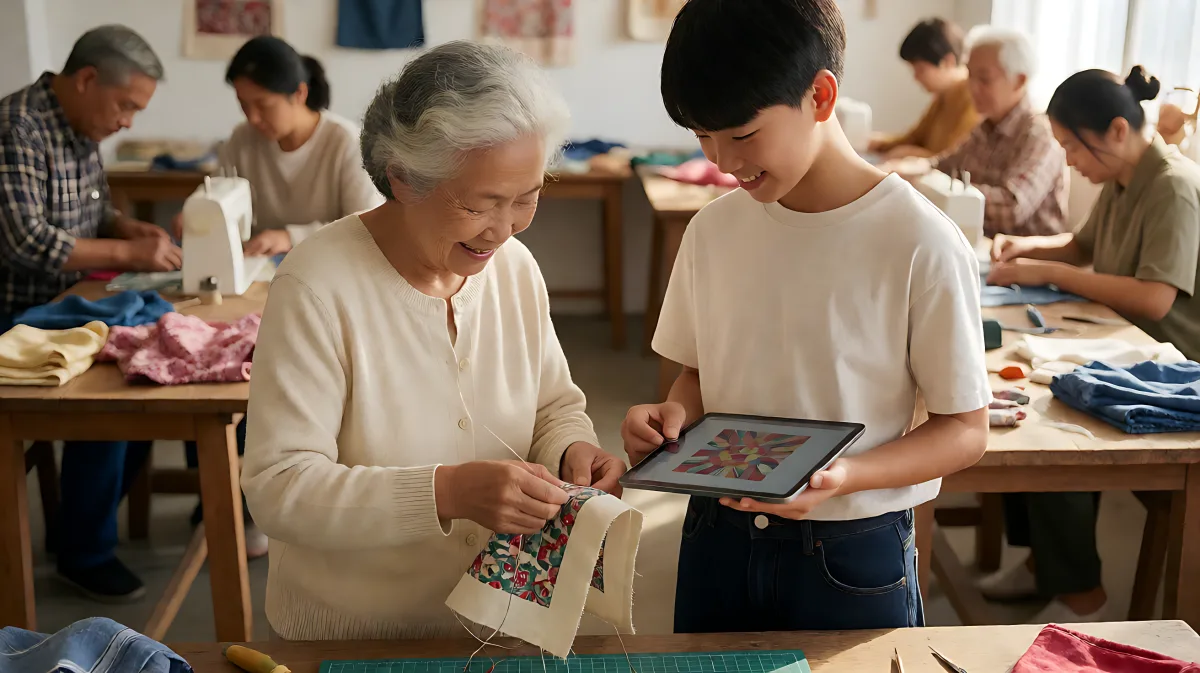
Intergenerational skill swaps are structured exchanges where seniors and youth trade knowledge, combining traditional craftsmanship with modern digital skills to combat isolation and strengthen community bonds.
Intergenerational skill swaps are community programs where older adults and younger people exchange specific expertise, such as traditional crafts for digital literacy. These reciprocal exchanges reduce social isolation for seniors while preserving cultural heritage, creating stronger neighborhood bonds through structured, mutual learning experiences.
The divide between generations is often portrayed as a cultural chasm, but emerging community models are proving that it is actually an opportunity for resource sharing. In these interactions, seniors do not merely receive care; they act as knowledge holders who possess valuable practical skills that young people are eager to learn. Simultaneously, younger participants contribute modern competencies that allow older adults to remain connected to the evolving world. This two-way street of education is reshaping how we view aging and youth engagement in the United States and the United Kingdom.
Why Should Communities Prioritize Skill Exchanges?
Traditional social programs for seniors often focus on passive recreation or medical support. Skill swaps introduce active engagement. According to community development frameworks promoted by organizations like Build Bonding, these programs serve three primary functions: preserving vanishing traditional skills, enhancing digital inclusion for older adults, and fostering empathy across age groups.
The benefits are measurable. When seniors teach, they experience a renewed sense of purpose and professional identity. For younger learners, these interactions provide hands-on education that textbooks cannot replicate. The exchange creates a "safe space" for vulnerability and learning, where mistakes are treated as opportunities rather than failures. This mutual respect helps dismantle stereotypes that paint seniors as technologically challenged or young people as disengaged from community life.
How Do Reciprocal Learning Models Work?
The core mechanic is reciprocity. A participant must bring something to teach and be open to learning something new. This ensures that no one feels like a student or a teacher in a hierarchical sense; they are partners. For example, a retired carpenter might join a program where they teach woodworking to college students. In return, the students help the carpenter set up their smartphone email or navigate online marketplaces to sell their crafts. This specific pairing addresses immediate needs while building a personal connection.
What Skills Are Most Valued in These Swaps?
The most successful programs identify high-demand skills from both demographics. Research into community needs suggests that the intersection of traditional trades and modern technology offers the highest value.
- Traditional Skills Offered by Seniors: Woodworking, gardening, sewing, traditional cooking techniques, home repairs, and oral history preservation.
- Modern Skills Offered by Youth: Digital literacy (smartphones and tablets), social media management, basic coding, photography, and digital marketing.
In the United States, organizations like Lawrenceville United have utilized surveys to map these skills. By asking residents over the age of 55 what they know and what they want to learn, they create a matching database. This ensures that every session is relevant to the participants. For instance, a senior might discover that their neighbor needs help fixing a leaky faucet, while the neighbor’s child needs a mentor in chess. The swap is seamless and practical.
How Can You Start a Local Skill Swap Program?
Launching a program does not require a large budget. It requires intentionality and space. Community centers, public libraries, and local cafes are ideal venues. The process begins with a simple audit of available resources. Participants should be asked to list one skill they can teach and one they wish to learn. This data forms the foundation of the schedule.
Accessibility is critical. Venues must be wheelchair-friendly, and materials must be large-print or digital. Time management is also a factor; sessions should be short, typically one hour, to maintain energy levels. Regularity is more important than complexity. A weekly hour-long session that builds trust over months will yield better results than a single massive weekend event.
What Are the Best Activities for First-Time Participants?
For those hesitant to join, low-stakes activities are the best entry point. Story-sharing circles allow participants to exchange life experiences without the pressure of teaching a hard skill. Technology partnerships, where a young volunteer patiently helps a senior set up a video call application, are also highly effective. These interactions build confidence. As Senior Streets notes, the strongest connections often happen during the informal moments: setup, cleanup, and shared meals.
What Impact Do These Programs Have on Senior Health?
Social isolation is a significant health risk for older adults, comparable to smoking. Structured skill swaps provide regular social contact and cognitive stimulation. Teaching requires the brain to organize and articulate knowledge, which keeps mental faculties sharp. Learning new digital tools provides neuroplasticity benefits, encouraging the brain to form new neural pathways.
Furthermore, these programs reduce the stigma associated with aging. When seniors are seen as experts, their social standing improves. In Japan, similar programs have revitalized traditional crafts by pairing artisans with young marketing professionals. The result is not just economic, but cultural: the knowledge is preserved, and the artisans feel valued. In the UK, community centers have adopted these models to counteract the loneliness epidemic, finding that intergenerational contact lowers blood pressure and improves mood.
FAQ
Do skill swaps require participants to be experts?
No, expertise is relative. A participant only needs to know slightly more than the learner in a specific area. For example, someone comfortable with using a tablet can teach a senior who is not. You do not need to be a master craftsman to share basic techniques or family recipes.
Where can I find a program near me?
Check with your local public library, community center, or aging services agency. Many organizations now list intergenerational programs on their websites. You can also use search terms like "intergenerational skill swap [your city]" to find local chapters of national initiatives.
How long does it take to see benefits?
While connections form quickly, the cognitive and social benefits of reduced isolation typically become noticeable after six to eight weeks of regular participation. Consistency is key to building lasting friendships.
Are there virtual options for people who cannot travel?
Yes, many programs have expanded to include remote participation. Video calls allow for face-to-face teaching of skills like sewing, music, or digital navigation. This is particularly useful for seniors with mobility issues or those living in rural areas.