AI Companions in Dementia Care: How They Reduce Loneliness
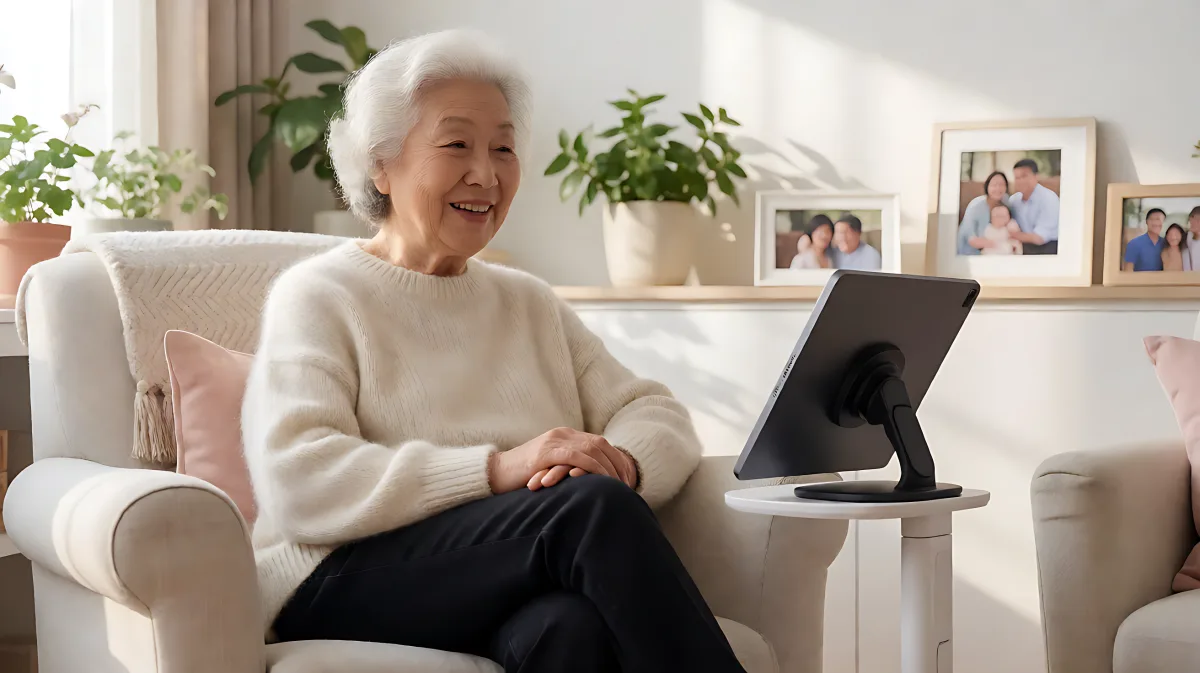
AI companions are becoming vital tools in dementia care, offering constant, patient interaction that alleviates social isolation. Here is what families and caregivers need to know about the technology, its benefits, and how to integrate it safely into daily routines.
AI companion bots reduce dementia-related loneliness by providing consistent, patient conversation and emotional support that human caregivers cannot always sustain alone. A 2026 pilot study confirmed these digital partners can significantly lower anxiety and social withdrawal in residents, while simultaneously giving families and staff real-time data on health and mood to improve care quality.
Why AI Companions Matter in Dementia Care
Loneliness is a critical symptom of cognitive decline, affecting more than 55 million people worldwide who live with dementia. As memory and social faculties fade, the fear of being a burden or forgetting details can lead to severe social withdrawal. Traditional care models, while vital, often struggle to provide constant, individualized attention due to staffing shortages. AI companions bridge this gap by offering an endless source of non-judgmental interaction. These systems use large language models to engage users in reminiscence, gentle conversation, and cognitive exercises, creating a safety net for emotional well-being.
How does the technology work?
Modern AI companions utilize natural language processing and sentiment analysis to understand the user's emotional state. Unlike basic voice assistants, these advanced bots can detect signs of agitation or sadness and adjust their tone and topics accordingly. They are designed to be proactive, checking in on the user, reminding them of medications or appointments, and even initiating conversations to prevent isolation. For individuals with dementia, the key benefit is the AI’s infinite patience; it never tires of answering repetitive questions or listening to the same story, which reduces the anxiety of feeling misunderstood.
What Did the 2026 Pilot Program Reveal?
A recent multi-site pilot program conducted in partnership with Pacific Living Centers and CloudMind provided concrete evidence of the technology's impact. The study deployed an AI companion named Kathy across six memory care communities. Over a period of 65 days, 18 residents aged 70 to 90 engaged with the bot. The results were significant: participants averaged 47.8 minutes of interaction daily, with some engaging for nearly an hour. The AI’s ability to track mood and suggest environmental adjustments, such as changing lighting or temperature, directly contributed to improved resident comfort. For example, one resident with mild dementia saw a reduction in anxiety episodes by over 50 percent during the trial period.
What are the specific benefits for caregivers?
Caregivers often suffer from burnout due to the emotional intensity and 24/7 demands of dementia care. AI companions act as an augmentative tool, not a replacement. They handle routine engagement and data collection, freeing caregivers to focus on complex medical needs and deep emotional support. Kathy’s system generated daily reports on residents' emotional states and health concerns, allowing staff to intervene proactively. This data-driven approach prevents small issues from becoming crises, reducing the overall workload and improving the quality of human-to-human interactions.
How to Integrate an AI Companion Safely
While the benefits are clear, integrating AI into sensitive care settings requires a thoughtful approach. Families and care providers must consider ethical guidelines, data privacy, and user preferences. Below is a checklist to help you evaluate and implement an AI companion for a loved one or a facility.
- Assess Cognitive Stage: Ensure the AI is appropriate for the resident's level of impairment. Bots should be able to handle repetitive conversations without frustration.
- Verify Data Privacy: Confirm that the service complies with health data regulations like HIPAA in the US and GDPR in the UK. Data should be encrypted and transparent.
- Check for Anthropomorphism: Be aware that overly human-like bots can sometimes reinforce delusions in later-stage dementia. Choose a bot that is clearly a tool but remains friendly.
- Monitor for Over-Reliance: Use the AI to supplement, not replace, human contact. Schedule regular face-to-face interactions to maintain social networks.
- Train the Care Team: Provide staff with training on interpreting AI-generated reports and managing the relationship between the resident and the bot.
What is a common misconception about AI and empathy?
Many families assume that an AI companion cannot provide any emotional value because it is "just code." In fact, studies from Harvard Business School indicate that AI companions can alleviate loneliness as effectively as interacting with another person, particularly when the user feels "heard" by the bot. The sense of being understood and validated is a powerful antidote to isolation, even if the listener is synthetic. The key is that the interaction must be personalized and responsive to the user's specific history and preferences.
What Are the Risks and Ethical Concerns?
As with any new technology, there are risks that must be managed. One primary concern is the reinforcement of delusions. Large language models are often designed to be agreeable, which can lead to a "sycophantic" response style that validates false beliefs rather than gently correcting them. For residents with late-stage dementia who experience hallucinations, this can worsen confusion. Additionally, there is a risk of social displacement, where the AI becomes the primary source of interaction, leading to further withdrawal from human community. Developers and caregivers must monitor for this and ensure the AI is part of a balanced care plan that includes family visits and group activities.
How can families mitigate the risk of isolation?
To prevent the AI from isolating the resident, families should use the data provided by the bot to schedule more human interaction. For instance, if the AI reports that a resident is frequently discussing a specific hobby, a family member can join that conversation or activity. The AI should be a bridge to human connection, not a wall. Regular reviews of the resident's social calendar and engagement levels are essential to maintain a healthy balance.
FAQ
Can an AI companion replace human caregivers?
No. AI companions are designed to supplement human care by handling routine interactions and providing data insights. They cannot replace the complex emotional and physical care that humans provide. The goal is to reduce caregiver burnout so that more time can be spent on high-value human interactions.
Is this technology safe for people with advanced dementia?
Cautious use is recommended. For advanced dementia, there is a risk that the AI might reinforce delusions or cause confusion if it becomes too anthropomorphic. It is crucial to work with a medical professional to determine if an AI companion is appropriate for the specific stage of dementia and to monitor the resident's response closely.
How much does an AI companion cost?
Costs vary widely. Subscription services for individual use may range from $20 to $100 per month, while enterprise-grade systems for care facilities can be significantly more expensive. Many providers offer trials, so it is advisable to test the service for a short period to evaluate its value before committing to a long-term contract.
Will the AI know if a resident is in distress?
Yes. Advanced AI companions use sentiment analysis to detect changes in voice tone, word choice, and behavioral patterns that may indicate distress, pain, or agitation. They can alert caregivers to these changes in real-time, allowing for faster and more appropriate interventions than waiting for a routine check-in.